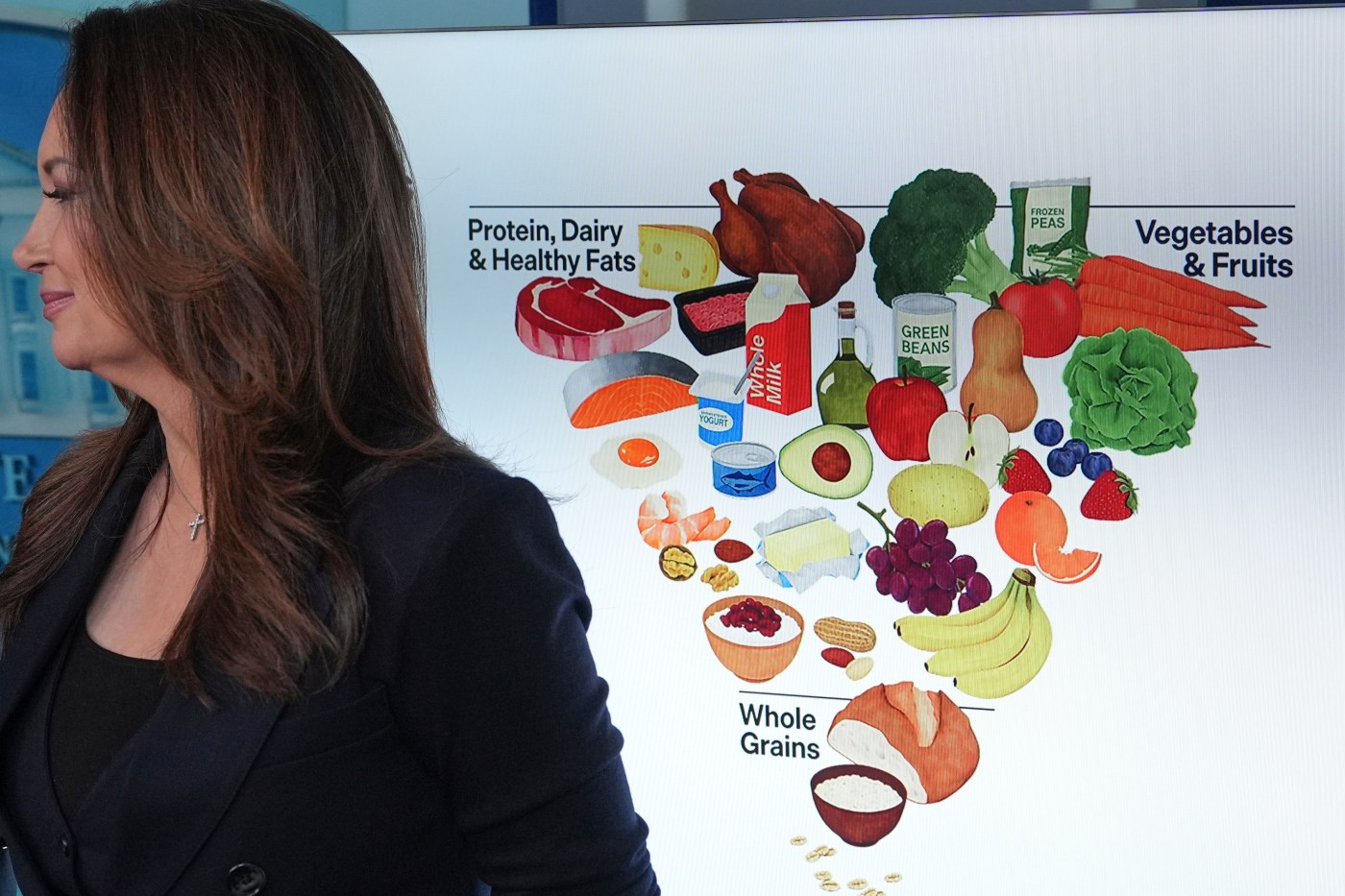
The U.S. government has released updated dietary guidelines emphasizing the importance of whole foods and protein while recommending a reduction in highly processed foods and added sugars. On March 15, 2023, Health Secretary Robert F. Kennedy Jr. and Agriculture Secretary Brooke Rollins introduced the 2025-2030 U.S. Dietary Guidelines for Americans. These guidelines aim to provide a framework for healthy eating and inform federal nutrition programs.
The new guidelines advocate for a diet rich in fresh vegetables, whole grains, and dairy products, consistent with long-standing nutrition principles. A notable change is the introduction of an inverted food pyramid graphic, placing protein, dairy, healthy fats, and fruits and vegetables at the top, while positioning whole grains at the bottom.
In a significant shift, the guidelines advise against consuming “highly processed” foods, defined as packaged, prepared, or ready-to-eat items that are high in salt and sugar, such as chips, cookies, and candy. This change reflects growing concerns about the health risks associated with ultraprocessed foods, which are linked to chronic conditions like diabetes and obesity.
Despite previous indications that the administration might relax restrictions on saturated fats, the guidelines maintain a recommendation that Americans limit saturated fat intake to no more than 10% of daily calories. However, they encourage the consumption of whole-food sources of saturated fat, including meat, whole-fat dairy, and avocados.
Reactions and Expert Opinions on Dietary Changes
The updated guidelines, which are required to be revised every five years, have drawn mixed reactions from the nutrition community. Some health experts have welcomed the emphasis on whole foods. Dr. David Kessler, a former FDA commissioner, praised the guidelines for advancing dietary health. He emphasized the importance of viewing food as medicine and providing clear directions for improving health.
Conversely, some experts have expressed concern about the guidelines’ emphasis on meat and dairy as primary protein sources, rather than promoting plant-based options. Marion Nestle, a nutritionist and food policy expert, noted that following these guidelines could lead to increased caloric intake rather than healthier eating habits.
The guidelines also propose a significant increase in recommended protein consumption, suggesting a range of 1.2 to 1.6 grams of protein per kilogram of body weight. This is a notable increase from the previous recommendation of 0.8 grams, which was seen as the bare minimum necessary for health. Currently, the average American man consumes approximately 100 grams of protein daily, significantly exceeding the previous guideline.
The American Heart Association has urged further research into optimal protein sources and consumption levels, recommending prioritization of plant-based proteins, seafood, and lean meats while limiting high-fat animal products.
New Recommendations on Added Sugars and Alcohol
In addition to the focus on whole foods and protein, the guidelines strongly advise against the consumption of added sugars. They state that no meal should contain more than 10 grams of added sugars, which is approximately 2 teaspoons. This contrasts with prior guidelines that allowed for up to 10% of daily caloric intake from added sugars.
Furthermore, the updated guidelines roll back previous limits on alcohol consumption, now advising individuals to consume less alcohol for better health rather than adhering to specific numerical limits. They also recommend that pregnant women and individuals recovering from alcohol use disorder avoid alcohol altogether.
The new dietary guidelines are poised to impact the federally funded National School Lunch Program, which serves nearly 30 million children in the United States each school day. The Agriculture Department will need to translate these recommendations into specific requirements for school meals, a process that may take several years.
Overall, the 2025-2030 U.S. Dietary Guidelines represent a significant shift in nutritional guidance, aiming to promote healthier eating habits and address the chronic health issues facing many Americans.