A new technological advancement could revolutionize how patients adhere to their medication regimens. Researchers have developed a biodegradable pill system that can communicate with healthcare providers shortly after ingestion. This innovation aims to tackle the significant issue of medication non-adherence, which contributes to approximately 125,000 preventable deaths annually in the United States alone.
The study, published in Nature Communications, highlights the potential of this system to ensure that patients, particularly those with chronic conditions like HIV and transplant recipients requiring immunosuppressive drugs, follow their prescribed treatment plans. Nearly half of those with chronic conditions do not take their medications as directed, leading to severe health complications and increased healthcare costs.
Giovanni Traverso, a physician and engineer at the Massachusetts Institute of Technology, emphasized the goal of this innovation: “The aim is to ensure that this helps people receive the therapy they need to maximize their health.” This technology could play a vital role in extending the lives of patients who require long-term medication.
Innovative Design and Functionality
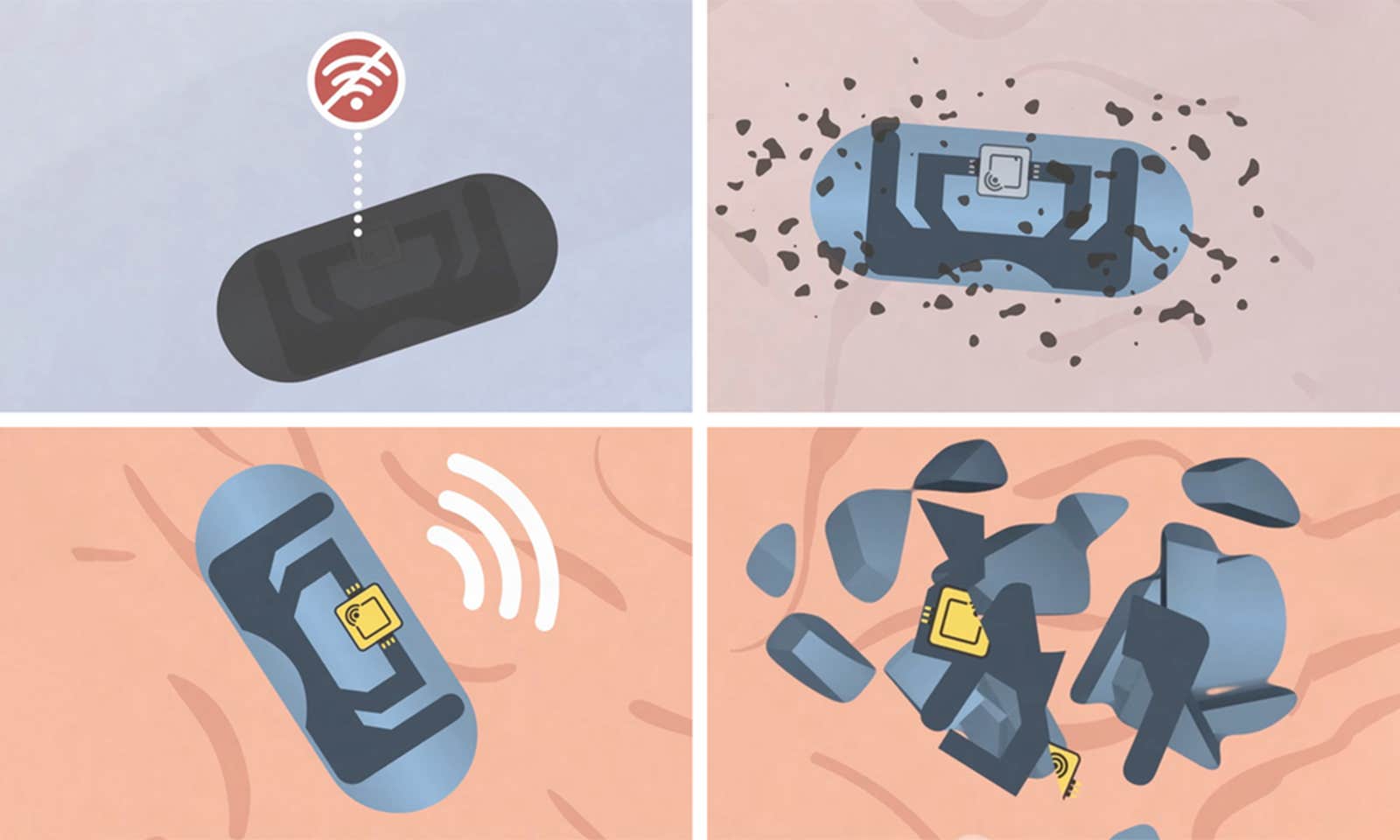
The newly designed pills contain a radio frequency antenna that allows for real-time communication with healthcare providers. The unique aspect of this system is its eco-friendly design; most components dissolve in the stomach within a week, minimizing the risk of gastrointestinal issues and reducing electronic waste.
In contrast to previous technologies that relied on non-biodegradable materials, this pill comprises safe and commonly used medical components. The radio frequency chip, sized at only a micrometer, is encased in a cellulose particle, while the capsule itself is made from gelatin and cellulose. The inclusion of molybdenum or tungsten serves to block radio frequency signals until the pill begins to break down.
During tests conducted on pigs—which have gastrointestinal tracts similar in size to humans—the system successfully transmitted signals from inside the stomach to a receiver located up to 2 feet away. The devices performed as intended, dissolving in the pigs’ stomachs and demonstrating their potential for human application.
Future Applications and Health Implications
The research team envisions a future where this technology is paired with a wearable device that can relay the data to healthcare providers. While the system is not designed for mass market production, it targets critical scenarios where adherence is crucial for patient survival and public health.
Traverso noted, “We want to prioritize medications that, when non-adherence is present, could have a really detrimental effect for the individual.” This focus could significantly improve health outcomes for patients at risk of severe consequences due to missed doses.
As researchers move towards human trials, the implications of this technology could be far-reaching. If successful, it may not only improve individual patient adherence but also contribute to broader public health initiatives by ensuring that critical medications are taken as prescribed. The development of these biodegradable pills represents a promising step forward in the quest to enhance medication adherence and patient health.