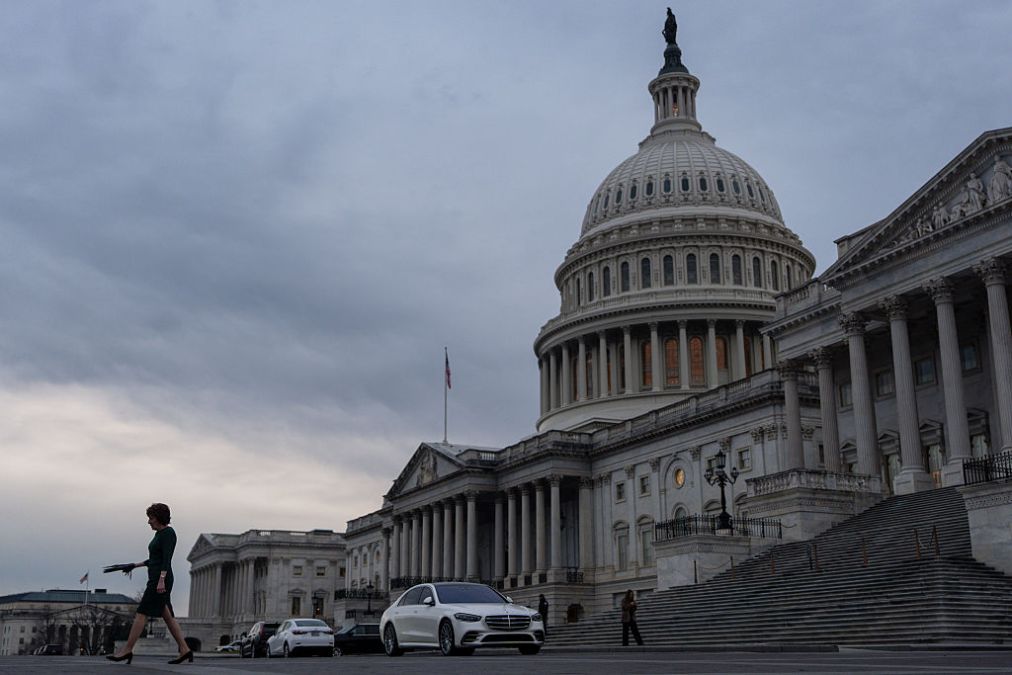
Congress concluded its legislative session for the year without securing a health care deal, resulting in the expiration of subsidies under the Affordable Care Act (ACA) on December 31. These subsidies have been crucial in reducing insurance costs for approximately 22 million Americans. As the deadline approaches, families are preparing for significant increases in their monthly payments, with costs expected to double or even triple for many ACA marketplace enrollees.
The Congressional Budget Office (CBO) estimates that the lapse in subsidies could leave an additional 4 million Americans without health insurance. Analysts warn that the repercussions of this decision could extend beyond immediate coverage gaps, affecting health care access for years to come. The enhanced subsidies were introduced during the COVID-19 pandemic and were extended by Democrats in 2022, leading to increased enrollment, particularly in Republican-led Southern states.
As Congress debated spending measures earlier this fall, Democrats emphasized extending the subsidies as a critical priority. However, a faction of Senate Democrats ultimately opted to reopen the government without including a vote on the extension. Now, lawmakers have departed Washington without addressing the looming expiration of the subsidies. Four House Republicans broke ranks to support a Democrat-led discharge petition aimed at forcing a vote on a three-year extension.
Despite this effort, Speaker Mike Johnson did not bring the issue to the floor before the holiday recess. The House will reconvene on the week of January 5, 2024, and Johnson will be required to address the matter then. Although the House may pass the bill, Senate Republicans are expected to oppose it, similar to their rejection of a previous Democratic proposal.
Some lawmakers remain optimistic about finding common ground. Representative Mike Lawler of New York expressed confidence that passing the bill in the House could encourage the Senate to pursue a bipartisan compromise. Lawler stated, “I do believe if the bill comes to the floor, not only will it pass, but it’ll give the Senate the ability to come back with a bipartisan compromise.”
Senator Susan Collins of Maine acknowledged the potential for momentum if the House bill passes but refrained from explicitly endorsing it. Collins mentioned, “What we’re trying to do is to put together a bipartisan bill that would have reforms plus a two-year extension.”
On the other side of the aisle, House Minority Leader Hakeem Jeffries dismissed concerns from Senate Majority Leader John Thune, who claimed a clean three-year extension would face challenges in the Senate. Jeffries asserted that a bipartisan majority would support the extension, emphasizing the importance of keeping health care affordable for millions of Americans.
In contrast, Senator Rand Paul of Kentucky reiterated his opposition to extending the subsidies, advocating instead for an alternative approach centered on expanding Association Health Plans. Paul criticized the ACA, stating, “Obamacare has been a failure. Every time we give more subsidies, the premiums go higher.” His perspective reflects a broader Republican sentiment against the current health care framework.
Another House Republican proposal, which passed earlier this week, is unlikely to gain traction in the Senate. Senator Thom Tillis of North Carolina remarked that the current voting landscape may be less favorable than it was previously.
As the deadline for open enrollment in the ACA marketplace approaches on January 15, 2024, millions are left to navigate the impending premium increases. Experts suggest that individuals explore options to maintain more affordable coverage as they prepare for the changes.
Both political parties have exchanged blame regarding rising health care costs. Former President Donald Trump recently attributed the increased expenses to Democrats, stating, “It’s the Unaffordable Care Act. The Democrats are responsible.” Conversely, congressional Democrats have criticized Republicans for their inaction as the subsidy expiration date nears. Senator Elizabeth Warren of Massachusetts emphasized the need for Republican cooperation to lower health care costs.
Additionally, Congress faces another deadline on January 30, 2024, when the short-term spending bill passed in November will expire. If lawmakers fail to reach an agreement by that date, the government could shut down once again. Trump warned supporters at a recent rally that Democrats would be responsible for future government closures.
Senate Minority Leader Chuck Schumer has stated that Democrats will not link the spending bill to the renewal of subsidies, indicating a desire to separate the two issues. Schumer noted that once the ACA subsidies expire, Democrats will continue to prioritize health care as a key issue leading into the next electoral cycle. “We’re trying to work with the Republicans to get it done,” he said, acknowledging the urgent need for a resolution.
As January approaches, the stakes remain high for millions of Americans who depend on affordable health care options. Lawmakers must navigate a complex landscape as they strive to address both health care and funding challenges in the new year.