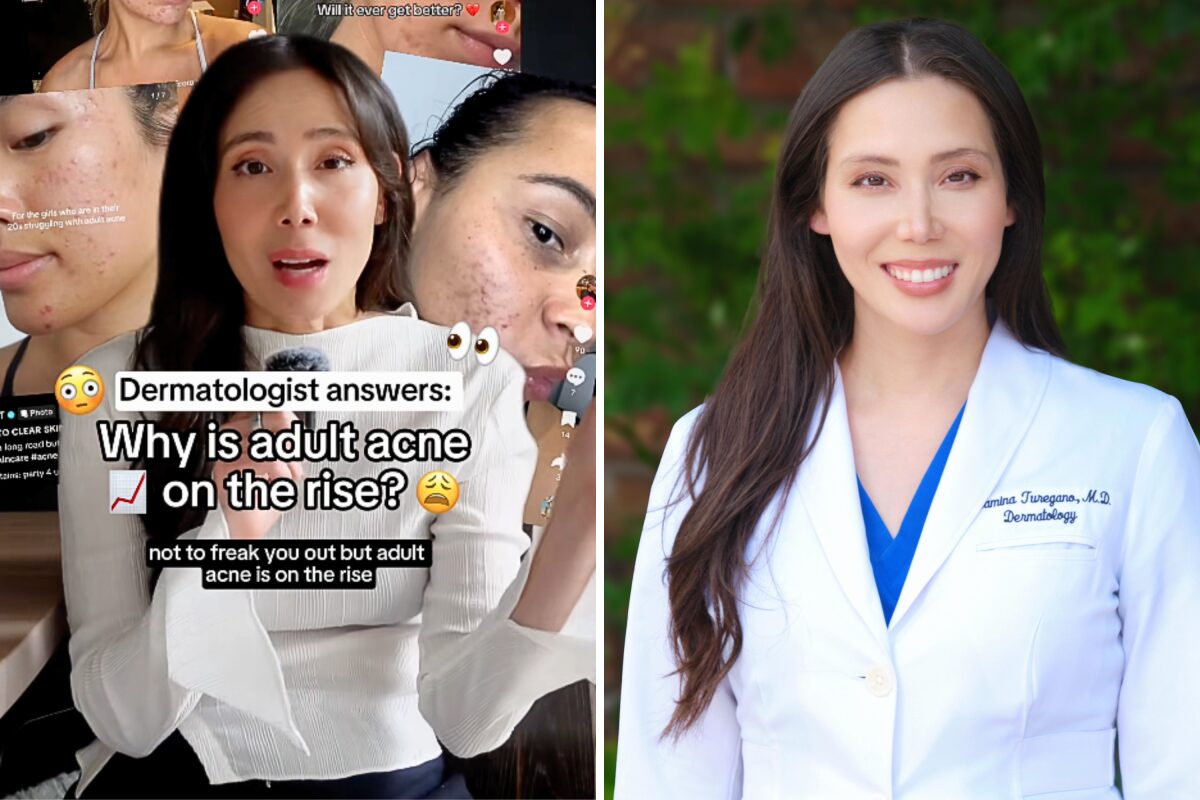
As adult acne rates rise, particularly among women, dermatologists are raising alarms about underlying health issues and environmental factors contributing to this trend. According to Dr. Mamina Turegano, a triple board-certified dermatologist, systemic changes in health and hormones may be at play. Her TikTok video, which has garnered over 122,000 views, highlights the alarming statistics: “It’s been on the rise for the last 20+ years. Adult acne is different from teenage acne, and it’s so common. Fifty percent of women, especially in their 20s, have experienced adult acne, and 35 percent of people overall face this condition.”
The American Academy of Dermatology estimates that adult acne affects up to 15 percent of women, with its prevalence increasing. Clinicians report a significant uptick in patients experiencing new breakouts well into their 30s, 40s, and beyond, challenging the common perception that acne is solely a teenage issue. Dermatologists attribute many adult cases to hormonal fluctuations, chronic stress, sleep deprivation, and dietary changes, including the rise of ultra-processed foods.
Dr. Shamsa Kanwal, a board-certified dermatologist with over a decade of clinical experience, underscores that adult acne is particularly prevalent among women aged 20 to 40. She notes that the condition is often exacerbated by hormonal shifts, certain medications, and the use of heavy cosmetics. “The main causes can be hormonal shifts, chronic stress, certain medications, occlusive makeup and sunscreens, and diet patterns that spike insulin,” Kanwal explained.
Adult acne often manifests differently than teenage acne, typically clustering around the lower face, chin, and jawline, and is often more inflammatory. Dr. Turegano emphasizes that while treatment methods for both types of acne overlap, additional treatments may be necessary for adults. “If acne is painful, scarring, or not improving with over-the-counter products, that’s a good time to see a dermatologist to create a tailored plan,” she advised.
Dr. Turegano’s holistic approach to dermatology connects the rise of adult acne with broader systemic health issues affecting women. She points to environmental factors such as endocrine-disrupting chemicals found in plastics, pesticides, and personal care products, which may disrupt hormonal balance. In her TikTok video, she states, “Hormonal changes at different phases of women’s lives can play a huge role, but also factors like stress, sleep, poor nutrition, pollution, and endocrine-disrupting chemicals. We are seeing a rise in other hormonal diseases.”
The causes of adult acne are multifaceted, with everyday triggers like friction from helmets or tight masks contributing to breakouts. Kanwal suggests a combination of treatments, including a retinoid at night and benzoyl peroxide or salicylic acid on breakout-prone areas. Topical antibiotics or azelaic acid may also be beneficial for addressing redness and pigmentation.
While dermatology has traditionally focused on visible symptoms, Dr. Turegano advocates for a more comprehensive approach that considers root causes. “Those treatments are often limited to addressing symptoms. Looking at internal, lifestyle, and environmental factors can help address the root causes as well,” she stated.
In her practice, Dr. Turegano encourages starting with a simple skincare routine: “A gentle cleanser, a non-comedogenic moisturizer, and sunscreen every morning. From there, ingredients like retinoids, benzoyl peroxide, salicylic acid, and azelaic acid can make a significant difference.” She believes that skin health should be viewed as a reflection of overall health and urges individuals to consider how modern environmental factors might be impacting both.
As adult acne continues to rise, the conversation around its causes and treatments is evolving. Dermatologists like Turegano and Kanwal are at the forefront of this dialogue, emphasizing the importance of understanding the complex interplay between hormones, environment, and lifestyle in managing this widespread condition.