The 1980s introduced a variety of cars that have not aged well, leaving many enthusiasts wondering how such designs made it to the market. This article explores five of the most notoriously unattractive vehicles from that decade, highlighting their unique features and the unfortunate experiences of their owners.
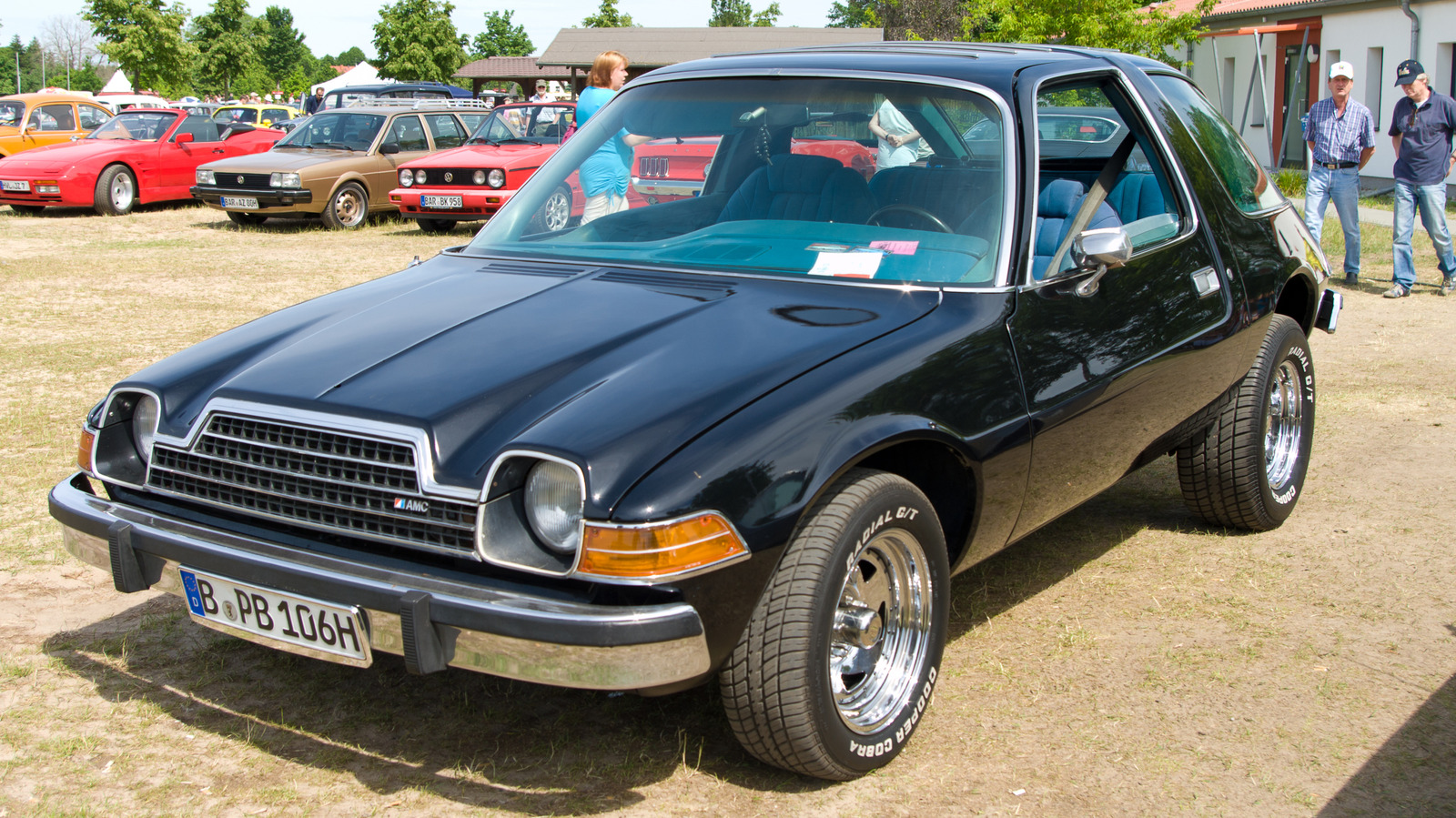
AMC Pacer: The Fishbowl Car
Among the most peculiar designs of the era is the 1980 AMC Pacer, often referred to as “the fishbowl.” Produced from 1975 until 1980, this vehicle was marketed as a “wide small car.” Motor Trend described the Pacer’s expansive glass area as creating the sensation of “a goldfish being boiled in its own bowl,” rather than enhancing visibility. Originally intended to feature a rotary engine, the Pacer ended up with an inline-six engine due to fuel economy and emissions challenges. Sales peaked in 1976 at 117,244 units but dwindled to about 2,000 by 1980, reflecting a sharp decline in consumer interest.
The Unfortunate Transformation of the MGB
The 1980 MGB marked the end of an era for the beloved British sports car. Originally celebrated for its elegant design, the MGB suffered significant aesthetic changes in 1974 due to new U.S. regulations mandating 5 mph bumpers. The once-charming chrome bumpers were replaced with bulky black rubber, transforming the car’s appearance into something less appealing. Critics of the time noted that the ride height increase to comply with regulations compromised handling, further diminishing its allure. The MGB was discontinued in the U.S. in 1980, with sales ultimately reflecting its decline; it was likened to “a septuagenarian running a decathlon” by Car and Driver for its poor performance.
Lincoln Versailles: A Missed Opportunity
Ford’s attempt to rival Cadillac’s success with the Lincoln Versailles resulted in one of the decade’s most criticized vehicles. Launched in 1977, the Versailles was essentially a modified version of the Ford Granada, featuring minimal new design elements. Despite its high price tag of $11,500, nearly four times that of its predecessor, the Versailles failed to impress buyers. Sales figures tell the story: starting at 15,434 units in its first year, they fell dramatically to just 4,784 by 1980. It never managed to compete effectively against the sleek Cadillac Seville.
Dodge Rampage: The Homely Pickup
The Dodge Rampage, introduced in 1982, aimed to blend the practicality of a pickup with the styling of a car. Described by Motor Trend as both “homely” and “dopey,” it was built on the Dodge Omni platform. With a short production run from 1982 to 1984, the Rampage featured a unique design that failed to capture the public’s imagination. It managed to sell 37,401 units in total, with its best year being 1982 when 17,636 were sold. Despite a facelift in 1984, the Rampage could not overcome its lukewarm reception.
The Ford EXP: An Inauspicious Legacy
Lastly, the Ford EXP represents a unique chapter in automotive history as the first two-seater Ford since the original Thunderbird. Launched as a personal luxury coupe, it was criticized for its unconventional design and lack of performance. Although Ford attempted to enhance its appeal with a turbocharged variant in 1984 that increased horsepower to 120, the EXP struggled to find its market. Production continued until 1988, but the vehicle was overshadowed by the more popular Escort, which it ultimately resembled due to design modifications.
The 1980s were marked by quirky designs and ambitious concepts that often fell short of consumer expectations. While some vehicles from this era have become cult classics, others serve as reminders of the challenges faced by automakers in a rapidly changing market.