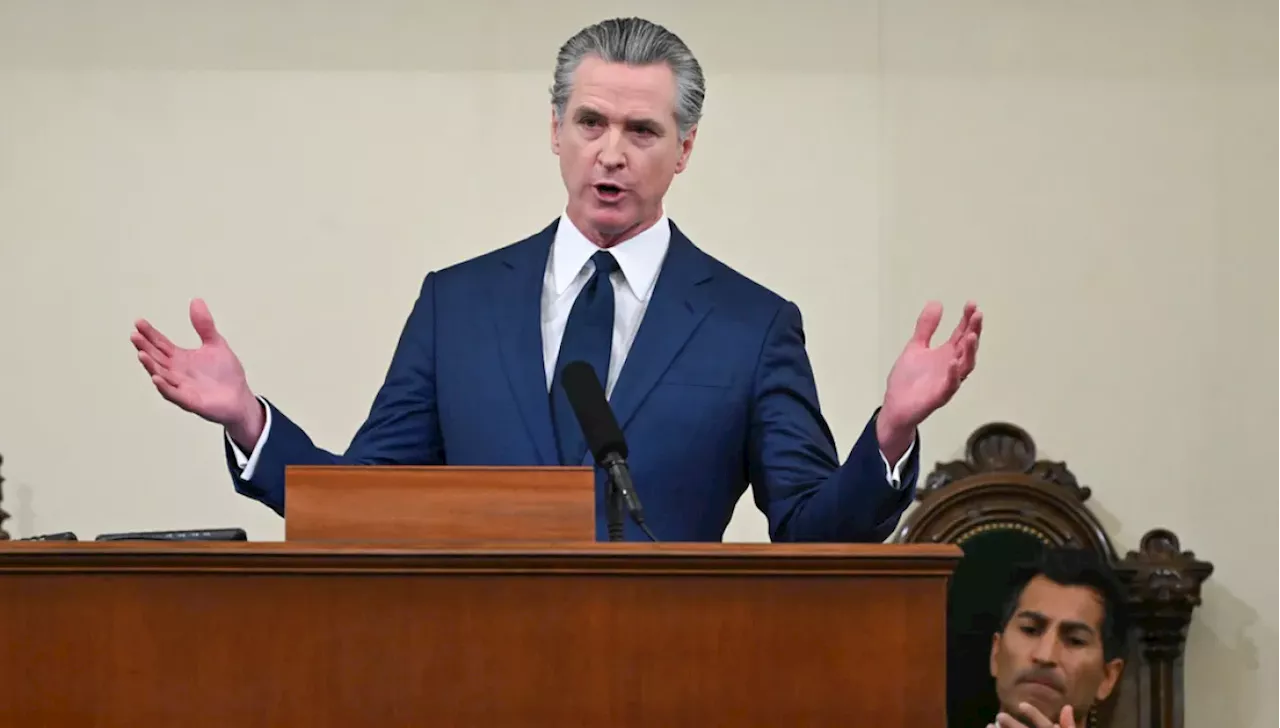
California Governor Gavin Newsom is facing scrutiny for his dual approach in the lead-up to the 2028 presidential election. While he seeks to present himself as a rational leader, his communications team frequently disseminates provocative content that contradicts this image, raising questions about his political integrity.
Newsom has been criticized for inflammatory rhetoric regarding U.S. Immigration and Customs Enforcement (ICE), particularly following an incident where a protester allegedly hindered ICE operations and injured an officer. He referred to the agency’s actions as “state-sponsored terrorism,” a statement that has alarmed many and drawn backlash from law enforcement advocates. Critics argue this kind of language not only jeopardizes the safety of ICE agents but also reflects a troubling trend of divisive political discourse.
In a recent episode of his podcast, Newsom hosted conservative activist Charlie Kirk, during which he expressed concerns about the fairness of allowing transgender girls to compete in girls’ sports. Despite this acknowledgment, his administration continues to advocate policies that support the inclusion of transgender athletes. This inconsistency highlights a broader pattern in Newsom’s messaging, where he adapts his stance based on the audience he is addressing.
The governor has also been vocal about parental rights in education, asserting that “parents know what’s best for their kids.” Yet, he simultaneously defends California laws that do not require schools to inform parents if their children are exploring gender identity, creating a perception of hypocrisy in his approach. Observers note that this duality in messaging serves to appease conflicting factions within the Democratic Party, which could be indicative of his ambitions to secure a broader base of support.
Newsom has often criticized former President Donald Trump’s divisive communication style. Nevertheless, his own team appears to employ similar tactics, sharing contentious statements via social media platforms. This raises concerns about the impact of such rhetoric on political discourse and the overall tone of American politics.
By navigating between the roles of a progressive advocate and a moderate leader, Newsom aims to maximize his appeal. However, this strategy has led to accusations of opportunism, suggesting that he is willing to adopt contrasting personas to gain political leverage.
As the 2028 election approaches, how Newsom reconciles these opposing narratives may significantly influence his campaign and public perception. Political analysts are watching closely to see if this two-faced strategy will resonate with voters or ultimately backfire, undermining his quest for higher office.