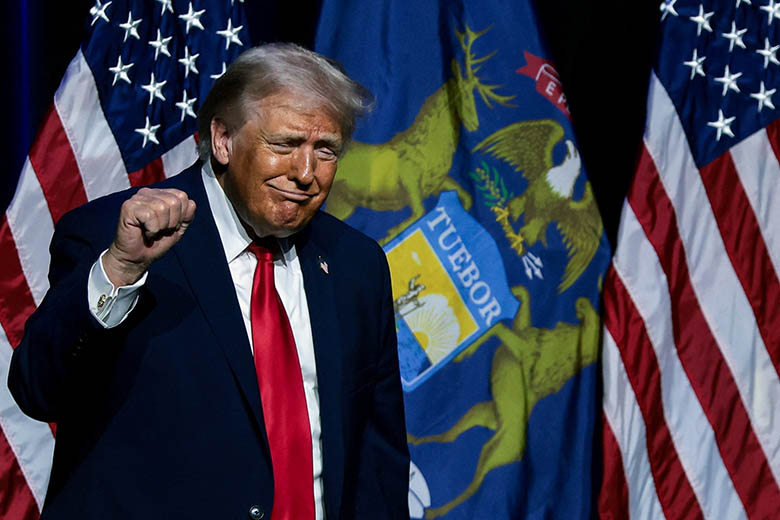
On January 13, 2024, President Donald Trump delivered remarks at the Detroit Economic Club, a visit that coincided with significant protests in the city. Demonstrators gathered to voice their opposition to the President’s policies and actions, marking a contentious backdrop to his address.
Arriving at the Detroit Metropolitan Wayne County Airport, Trump was met not only by supporters but also by a sizable group of protesters. The rally drew attention to various issues, including economic inequality and labor rights, as demonstrators chanted slogans and held signs opposing the President’s visit.
Trump’s Address and Economic Focus
During his speech, President Trump emphasized his administration’s efforts to bolster the U.S. economy, particularly in the automotive sector. He highlighted recent job growth and investment opportunities, stating, “We are committed to making America the best place to do business.” The President’s remarks aimed to reassure local business leaders about the administration’s pro-business stance.
At a Ford production center in Dearborn, Michigan, earlier that day, Trump reiterated his administration’s support for American manufacturing. He pointed to the revitalization of the automotive industry as a key achievement, claiming it has led to the creation of thousands of jobs. “We are bringing back jobs that were lost,” he asserted, seeking to connect with the local workforce that has been historically tied to the automotive industry.
Protests Reflecting Local Sentiments
The protests outside the Detroit Economic Club reflected a range of sentiments from various community groups, including labor unions and civil rights organizations. Many protesters expressed frustration over perceived economic disparities and called for greater accountability from the President regarding his policies on trade and labor rights.
“We are here today to stand up for the workers and families affected by decisions made in Washington,” said one protest leader. “We demand that our voices be heard.”
As Trump’s motorcade left the event, the atmosphere was charged, with demonstrators continuing to express their dissent. The juxtaposition of the President’s message of economic growth against the backdrop of protest highlighted the polarized political climate in the United States.
As he concluded his visit, Trump reaffirmed his commitment to American workers, but the protests served as a reminder of the challenges he faces in bridging the divide within the electorate. The events of January 13 underscored the complexities surrounding political discourse in a country deeply divided on key issues.
Overall, Trump’s visit to Detroit was marked by a blend of economic optimism and vocal opposition, illustrating the ongoing tensions that characterize contemporary American politics.