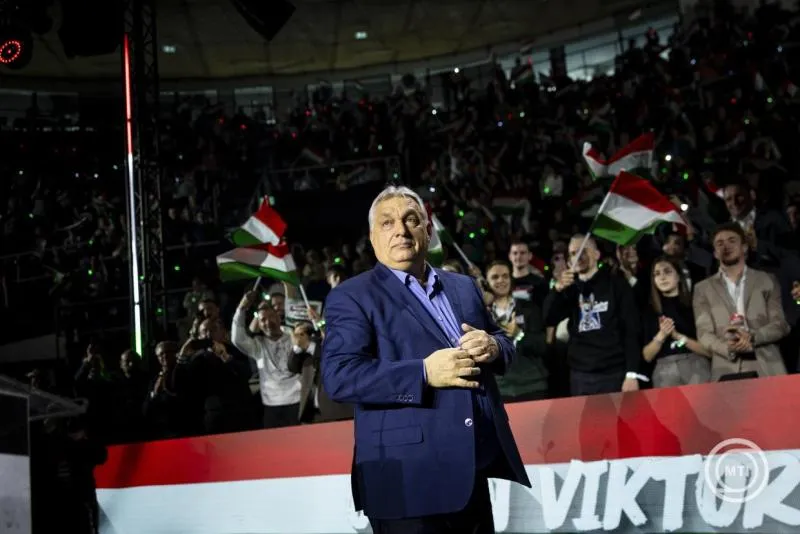
Prime Minister Viktor Orbán asserted that Ukraine’s ongoing conflict is crucial for its financial survival, stating that for Kyiv, the war is a “matter of life and death.” Speaking at a government forum in Békéscsaba, he emphasized that Ukraine stands to gain from the continuation of hostilities, as international aid flows only while fighting persists.
During his address, Orbán warned of “clouds towering above our heads,” indicating rising tensions in the region. He described Békéscsaba as a city with a historical legacy of conflict, making it a fitting venue for an “explicitly anti-war” gathering. Attendees raised concerns about energy supplies, specifically inquiring whether oil deliveries via the Druzhba pipeline could resume before the next election. Some even suggested reconsidering holiday plans in Croatia if energy cooperation fails.
Orbán did not provide a definitive timeline for when oil supplies might restart, following Croatia’s Janaf company rejecting Hungarian government concerns, affirming its capability to supply Hungary with non-Russian oil.
Ukraine’s Financial Interests in the Conflict
According to Orbán, the prolongation of the war serves Ukraine’s financial interests as it allows the country to extract more support from European nations. He criticized Ukrainian leaders for allegedly using the conflict to achieve broader political and financial objectives. The prime minister contended that Hungary’s stance is contrary to the wishes of Kyiv, suggesting that Ukraine would prefer a change in Hungary’s government.
He further accused Ukraine of employing what he termed an “energy weapon,” although he did not acknowledge that previous disruptions to pipeline deliveries were tied to Russian military actions.
Hungary’s Energy Strategy and Possible Countermeasures
Orbán indicated that Hungary has proactively managed risks related to energy supplies and is prepared to implement further countermeasures. He mentioned potential actions, such as halting diesel exports and possibly vetoing a European Union loan package for Ukraine, despite Hungary opting out of participation in that initiative.
He highlighted that a significant portion of Ukraine’s electricity imports comes from Hungary, cautioning that ceasing these supplies could result in “serious consequences.” Orbán did not rule out such actions, emphasizing Hungary’s readiness to protect its interests.
In a lighter moment, Orbán referenced past visits to a local sausage festival, before showcasing Hungary’s economic progress. Reflecting on earlier statements by Construction and Transport Minister János Lázár, he noted that the government has established some of the world’s most modern factories in the heart of Hungary. “With due modesty, I say we are capable of anything,” Orbán proclaimed, asserting the government’s ability to deliver results once it aligns with citizens on a common agenda.