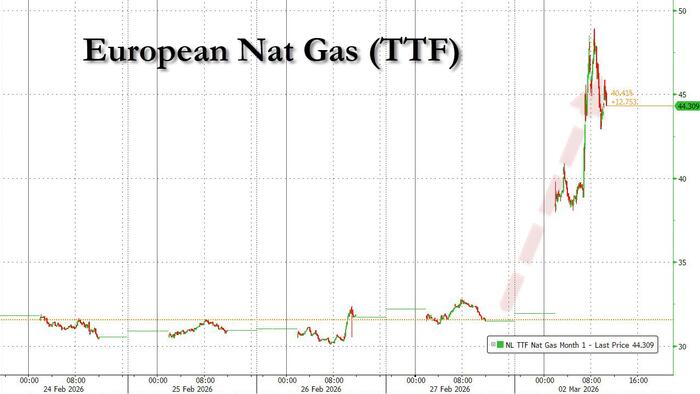
European gas prices experienced a dramatic surge of 50% following the shutdown of the world’s largest liquefied natural gas (LNG) export facility in Qatar. This closure, prompted by an Iranian drone attack, has raised serious concerns about energy security and availability in Europe. By the afternoon of March 2, 2026, Dutch front-month futures, a key benchmark for European gas, traded at €46.77 per megawatt-hour, marking the highest level since February 2025.
The situation escalated when QatarEnergy announced it had ceased LNG production at its Ras Laffan facility, which accounts for approximately 20% of global LNG supply. This decision came after two drones launched from Iran struck its facilities without causing casualties. The implications of this shutdown are significant, as it disrupts the flow of LNG through the Strait of Hormuz, a vital route for global energy shipments.
Market Reactions and Price Projections
According to a recent analysis by Goldman Sachs, European gas prices had previously embedded little to no risk premium associated with geopolitical tensions in the region. The firm highlighted that if LNG flows through the Strait of Hormuz are fully halted for one month, prices could potentially soar to around €74 per megawatt-hour, a staggering 130% increase from current levels. This prediction aligns with historical patterns observed during the 2022 European energy crisis, when similar price thresholds triggered substantial demand responses.
The firm noted that current European gas prices had been trading significantly below their projected range, primarily due to low carbon emission prices and the need to maintain gas storage levels above 80% for the upcoming winter. With inventories already below average, the urgency for LNG imports has never been greater.
Global Implications and Future Outlook
The ramifications of the recent events are not confined to Europe. The disruption threatens to increase competition for alternative energy supplies globally, potentially driving prices higher across various markets. Observers note that while the United States might see limited immediate impacts on its natural gas prices, the overall market dynamics will likely shift as countries scramble for available resources.
Analysts, including Simone Tagliapietra from Bruegel, emphasize that the “threat to security of supply is here and now,” suggesting that the length of the facility’s shutdown will largely dictate market stability. The situation remains fluid, with traders closely monitoring developments in the Middle East. If the conflict escalates and LNG supply remains constrained, European gas prices could rise even further, complicating energy planning for the upcoming winter season.
As Europe navigates this latest energy challenge, the focus will be on how quickly Qatar can restore production and whether alternative sources can fill the gap left by this significant disruption. With geopolitical tensions continuing to rise, the outlook for global energy markets remains uncertain.