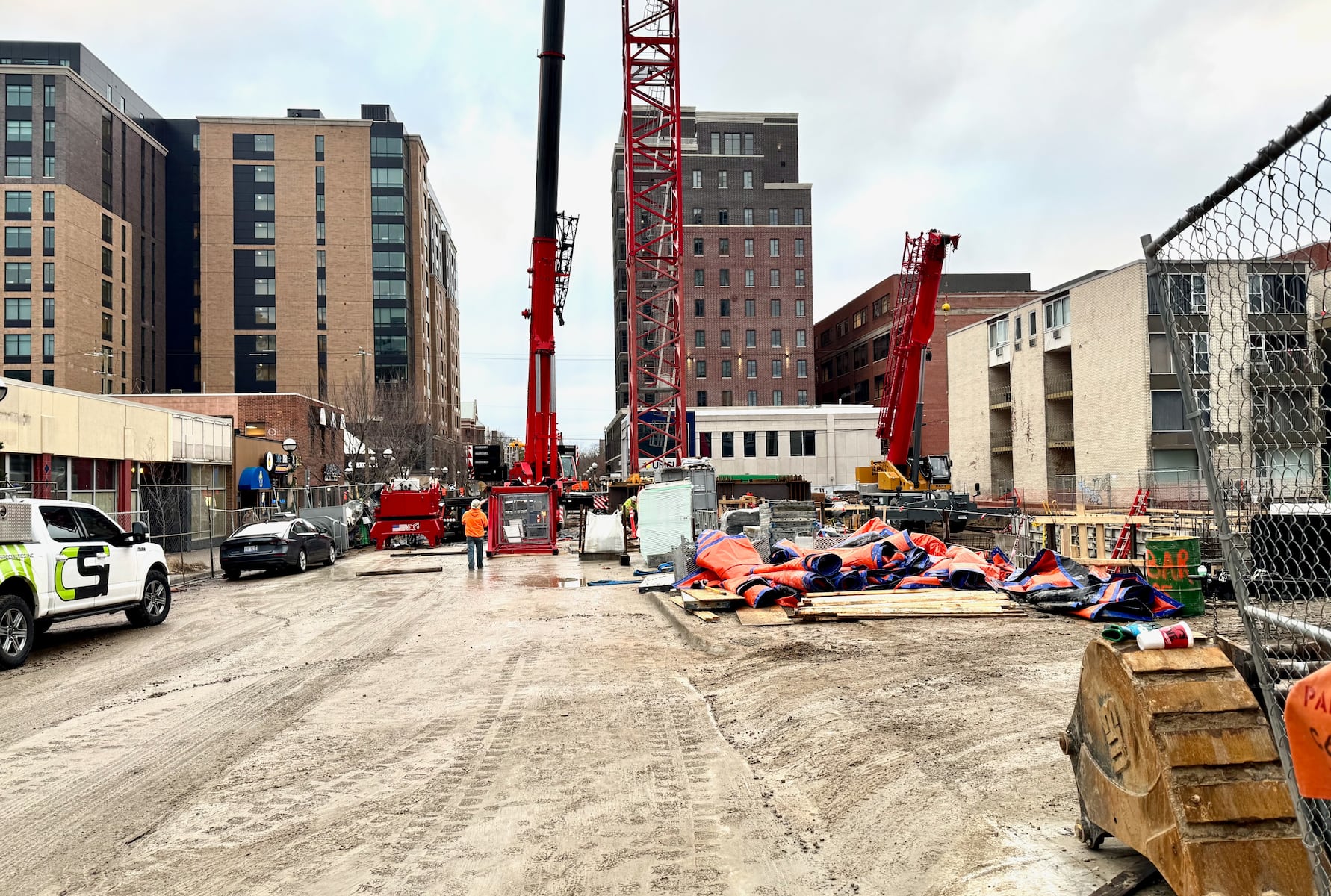
ANN ARBOR, MI — In a significant push towards addressing housing demands, Ann Arbor is preparing to welcome thousands of new housing units by 2026. City leaders are finalizing plans aimed at accelerating development, which includes more than 50 projects currently in various stages of planning and construction. This initiative reflects the city’s commitment to providing diverse housing options, particularly for University of Michigan students.
Among the most notable projects is the demolition of the old Pinball Pete’s and Galleria Mall at 1208 South University Ave. This site will soon give rise to a striking 18-story high-rise named The Metropolitan, featuring 259 apartments designed to accommodate nearly 1,000 residents. The development will also include three new retail spaces on the ground floor, with Pinball Pete’s relocating to Liberty Street.
Another significant proposal is The Dean, a 14-story high-rise planned along Madison Street, directly across from the University’s marching band practice field. This project aims to provide 220 apartments, which will include a mix of studios and one- to five-bedroom units, targeting students, young professionals, and visiting faculty.
The Ann Arbor Housing Commission is set to break ground on a long-anticipated 20-story high-rise at 350 S. Fifth Ave. in 2026. With an investment exceeding $200 million, this project aims to create 330 apartments for low- to moderate-income households, alongside commercial space on the ground floor.
Expanding Student Housing Options
Construction is progressing on several other high-rises, notably the 19-story Chapter building at the intersection of South U and Church Street. This structure will provide 183 apartments that cater specifically to students, along with new retail space. Nearby, a 16-story apartment building on William Street, adjacent to the downtown library, is also under construction and is expected to open in the fall of 2026.
Plans for a 15-story building next to Domino’s Pizza at State and Packard streets are underway, promising 368 apartments and 1,217 beds designed mainly for students. Similarly, a new 19-story development at 625 Church St. will offer 198 apartments, with plans for about 700 beds specifically for student residents.
In a different direction, a 10-story high-rise is proposed to replace the Live nightclub, the Last Word bar, and adjacent structures at First and Huron streets. This project is set to feature 285 apartments that will not primarily target students, marking a shift in the city’s housing strategy.
Upcoming Developments and Community Impact
The Ann Arbor District Library is also looking to enhance its offerings with a new mixed-use high-rise that will include a new library on the lower levels, along with housing and additional commercial space. Although construction is not expected to begin in 2026, this project will replace the current library on Fifth Avenue and extend to the nearby Library Lane parking lot.
Further developments off State Street and Eisenhower Parkway propose an investment of hundreds of millions of dollars, including three new public parking decks. This ambitious plan envisions approximately 1,000 new apartments, with around 200 designated as affordable housing, in addition to 30 condominiums, a 205-room hotel, and about 100,000 square feet of retail space.
In the luxury segment, a 15-unit condo building at 330 Detroit St. is nearing completion, while a conversion of the Market Place complex at 303 Detroit St. is underway to create 18 high-end condos. Other projects include the eco-friendly quadplex known as The Bridge, which aims for net-zero energy use and is priced between $1.4 million and $2.4 million.
As Ann Arbor undertakes these developments, city officials are also exploring solutions to address the growing homelessness crisis, including the possible introduction of temporary tiny homes. The city has proposed tax incentives to support the construction of affordable housing, including 26 single-family homes and accessory dwelling units.
With these developments, Ann Arbor is set to redefine its housing landscape, providing a wider range of options for its residents and students alike. As the city continues to evolve, these projects will play a crucial role in meeting the diverse needs of its community.