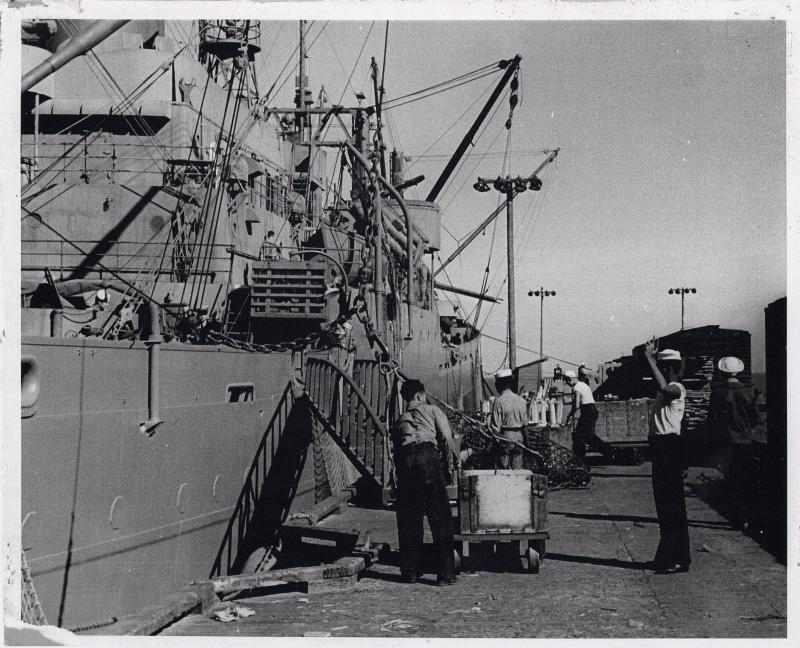
The recent controversy surrounding six members of Congress urging U.S. troops to defy what they termed “illegal orders” has drawn parallels to a significant historical event in Vallejo, California. This incident, known as the Port Chicago mutiny, unfolded in 1944 and involved a tragic munitions explosion that killed 320 people, including 202 African-American sailors. The ensuing judicial proceedings marked the largest mutiny trial in U.S. Navy history and ultimately led to pivotal reforms within the military.
On July 17, 1944, a catastrophic explosion at the Port Chicago naval base devastated the facility and surrounding areas, causing unprecedented loss of life. Following the disaster, a group of sailors, most of them Black, faced orders to return to work under hazardous conditions. The military’s response to the explosion included threats of execution for refusal to comply. When 258 sailors were ordered to load munitions, 50 of them stood firm, refusing to undertake what they deemed unsafe duties. This act of defiance resulted in charges of mutiny, and on October 24, 1944, a military court found the group guilty, sentencing them to 15 years in prison.
Despite appeals from prominent figures such as Thurgood Marshall and Eleanor Roosevelt, the convictions were upheld. It was not until January 1946 that the sentences were significantly reduced, leading to the release of most of the sailors. In 2024, the Navy officially exonerated the Port Chicago 50, along with 208 other sailors who had faced similar charges, acknowledging the systemic injustices they endured.
Historical Context and Consequences
The events surrounding the Port Chicago explosion highlighted the deep racial disparities within the military during World War II. At the time, the Navy operated under segregationist policies, limiting opportunities for Black sailors. In an effort to appease civil rights advocates, Secretary of the Navy Frank Knox announced in April 1942 that Black volunteers would receive better training, but these measures fell short of true equality. As racial tensions escalated, the Navy’s discriminatory practices led to unrest, culminating in the Port Chicago disaster.
The explosion itself was catastrophic, with a force equivalent to five kilotons of TNT. It destroyed two cargo ships, the Quinault Victory and the E.A. Bryan, and had a profound impact on nearby communities, including Vallejo. Seismographs recorded the tremors, which measured 3.4 on the Richter scale. Author Robert Allen noted that the sailors, traumatized and angered by their treatment, began discussing their refusal to return to work, recognizing the potential dangers they faced.
Following the mutiny trial, the Navy began to reassess its policies. Under the leadership of Navy Secretary James Forrestal, the Navy initiated steps toward desegregation, becoming the first branch of the U.S. military to eliminate racial barriers in February 1946. These reforms set a precedent that eventually influenced the broader desegregation of the U.S. armed forces, culminating in President Harry Truman issuing an executive order in July 1948 to ensure equal opportunities across all military branches.
Current Legal Implications
The recent actions of Congress members, including Democratic Sen. Mark Kelly and Democratic Sen. Elissa Slotkin, have sparked a new wave of legal scrutiny. The lawmakers appeared in a social media video urging military personnel to reject illegal orders, a stance that has led to an FBI investigation. Reports indicate that the Pentagon is reviewing the involvement of these politicians, marking an unusual intersection of military protocol and political expression.
The Associated Press described the inquiry as “an extraordinary escalation for federal law enforcement and military institutions that traditionally steer clear of partisan clashes.” The lawmakers’ comments were not specific but referenced past military orders from the Trump administration regarding the destruction of vessels associated with drug trafficking. Such discussions have raised concerns about the legal ramifications of military orders and the responsibilities of service members to navigate moral and ethical dilemmas.
The historical narrative of the Port Chicago mutiny serves as a poignant reminder of the ongoing struggles against injustice within the military. As legal debates unfold over the actions of contemporary lawmakers, the legacy of the Port Chicago 50 underscores the importance of accountability and reform in the face of systemic discrimination. Vallejo, rich in historical significance, continues to reflect on its past while confronting the challenges of the present.