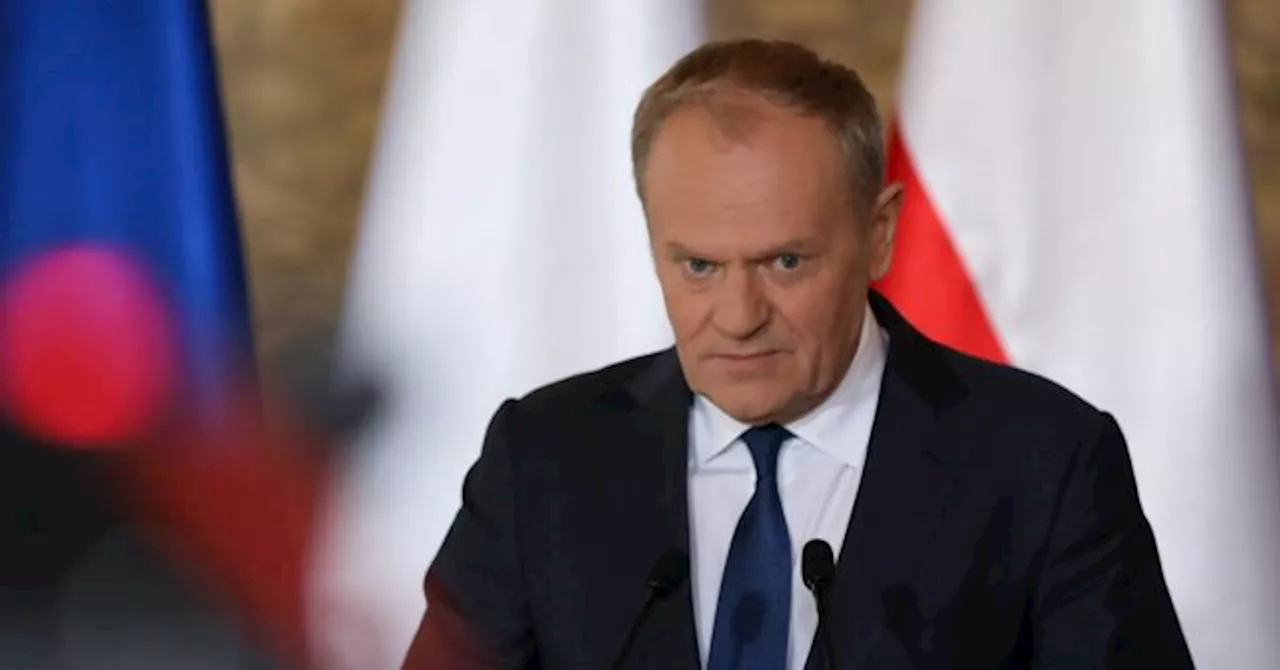
Polish Prime Minister Sounds Alarm on NATO’s Future Amid U.S. Troop Withdrawals
Polish Prime Minister Donald Tusk issued a stark warning that the NATO alliance faces possible “disintegration” following recent announcements of U.S. troop reductions in Europe. The Pentagon confirmed plans to relocate approximately 5,000 soldiers from bases in Germany over the next year as part of a broader strategy to shift U.S. military deployments.
President Donald Trump indicated that the troop drawdown could be significantly larger but did not disclose exact numbers beyond the current estimates of around 36,000 U.S. troops stationed in Germany. Trump has also floated withdrawing forces from allies like Italy and Spain, criticizing their responses to the conflict with Iran’s Islamist regime.
Tusk Doubts U.S. Commitment to NATO’s Core Defense Pact
While the administration has not announced plans to pull U.S. troops from Poland, where about 8,500 American soldiers are deployed, Tusk openly questioned the U.S.’s loyalty to its European allies this week. He expressed serious concern that the United States might not uphold Article 5 of the NATO treaty, which obligates member states to defend one another if attacked.
“The greatest threat to the transatlantic community are not its external enemies, but the ongoing disintegration of our alliance,” Tusk said. “We must all do what it takes to reverse this disastrous trend.”
Tusk’s warning comes amid diminishing trust toward Washington’s steadfastness, despite President Trump’s repeated assurances that the U.S. would stand by NATO allies in the event of conflict. Europe’s biggest strategic question, according to Tusk, is whether the United States will remain “as loyal as it is described in our treaties.”
Europe Pushes for Strategic Autonomy and Nuclear Sharing
Formerly the head of the European Council in Brussels, Tusk has been a leading voice in transforming the European Union’s defense posture. He has recently engaged with French President Emmanuel Macron on plans that could see France extend its nuclear protection umbrella across Europe, potentially stationing French nuclear weapons in Poland and Germany.
Macron, aiming to leave a lasting legacy before his term ends, is actively exploring enhanced military cooperation among key European powers. Germany has publicly committed to building the continent’s strongest army by 2039, targeting a force of around 460,000 combat-ready troops. However, Berlin faces ongoing struggles with recruitment and modernization efforts.
Why This Matters Now to U.S. and Kentucky Readers
The U.S. troop realignment signals a major shift in U.S. defense strategy amid global tensions, with direct implications for NATO’s long-term stability and U.S. leadership in Europe. For Kentucky and broader American audiences, the debate raises urgent questions about the future of American military commitments overseas and the security architecture that has shaped global peace since World War II.
The developments also create ripple effects for U.S. defense industries, military personnel, and international relations involving Kentucky’s numerous veterans and military families, many of whom have served within NATO frameworks.
Next Steps and What to Watch
Watch for updates on how NATO members will respond to the U.S. troop reductions and whether European nations accelerate efforts to establish stronger independent defense capabilities. Developments in France and Germany’s military strategies could reshape transatlantic security dynamics.
U.S. policymakers may soon face pressure to clarify troop deployment plans in Europe. The evolving alliance tensions come as geopolitical instability intensifies around Iran and Russia, complicating defense and diplomatic calculations.
For readers in Kentucky and across the United States, the emerging cracks within NATO underscore the fragile state of long-standing alliances at a time when global uncertainty demands robust, unyielding partnerships.