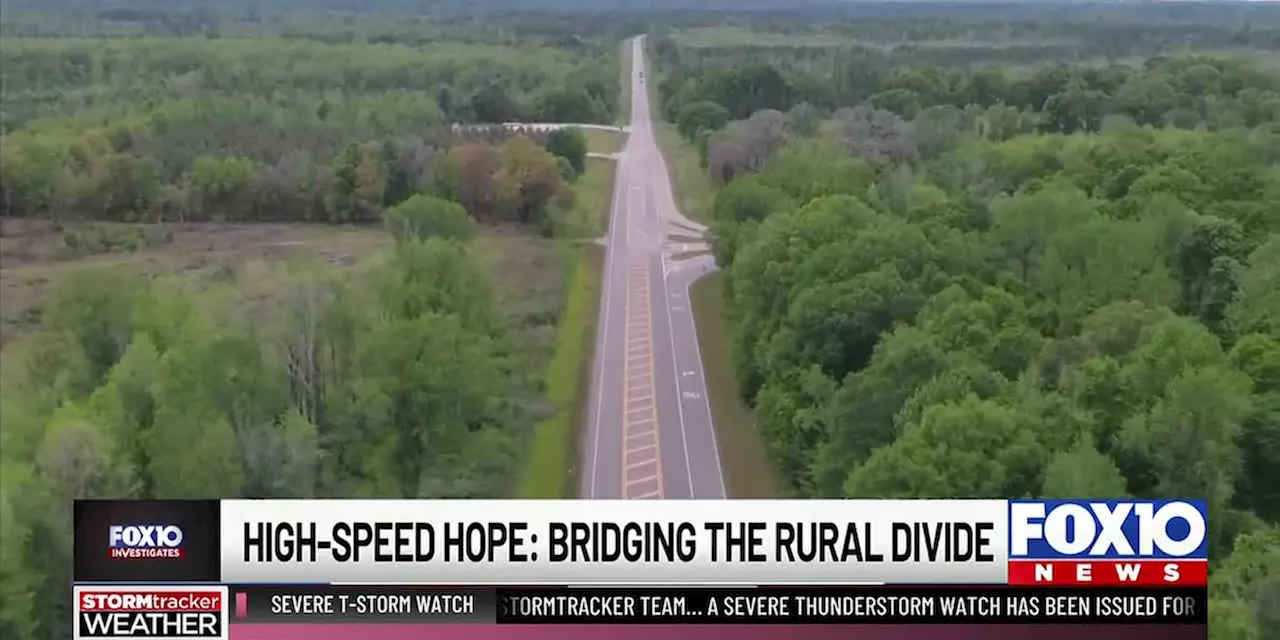
Rural Alabama Towns Face Growing Frustration Over Slow High-Speed Internet Rollout
Residents in Millry and Chatom, Alabama, remain disconnected as the long-awaited high-speed internet expansion painfully lags behind, leaving communities struggling with unreliable and slow connections that affect everything from daily communication to local business operations.
In Washington County, several small towns—including Millry, Yellow Bluff, Forkland, Peterman, and Boykin—continue to battle insufficient broadband service despite ongoing efforts to install fiber optic lines. The digital divide is not only frustrating residents but also holding back economic development in these remote areas.
Long Wait For Fiber Internet Frustrates Communities
Lonnie Guy, a longtime Millry native and local business owner, recently saw a dramatic improvement when fiber optic cable reached his home roughly 11 miles west of town. The enhanced internet speed immediately transformed his ability to serve customers at Nana and Papa’s Ice Cream and Sandwich Shop, located just off Highway 17. “The difference was immediate — faster load times, better speeds, and more reliable internet for home and business,” Guy explained.
However, Guy’s experience is far from the norm. Chester Caulder, general manager of Millry Communications, a local internet provider, revealed the challenges of expanding fiber in such low-density rural areas. “We average about 4.7 households per mile of fiber constructed,” Caulder said, highlighting the high cost and slow pace of expansion where customers are scattered over large distances. “If I can get fiber to you, I can deliver the full complement of internet speed that you are purchasing from the telephone company,” he added.
Chatom Residents Left Offline Amid Fiber Installation Delays
Just south in Chatom, frustration runs deeper as residents report the internet remains painfully slow and unreliable despite fiber installation projects starting years ago. Landis Waite, a lifelong Chatom resident, described the broadband situation as “bad” and unpredictable, often requiring him to walk to his grandmother’s house just to make phone calls, since cellular signal and Wi-Fi support at his home are spotty at best.
“When my internet’s down, I ain’t getting no notifications from nobody. No texts, no calls. I gotta go out to the yard,” Waite said, capturing the isolation felt by many in the community.
Waite and other residents have aired their concerns online, with posts questioning ongoing internet outages even affecting ATM usage. The inability to access basic communication tools threatens social connections and local economic activities, making reliable broadband an urgent necessity rather than a luxury.
Why High-Speed Connections Matter Now More Than Ever
The pandemic and a shift toward remote work, telehealth, and online education have spotlighted rural broadband gaps nationwide, including in Washington County’s small towns. For communities like Millry—with just over 500 residents—and Chatom, consistent high-speed internet is critical not only for business sales and personal calls but also for safety and civic participation.
Millry once thrived as a key logging route along historic railroads but now faces modern isolation without dependable connectivity. As local provider Millry Communications presses forward with fiber expansion, community members watch anxiously, hoping that technology will finally close the digital gap in 2026.
The Road Ahead: Broadband Expansion Must Accelerate
While isolated success stories like Guy’s home fiber installation spark hope, local providers warn that the rural topology and sparse population density will continue to slow universal access without significant infrastructure investment. In the meantime, families like Waite’s remain caught in a digital waiting game, yearning for the day when their internet connections no longer hold them back.
For Kentucky readers and across the US, this ongoing battle in rural Alabama is a stark reminder of the national challenge to extend critical broadband infrastructure beyond urban centers—which remains essential for economic growth, education, and daily living in every American community. The story of Millry and Chatom underscores the urgent need for accelerated broadband investment in America’s countryside.