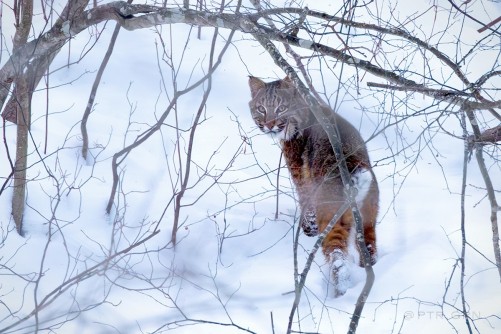
The bobcat population in southern New England is experiencing a resurgence, with over 1,000 sightings reported since the launch of the Rhode Island Bobcat Project in September 2023. This initiative, spearheaded by researchers from the University of Rhode Island (URI) in collaboration with local partners such as the Rhode Island Department of Environmental Management and the Wildlife Clinic of Rhode Island, aims to monitor and understand the behavior of these once-eradicated feline residents.
Bobcats have been increasingly sighted across southern Rhode Island, signaling a positive trend for this species. According to URI Assistant Professor of Quantitative Ecology Kathleen Carroll, the data collected will significantly enhance the understanding of the bobcat’s movements, habitat preferences, and population dynamics. Alongside Ph.D. student Christopher Hickling, Carroll emphasizes the importance of public engagement in wildlife conservation.
The project captures valuable information through public reports, camera traps, and GPS radiocollars, which will aid in identifying where bobcats rest, hunt, and travel. Carroll noted that bobcats in southern New England exhibit a remarkable tolerance of human presence, a behavior not typically observed in more rural regions. “Bobcats in this area appear very tolerant of people compared to bobcats in other regions,” she explained. “This makes sense since southern New England is so densely populated.”
Monitoring Bobcat Behavior and Public Engagement
The project has also sparked considerable public interest. “We are happy people are excited about seeing bobcats and interested in their importance for biodiversity,” Carroll added. The enthusiasm surrounding the bobcats is not only beneficial for animal populations but also for fostering a deeper connection between humans and wildlife.
Carroll and Hickling provided updates on various aspects of bobcat behavior since the survey commenced. Reports indicate that most sightings have occurred in southern Rhode Island, although the animals have been spotted throughout the state. As spring approaches, residents should remain vigilant as female bobcats typically give birth to litters of two to four kittens during this season. These mothers establish dens away from human activity, often in hard-to-reach locations.
Curiously, the bobcats that the team collars and releases are named after native birds, such as Osprey and Falcon. This naming convention is not only memorable but also serves an organizational purpose. Carroll explained, “Each cat receives a formal name, like B03M or B11F, but it’s also fun to give them a more memorable name. Since URI’s Scott McWilliams, who studies birds, has been a mentor for our work, birds made good sense!”
Local Fascination with Bobcats
The increased sightings and public engagement highlight the unique charm of bobcats. These animals are often compared to house cats, making them relatable to many. “People are drawn to bobcats because they are highly charismatic and resemble house cats,” Carroll said. “With bobcats, you have a charismatic species that captures attention, plus something people have a decent chance to see in the wild.”
Bobcats possess large home ranges and are known to roam extensively. Younger males tend to disperse more than their female counterparts, but often, the same individuals may be seen multiple times by individuals living or working within their territory. This phenomenon contributes to the growing fascination with these elusive cats.
The Rhode Island Bobcat Project continues to shed light on the return of bobcats to southern New England, offering insights into their behavior and enhancing public understanding of wildlife conservation. For those interested in learning more about the project or reporting sightings, further information can be found at connectivityandconservation.com/bobcat-project, or inquiries can be directed to Carroll at [email protected] or Hickling at [email protected].