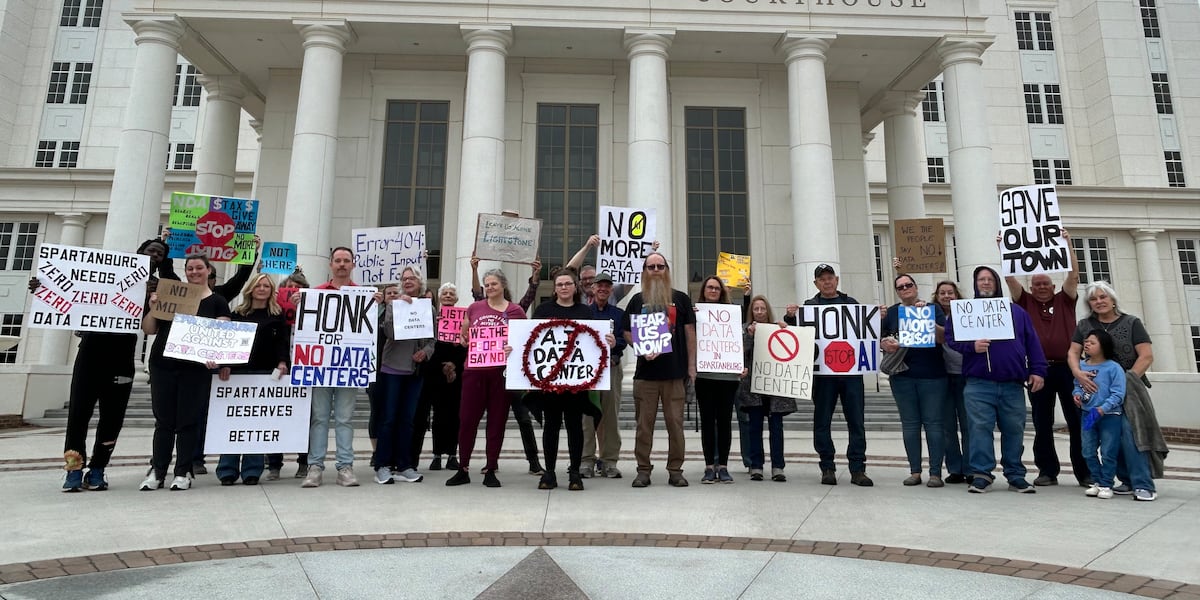
Residents of Spartanburg, South Carolina, gathered on March 11, 2026, to voice their opposition to proposed data center developments in the area. The protest, which attracted more than two dozen individuals, highlighted concerns regarding energy consumption, water usage, and potential health impacts associated with these facilities.
Protesters expressed their dissatisfaction with the lack of transparency surrounding the developments, indicating that many local residents are unaware of the planned projects near their neighborhoods. Eric Allison, a representative of the Facebook group “No Data Centers in Spartanburg,” articulated his multifaceted concerns, stating, “There are concerns around energy usage and our energy rates that may go up for residents. We’re concerned about water, the usage.”
Residents fear that the influx of large data centers could strain local infrastructure and utilities, potentially leading to power outages. “How does it affect our energy grid? Are we going to have blackouts or brownouts?” Allison questioned. Additionally, he raised alarms about the environmental impact, particularly regarding water resources and the emissions from backup generators. “We have health concerns over fossil fuel burning of natural gas generators and diesel generators,” he added.
The recent decision by the Spartanburg County Council not to provide tax incentives for the Spero Group’s proposed data center was met with approval from the protesters. Despite this victory, Allison pointed out that attention must now shift to two other planned data center projects in the area. “We have two more data centers in Spartanburg,” he noted, emphasizing ongoing community concern.
One of the identified projects is located on Pine Street, where Northmark Strategies received county council approval in 2025 and has begun construction. The company aims to be operational by the end of this year. A second project is proposed for 300 Jones Road, with a timeline that traces back to a cryptocurrency operation in 2022, which later transitioned to new developers.
Emory Caraviello, another organizer, represents “Powergrid Spartanburg,” a local Facebook group aiming to raise awareness and unite community efforts against these developments. She expressed that the grassroots organizing around Project Sparrow has helped build momentum, but noted that the remaining projects have advanced with inadequate public visibility. “Many people who live very close don’t even really understand what’s going on or what’s being built there,” she said.
Caraviello’s primary concerns relate to the potential burden on the electric grid and uncertainties regarding the water systems required for these data centers. “I think there’s going to be some major costs to electric companies to provide the electricity that these centers need,” she remarked.
The notion that data centers could bring economic benefits has been challenged by some community members. Attendee Bradley Broughton argued that developments driven by artificial intelligence could be detrimental to local populations. “At its core, AI is anti-human,” he stated, questioning the validity of job creation promises often associated with such projects. “Where’s the data on that? Where’s the proof?”
Broughton also criticized the idea of providing public incentives to an industry that he believes offers limited long-term employment opportunities. “Why would we give tax breaks to an industry that is literally our replacement?” he asked.
As Spartanburg continues to navigate the implications of these proposed developments, community members remain vigilant, advocating for transparency and accountability in local planning processes. The ongoing dialogue reflects broader concerns about the balance between technological advancement and the well-being of local residents.