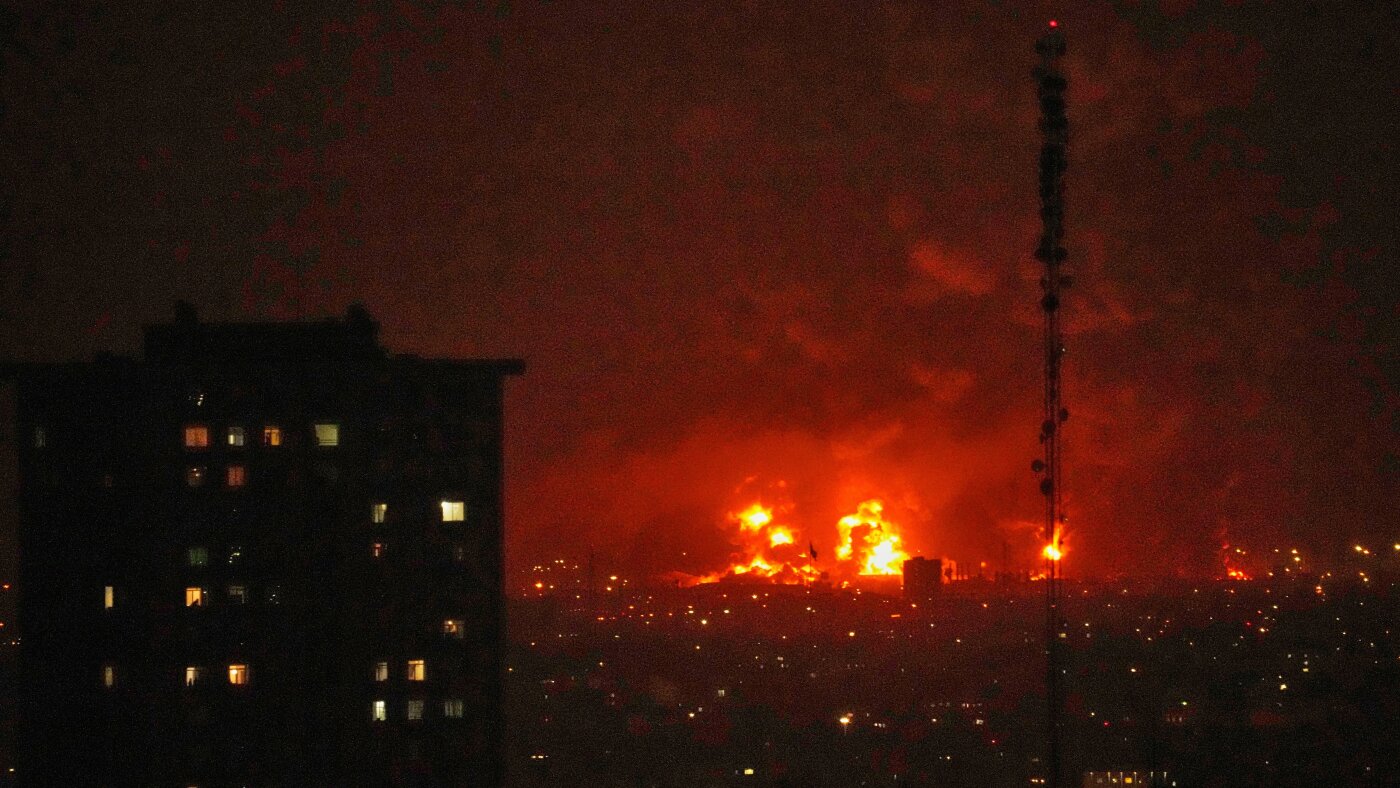
Early on March 10, 2024, Israel launched a significant offensive against Iran, targeting oil facilities for the first time in the ongoing conflict. Eyewitness footage revealed large flames erupting from the installations, marking a notable escalation in military operations. In retaliation, Iran attacked a desalination plant in Bahrain, demonstrating its willingness to respond to threats against its infrastructure.
Israeli Defense Forces (IDF) confirmed that the targeted oil storage facility in Tehran had been used to support military operations. Reports suggest that at least four tanker drivers were killed in the strike. In a related incident, Iran’s Foreign Minister announced that a U.S. airstrike had also damaged an Iranian desalination plant, marking the first time such infrastructure was struck.
Iran’s Leadership Transition and Regional Tensions
The situation has been further complicated by developments surrounding Iran’s political leadership. Clerics from Iran’s Assembly of Experts, responsible for selecting a successor to the late Ayatollah Ali Khamenei, reportedly reached a consensus on a new leader, although the identity remains undisclosed. The IDF issued a warning in Farsi, asserting its commitment to pursue any successor and those involved in the selection process.
Israeli Prime Minister Benjamin Netanyahu reinforced this stance during a press conference, stating his goal to “destabilize the regime and enable change.” The Israeli military has indicated it will target participants in the leadership selection, highlighting the interconnected nature of military action and political maneuvering in the region.
Escalating Attacks in Lebanon and Iraq
As Israel intensifies its military campaign, attacks on Hezbollah positions in Lebanon continue. A recent strike on a hotel in central Beirut resulted in at least four fatalities, marking a significant shift in Israel’s operational strategy since the war began. The Israeli military has claimed responsibility for the deaths of five Iranian commanders affiliated with the Iranian Revolutionary Guard in Lebanon.
The Lebanese government reports that nearly 300 people have died, with tens of thousands displaced due to ongoing violence. Hotels, such as the Ramada Plaza, have become refuge points for families fleeing the conflict in southern Lebanon.
In addition to the violence in Lebanon, Iran and its paramilitary proxies have intensified attacks in Iraq’s Kurdistan region. A missile strike on a U.S. base near Erbil’s international airport resulted in the death of a Kurdish security member. Rockets also targeted the U.S. Embassy in Baghdad, with one rocket reportedly striking the embassy’s helicopter landing pad. The Iraqi government has vowed to apprehend militia members responsible for these assaults.
The escalating violence in the region has drawn international attention. U.S. President Donald Trump criticized British Prime Minister Keir Starmer over the UK’s military readiness in response to the conflict. In contrast, Chinese Foreign Minister Wang Yi called for a ceasefire, emphasizing that armed conflict only exacerbates hatred and instability. China has offered to mediate the situation, although it maintains closer ties with Iran than with the U.S. or Israel.
As the conflict enters its ninth day, the implications of these military actions continue to unfold, affecting regional stability and international relations. The situation remains fluid, with potential for further escalation as both sides continue to assert their military capabilities.