Washington State University (WSU) is taking significant steps to enhance its Nuclear Science Center’s capacity for research and workforce training. This initiative comes approximately 65 years after the reactor became operational, focusing on meeting the growing demand for skilled professionals in the nuclear sector.
The Nuclear Science Center has been instrumental in providing radioisotopes for numerous research facilities and national laboratories. It has also collaborated with the Idaho National Laboratory as the exclusive supplier of radioisotopes for first responder field training. As defined by the International Atomic Energy Agency, radioisotopes are unstable elements that emit radiation while transforming into more stable forms.
Training the Next Generation of Nuclear Professionals
A crucial part of WSU’s mission is to educate students in nuclear science. Many of the students trained at the center are undergraduates, aiming to earn their reactor operator licenses. Corey Hines, the center’s director, noted the importance of early interest in the field. “What we’re hearing from the industry is we need people, way earlier on, to get interested in this,” he said, emphasizing the need for health physicists, radiochemists, welders, and technicians.
In 2022, eight students successfully earned their reactor operator licenses, and Hines anticipates that more than ten will achieve this milestone this year. Industry projections indicate that approximately 300,000 people will be required to fulfill nuclear workforce needs by 2050. In response, WSU plans to broaden its educational offerings to include various degrees, certificates, and micro-credentials.
Kim Christen, WSU’s vice president for research, stated that these initiatives will cater to students pursuing four-year degrees while also expanding training for current professionals. This may involve hybrid learning options that reach students across the state.
New Facilities to Enhance Research Opportunities
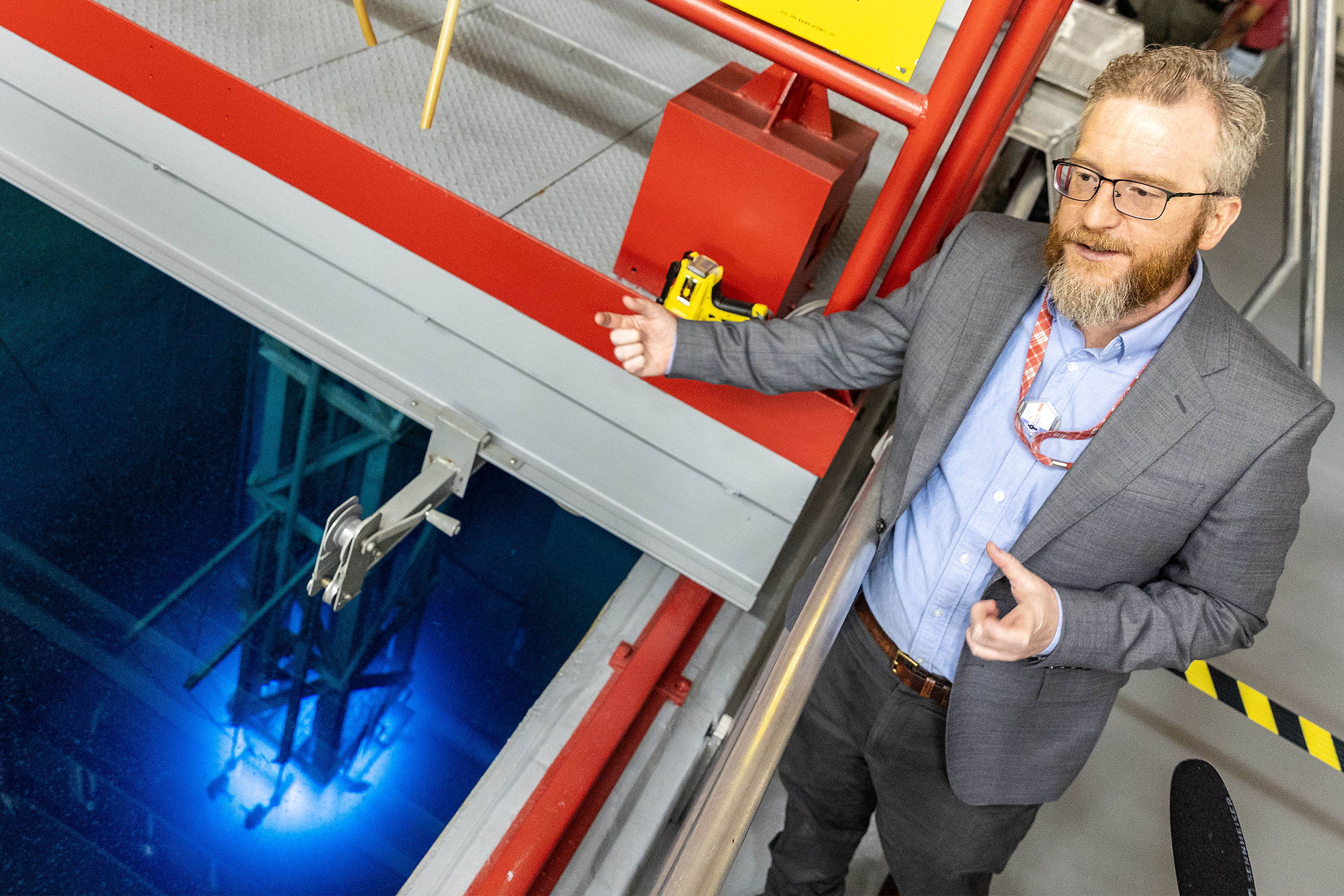
WSU is also developing a hot cell facility, currently under construction, which will significantly boost the center’s research and training capabilities. Hot cells are specialized containment chambers designed to handle highly radioactive materials safely. Once operational, they will enable the production of medical isotopes, essential for diagnosing and treating cardiovascular diseases and cancer.
Currently, WSU sends irradiated materials from its reactor to external facilities for research. With the new hot cells, researchers will be able to conduct their work in-house, streamlining the process. “(Irradiated material) can come out of the (reactor) pool, it can go into the hot cell, the researcher can do their research,” Christen explained. This efficiency could benefit various clients, including the US government and energy companies.
Construction of the first phase of this project began in the summer of 2022, supported by a $7.6 million congressionally directed earmark. Christen remarked that while the facility may appear to be a simple concrete structure, it will serve a far greater purpose. The second phase will involve the installation of the hot cells, which will be assembled like “Lego sets” within the building.
Funding for the second phase remains to be secured, with Christen mentioning potential public-private partnerships and federal funding options. The total cost for this phase is estimated to range between $23 million and $43 million, with construction anticipated to take over two years.
As WSU embarks on these ambitious plans, the university aims to position itself as a leader in nuclear education and research, addressing both current and future workforce demands in the industry.