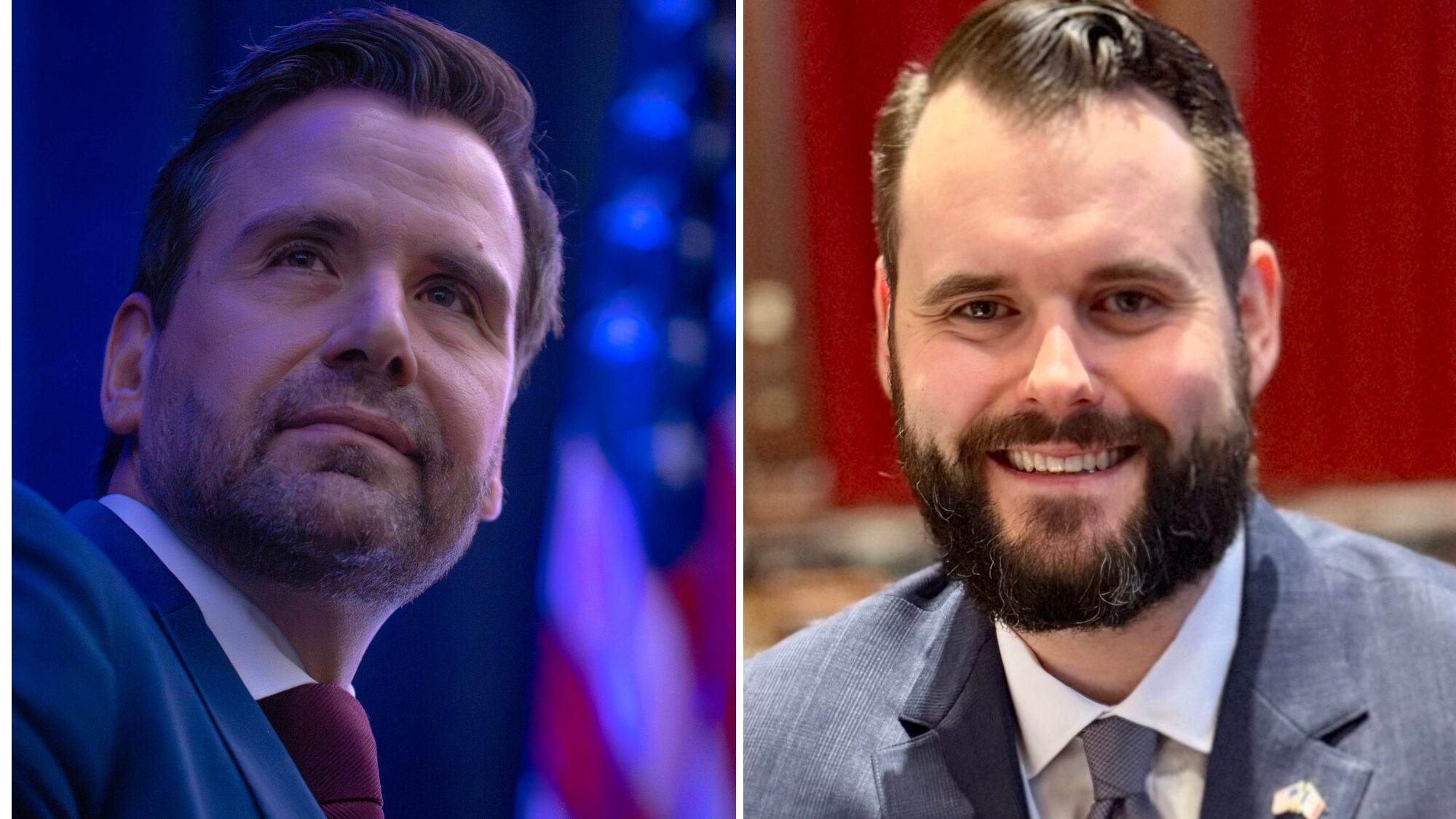
The Democratic primary for the U.S. Senate seat in Iowa has condensed to a two-man race, intensifying competition between state Senator Zach Wahls and state Representative Josh Turek. As voters prepare for the June primary, both candidates are striving to position themselves as the frontrunner, each offering distinct approaches to appeal to Iowa’s electorate.
Wahls, known for his viral defense of gay marriage, identifies as the more progressive candidate. He believes that a union-backed message focusing on working-class issues can galvanize the Democratic base. In contrast, Turek, a former Paralympian and one of the few Iowa Democrats to win in a district that also supported Republican President Donald Trump, presents a moderate image aimed at attracting independents and disillusioned Republicans.
The dynamics of this primary race reflect broader national trends as Democrats assess their strategies in a challenging midterm landscape. “This is the fundamental question that Democrats are wrestling with,” said Jessica Taylor, Senate and Governors Editor for the Cook Political Report. “Do you need to energize your base more to get them to turn out, or do you need to win over the middle?”
Despite both candidates’ efforts, neither has established a clear lead, and the competition has grown increasingly fierce as they vie for frontrunner status. Turek appears to have the unofficial backing of national Democratic figures who view him as a stronger general election contender. Wahls has seized on this, criticizing Turek for his perceived ties to the political establishment.
Republicans are also focusing their attention on Wahls, highlighting a poll from the National Republican Senatorial Committee that shows him leading the Democratic primary. Turek contends that this poll is a tactic designed to elevate a candidate they believe would be easier to defeat in the general election.
The stakes are high, as the winner will likely face Republican U.S. Representative Ashley Hinson in November. Hinson has already targeted Wahls as a “far-left Democrat,” framing him as out of touch with Iowa’s electorate. In response, Wahls has framed Hinson as part of a corporate political machine, emphasizing his commitment to working-class voters.
Turek argues that electability will be the decisive factor in the general election. He points to his successes in Council Bluffs, where he narrowly defeated a Republican in 2022 and secured a more substantial victory in 2024, despite Trump’s presence on the ballot. “I’m the only person in this race that has run against a Republican,” Turek stated, emphasizing his unique position.
The race has also attracted national attention, with both candidates accusing Washington Democrats of attempting to sway the outcome. Although the Democratic Senatorial Campaign Committee has not officially endorsed Turek, his campaign suggests that they have indicated a preference for his candidacy over Wahls.
Wahls has not shied away from criticizing Senate Minority Leader Chuck Schumer, stating that he would not support Schumer’s leadership. Turek has refrained from taking a public stance on Schumer’s role but has acknowledged the potential benefits of aligning with the party establishment.
While Turek’s campaign has positioned him as a moderate choice, Wahls has garnered significant support from organized labor, claiming the backing of nineteen local unions compared to Turek’s two. This support highlights Wahls’ deep connections to the working-class community, which he believes is crucial for a successful campaign.
Polls indicate a competitive landscape, with Wahls recently reporting a strong fundraising period, amassing $742,000, surpassing Turek’s $678,000. Wahls also holds a significant advantage in cash on hand, with $733,000 compared to Turek’s $398,000.
As the primary approaches, both candidates are actively promoting their platforms. Turek has launched a ten-part “Pushing for Change” agenda focused on addressing issues such as Medicaid cuts and raising the minimum wage. Wahls continues to emphasize his grassroots support and his commitment to labor rights.
Ultimately, the Iowa Senate primary reflects a microcosm of the challenges facing Democrats nationwide as they navigate a complex political landscape ahead of the midterm elections. The outcome of this race will not only determine the Democratic nominee but could also shape the party’s strategy in a state that has leaned Republican in recent years.