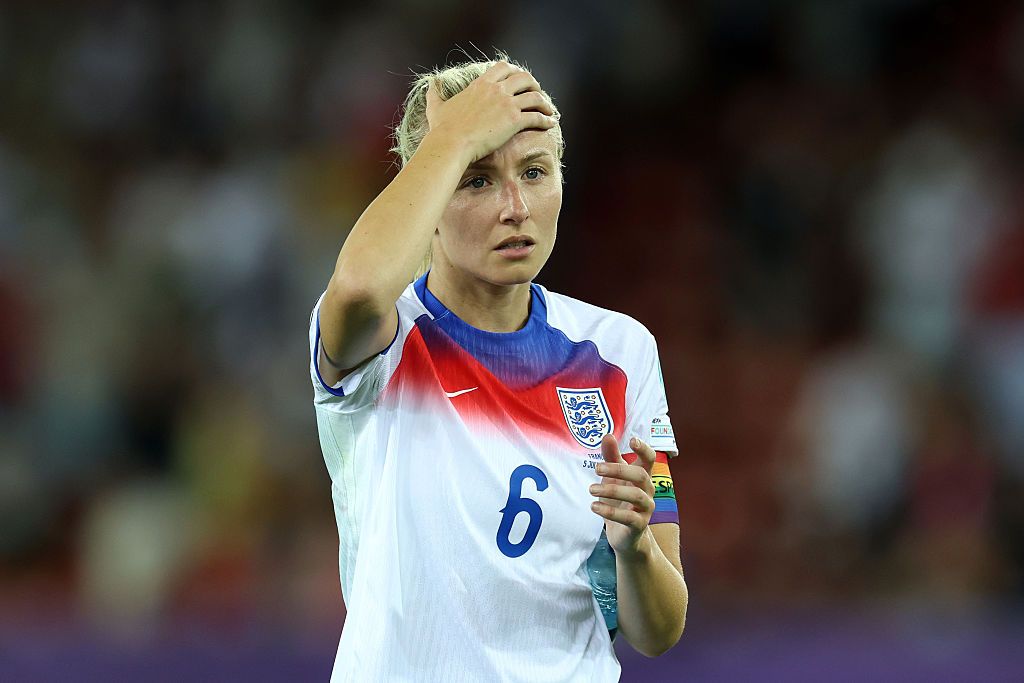
England captain Leah Williamson has raised the possibility of strike action among players in response to ongoing concerns regarding player welfare in women’s football. This statement comes as Williamson rejoins the national team for the first time since undergoing surgery after the Euro 2025 tournament, where she played a pivotal role. The defender had previously missed the World Cup 2023 due to an anterior cruciate ligament (ACL) injury.
Williamson’s comments were made ahead of England’s opening match in the World Cup qualifiers against Ukraine, scheduled for October 31, 2023, in Antalya, Turkey. The match’s location has been influenced by the ongoing unrest in Ukraine.
Concerns about the increasing frequency of ACL injuries among female players have become more pronounced. Williamson noted that the current season has seen eight instances of ACL injuries in the Women’s Super League (WSL), including a notable injury to Michelle Agyemang, who was awarded Young Player of the Tournament at Euro 2025.
H2: Scheduling and Player Safety Under Scrutiny
The issue of fixture congestion has emerged as a significant challenge, not only in women’s football but also in the men’s game. Williamson highlighted the difficulties players face with demanding schedules, stating, “The more successful you are… the higher risk there is of injuries. The facts are there with the players.”
The England team has been afforded a rare 10-day break between club matches and the qualifier against Ukraine. Williamson expressed optimism about this pause, noting, “Using this time to our advantage is a bit of a luxury.” She underscored the importance of rest, suggesting that scheduling considerations should prioritize player health.
Williamson also reflected on the broader implications of player welfare, emphasizing the need for governing bodies to align on rest periods and injury prevention strategies. “We’re quite forthcoming with giving that to people so that they can make more educated decisions for us,” she stated.
H2: The Possibility of Collective Action
When asked about the potential for strike action, Williamson did not dismiss the idea outright. She remarked, “Taking drastic action is always there as a possibility.” While she acknowledged that players are passionate about their sport and do not wish to disrupt competitions, she emphasized the need for a balance between player welfare and the demands of the game.
Williamson pointed out that a failure to listen to players could lead to drastic measures in the future. “If a group of people don’t feel like they’re getting listened to, then history suggests that that’s the only way sometimes they can be heard,” she explained.
As discussions about player welfare continue, Williamson called for collaboration among players and governing bodies to ensure that the sport can grow sustainably. “There has to be a balance, and I would never rule out further action from the players because if it needed to happen for people to protect themselves, I wouldn’t blame anybody.”
With the stakes high for both players and the sport, Williamson’s remarks serve as a crucial reminder of the ongoing challenges faced by athletes in managing their health while competing at the highest levels.