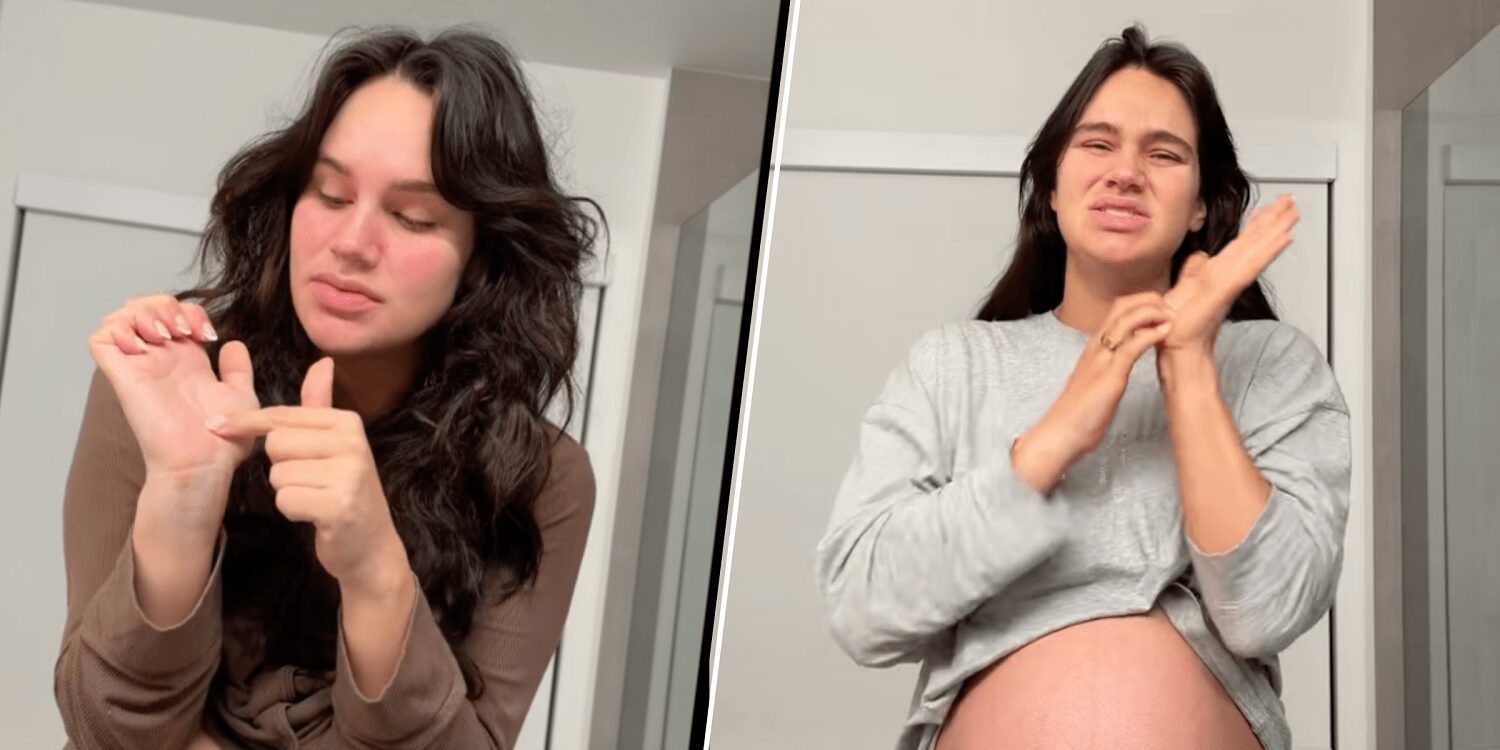
During her third trimester, 29-year-old Abbie Herbert noticed an unusual symptom: itchy hands. As a content creator based in Pittsburgh, she initially dismissed it as a typical pregnancy issue. However, as she shared her experiences through daily “Vlogmas” videos on TikTok, viewers began to express concern. Comments urging her to seek medical advice prompted Herbert to explore the condition known as cholestasis, a liver disorder that can pose serious risks to both mother and baby.
In her first TikTok video of December, Herbert scratched her palms and attributed the itchiness to skin stretching. She recalls, “I started seeing some comments that were like, ‘You’re itching. You should go get that looked at.'” Despite her initial dismissiveness, the volume of messages urging her to consult a doctor increased significantly. By December 3, Herbert recognized the severity of her symptoms, which included a rash and broken blood vessels on her hands.
After a photoshoot that day, she contacted her doctor and arranged for blood tests. Initial results appeared normal, leading her to believe she was overreacting. Yet, when her liver bile acid test results arrived two days later, the situation escalated. “I woke up at 4 a.m. and I got the notification on my phone that my blood work came back,” she said. Although she intended to wait for her doctor’s advice, curiosity led her to check the results herself. They were abnormal.
Her doctor, Ron Cypher, contacted her shortly thereafter, having already coordinated with the fetal medicine team at her hospital. With urgency, he advised her to prepare for delivery that same day. Herbert gave birth to a healthy son, Rocky, on December 5, 2023, after a whirlwind of events.
Understanding Cholestasis and Its Risks
Cholestasis occurs when bile acids produced in the liver back up into the bloodstream, potentially affecting the baby and causing extreme itchiness for the mother. According to Dr. Cypher, “Those bile acids can cross the placenta to the baby and affect the baby’s liver.” If untreated, cholestasis can lead to severe complications, including preterm birth or even stillbirth.
The condition is relatively rare but can occur in non-pregnant individuals as well. Hormonal changes during pregnancy may increase susceptibility, particularly in the later stages. Notably, Herbert’s bile acid levels were nearly double the normal range, necessitating an urgent C-section.
Dr. Cypher emphasized the importance of awareness regarding cholestasis, noting that early detection could allow for interventions such as the medication ursodiol, which helps reduce bile acids. In Herbert’s case, the timing of her diagnosis was critical.
The Role of Social Media in Raising Awareness
Herbert’s experience underscores the potential impact of social media in healthcare. By sharing her journey online, she not only documented her family’s experiences but also drew attention to an important health issue. “Putting stuff online, you hear the good and the bad,” she stated. “But this was a very good thing that happened from people watching my content and potentially saving my baby’s life.”
Her story serves as a reminder of the need for vigilance during pregnancy and the importance of listening to one’s body. With increased awareness, expectant mothers may be better equipped to recognize symptoms that warrant medical attention, ultimately contributing to healthier outcomes for both mothers and their babies.