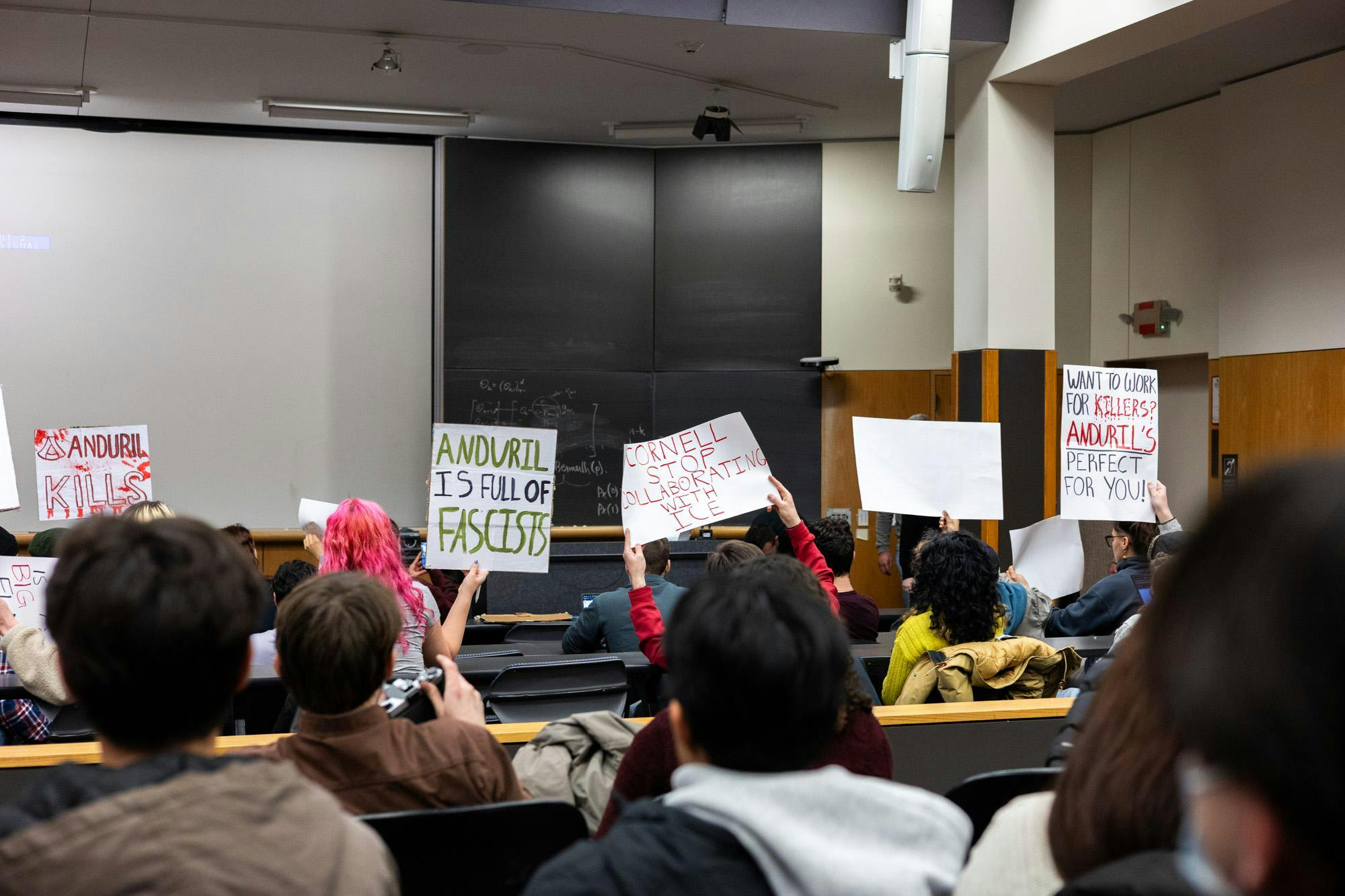
Protests erupted at Cornell University on March 14, 2024, disrupting a recruitment event hosted by defense technology firm Anduril. Originally intended as a two-hour “Tech Talk” aimed at engaging engineering students, the session was cut short after just seven minutes. Demonstrators filled Phillips Hall 101, voicing their opposition to the company’s involvement in military technology and its perceived role in human rights violations.
As students entered the lecture hall, protesters distributed leaflets highlighting Anduril’s latest product, the “Fury,” an AI-driven, semi-autonomous unmanned combat aerial vehicle. The flyers contained provocative statements, including, “Does this look sleek? Soon, it’ll slaughter a family,” and criticized the company’s contracts with U.S. Customs and Border Protection (CBP). The pamphlets claimed that Anduril‘s technology threatens the lives of migrants and accused the firm of selling weaponry to countries engaged in human rights abuses.
The protest unfolded as Christine Nye, the Associate Dean of Students with Student Support and Advocacy Services, opened the session by reiterating Cornell’s policies on free speech and expressive activity. She stated that while invited speakers have the right to present their views, audience members may express dissent as long as it does not obstruct the presentation.
Following her remarks, the presenters quickly moved through a brief six-slide overview of Anduril’s mission, hiring practices, and internship opportunities. As the presentation concluded, protesters raised anti-ICE signs and shouted insults, expressing frustration over their inability to ask pre-prepared questions.
Organizers of the protest, including members of Students for Justice in Palestine and Cornell Progressives, had been advocating for the cancellation of the event for over a week. Adrianna Vink, president of Cornell Progressives, explained that students feel strongly against hosting companies they believe are complicit in violence and human rights abuses. “The people here today are concerned students who showed up with questions and were ready to engage,” Vink stated. “They clearly weren’t ready to engage with us.”
Another protester, Francis Burns, emphasized the importance of raising awareness among students about career choices in the defense industry. “We’re trying to show engineers that these are unacceptable career paths,” he said, underscoring the social implications of such employment.
The event saw a notable police presence, with officers positioned both outside and inside Phillips Hall to ensure safety amid the tensions. This protest follows recent backlash against the university for promoting job opportunities with CBP through virtual Career Services events.
In a statement to The Sun, Shannon Prior, head of communications at Anduril, described the session as a success, noting several applications received shortly after the event. “We even had students emailing our recruiters apologizing for the disturbance,” Prior added. When questioned about the decision to proceed with the talk despite student opposition, she emphasized the company’s commitment to free expression.
“We respect the right to free speech and understand that protests are a hallmark of democratic expression,” she said. However, Prior expressed confusion regarding the criticism, calling it “perplexing” that a company supporting the U.S. military, which she argued safeguards freedoms, would face such backlash.
Vink countered this viewpoint by highlighting the responsibility of student labor in the defense sector. “Your labor is critical to these systems of violence and oppression,” she argued, suggesting that withholding participation could lead to a safer and more equitable world.
The protest reflects ongoing tensions at universities regarding the role of defense contractors and the ethical implications of employment within the sector. As students continue to voice their concerns, the conversation around military technology and human rights is likely to remain at the forefront of campus discourse.