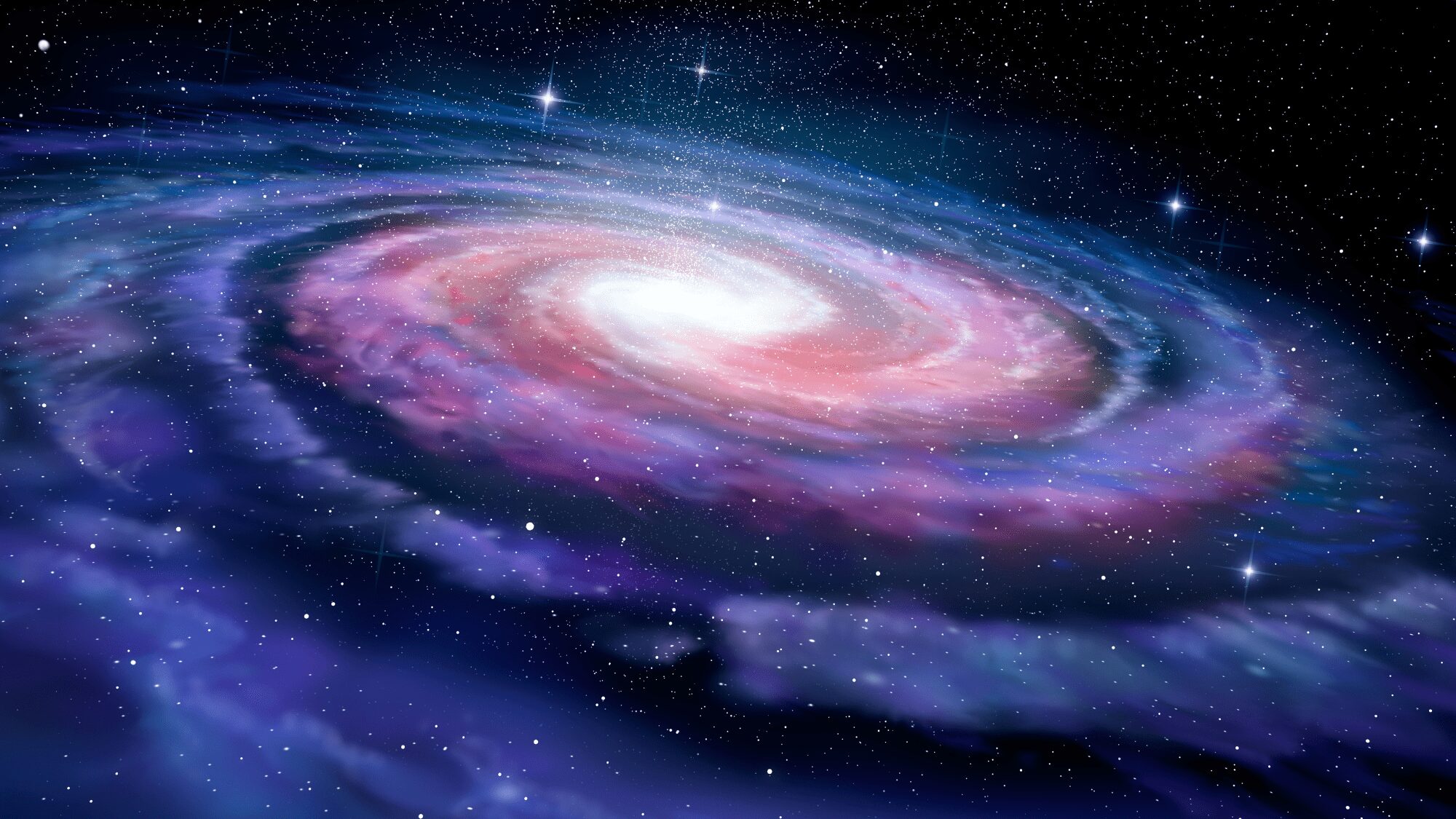
Astronomers have identified a planetary system that defies conventional understanding of planetary formation. The star, known as LHS 1903, is a red dwarf that previously had three confirmed planets. Recent observations from the European Space Agency’s CHEOPS space telescope have revealed a surprising fourth planet located farther from the star, which also appears to be rocky. This discovery challenges the expected arrangement of planets, where rocky worlds typically orbit closer to their star, followed by gas giants at greater distances.
The newly identified fourth planet disrupts the typical pattern, creating an arrangement of rocky, gas, gas, and then rocky again. This configuration raises significant questions about the processes that govern planetary formation. Generally, a planet’s proximity to its star subjects it to intense radiation, which can strip away lighter gases, leaving behind smaller, rocky bodies. In contrast, gas giants tend to form in environments where they can accumulate significant atmospheres, typically located further from their stars.
Thomas Wilson, a planetary astrophysicist at the University of Warwick and lead author of the study published in Science, described the system as an “inside-out” arrangement. He noted, “Rocky planets don’t usually form so far away from their home star.” This statement highlights the unexpected nature of the findings and the need for further investigation.
Reevaluating Planetary Formation Theories
The research team explored various traditional explanations but found them lacking. Their preferred hypothesis suggests that the planets may have formed sequentially rather than simultaneously. In this scenario, the earlier planets formed while ample gas remained in the surrounding disc. As this gas supply diminished, the outer planet could emerge as a smaller, rocky body despite its distance from the star.
Wilson remarked that this discovery could represent “first evidence” for a planet developing in a “gas-depleted environment,” indicating that the materials necessary for building a substantial atmosphere may not have been available at that time.
Isabel Rebollido, a planetary disc researcher at the European Space Agency, emphasized the significance of this finding. She stated, “Historically, our planet formation theories are based on what we see and know about our Solar System.” The ongoing discovery of unusual exoplanet systems continually prompts researchers to reassess and refine their theoretical frameworks.
The study of planetary systems like LHS 1903 underscores the complexities of the universe. Each new discovery adds layers to our understanding of how celestial bodies form and interact. As astronomers continue to explore these unknown territories, the potential for new insights remains vast, reminding us that the universe often operates in ways that challenge our existing knowledge.
This finding not only reshapes current scientific narratives but also reinforces the idea that every apparent certainty in the cosmos can be upended by new observations. The journey of understanding planetary systems is ongoing, and with each revelation, scientists are drawn back to their models and theories to account for the unexpected.