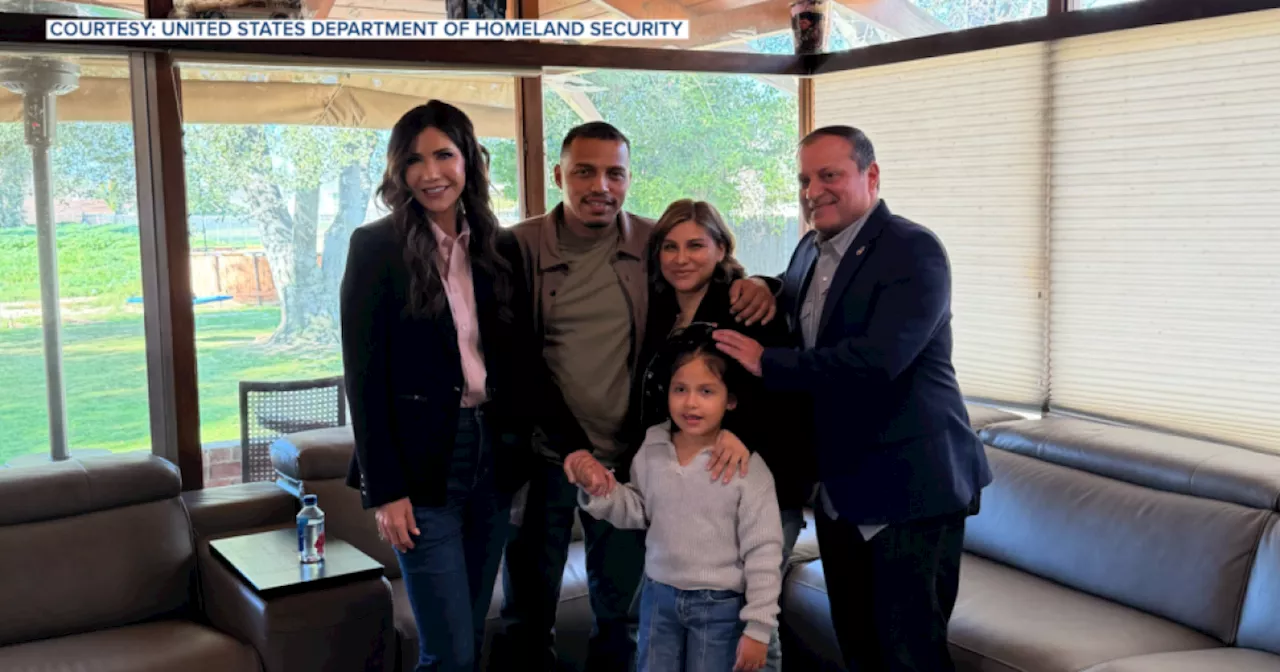
During a recent visit to Bakersfield, California, Secretary of Homeland Security Kristi Noem addressed issues surrounding crimes allegedly committed by undocumented immigrants. Her visit, part of a nationwide initiative, focused on the case of Dalilah Coleman, a young girl critically injured in a 2024 vehicle collision involving an undocumented truck driver.
Dalilah, who was only five years old at the time of the accident, suffered severe brain swelling from a six-vehicle crash on Highway 395 in San Bernardino County. She remains reliant on life support and continues her journey of recovery, which her family describes as both long and challenging. Despite her struggles, Dalilah’s spirit shines through; her family shares that her radiant smile brings joy to those around her.
The truck driver involved in the crash, Partap Singh, is currently in custody of U.S. Immigration and Customs Enforcement in Texas. Singh, an undocumented immigrant from India, has become a focal point in discussions about immigration policy and enforcement. Secretary Noem’s visit included engagement with families, often referred to as “angel families,” who have endured loss or injury due to incidents linked to undocumented immigrants, reflecting a broader strategy aimed at enhancing immigration enforcement.
Dalilah’s parents, Marcus Coleman and Ileana Krause, expressed their surprise at the national attention their story has received. They had initially traveled to Washington, D.C., advocating for their daughter’s recovery, but did not expect their experiences to resonate so widely. The couple visited Singh at the Mesa Verde Detention Facility in Bakersfield, seeking closure and understanding.
While grappling with their emotions, Marcus shared their initial feelings of resentment towards Singh, emphasizing the need to release these negative emotions for the sake of their daughter’s healing. “Holding onto anger and resentment did not serve our well-being,” Krause noted, highlighting the family’s focus on Dalilah’s recovery rather than dwelling on the past.
Now a first-grader, Dalilah continues to undergo rehabilitation and therapy, with an additional surgery planned for next year. Her family is actively preparing for this procedure, both emotionally and financially. Marcus, who works as a truck driver, raised concerns about the current standards in the trucking industry. He advocates for stricter training and testing requirements to ensure that only qualified individuals operate heavy machinery.
Despite the political implications surrounding their story, the Colemans stress that their primary concern remains Dalilah’s health and recovery. They aim to provide her with the necessary support and resources. The family hopes that their experience will foster understanding and compassion, rather than division.
As they navigate this difficult path, the Colemans unite in their prayers for Dalilah’s continued progress, emphasizing that healing—both physical and emotional—remains their foremost priority. Their journey illustrates the resilience of family values and the power of compassion in overcoming adversity.