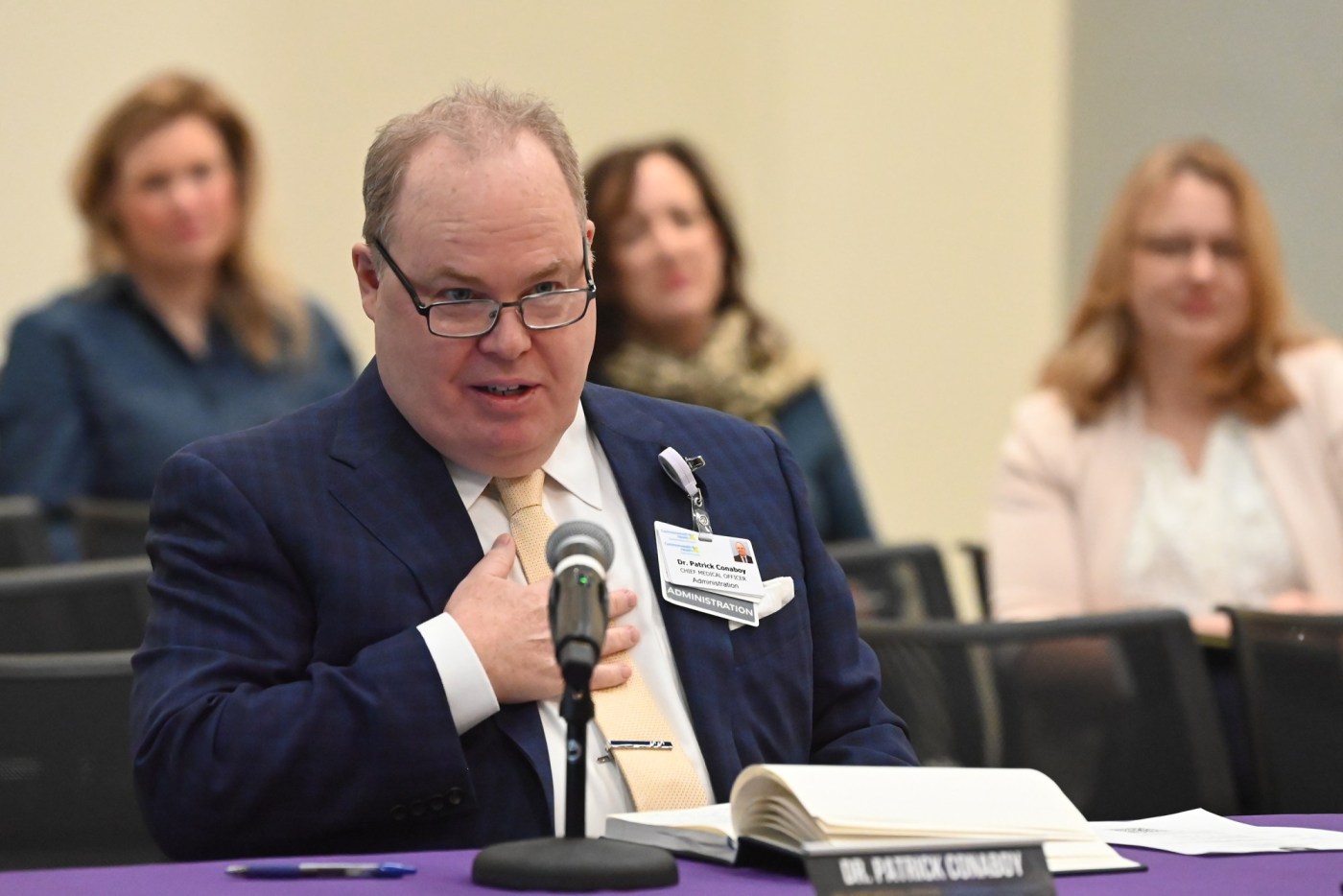
The health care landscape in Scranton, Pennsylvania, is facing significant challenges as local hospitals grapple with recruitment issues and financial pressures. During a hearing on February 11, 2026, Dr. Patrick Conaboy, chief medical officer for the Regional Hospital of Scranton and the nearby Moses Taylor Hospital, told state lawmakers that recruitment across all positions is their most pressing concern.
The hearing, convened by the state House Democratic Policy Committee at the University of Scranton, addressed the various financial and workforce difficulties that local hospitals are currently experiencing. This discussion follows the recent acquisition of Commonwealth Health’s Scranton and Wilkes-Barre hospitals by the nonprofit Tenor Health Foundation, a move that prevented the closure of these vital healthcare facilities.
Dr. Conaboy expressed the urgency of the recruitment crisis, stating, “The biggest challenge for the hospitals right now is recruitment, and understand that’s not just recruitment of physicians which is a huge problem for us, but it’s recruitment for every position in the hospital, top to bottom.” He explained that the cost of hiring new employees has become increasingly burdensome, making it difficult for hospitals to compete for talent.
Competition with private sector employers is a significant hurdle. Dr. Conaboy highlighted that even entry-level positions, such as those in environmental services, must compete with companies like Chewy, which offers attractive wages. He emphasized that for specialized roles, such as nurses and physicians, potential hires need assurance of both competitive salaries and long-term job stability.
The local hospitals’ financial instability exacerbates recruitment challenges. Dr. Conaboy stated, “The tenuous future of the hospital due to all of these financial pressures is our biggest challenge.” He noted that while he can promote the area, the uncertainty surrounding hospital finances makes it difficult to attract new staff.
The hearing also revealed broader financial concerns impacting healthcare delivery in the region. Dr. Conaboy pointed to insufficient reimbursements for care as a contributing factor. With the rising costs of health insurance, many individuals are becoming uninsured, leading to an influx of patients in emergency departments seeking care.
The recent fire at Lehigh Valley Hospital-Dickson City, which temporarily closed its emergency room, has further strained the local healthcare system. Dr. Conaboy remarked that without Tenor’s intervention, the emergency department at Regional would have closed, following a pattern anticipated for other local hospitals.
Challenges within the nursing workforce were underscored by Jen Huber, a registered nurse and president of the Northeast Pennsylvania Nurses Association. Huber articulated the difficulties not just in recruiting new nurses, but also in retaining experienced staff. She stated, “We’re losing nurses to burnout, unsafe staffing, and working conditions that make it hard to provide the level of care to our patients.”
Short-staffing has become a norm in many hospitals, resulting in nurses caring for more patients than is safe, which impacts patient outcomes and staff morale. Huber emphasized that this situation is not just a workforce issue but also a critical patient care and access issue.
The testimony of Sue Wiggins, a medical laboratory technologist at Regional and vice president of the SEIU Healthcare PA union, echoed these sentiments. Wiggins noted that the healthcare workforce shortage, worsened by the COVID-19 pandemic, affects nearly every job title within the sector. “Health care work is very tough physically, mentally, and emotionally,” she said.
The hearing highlighted the pressing need for hospitals to offer competitive benefits and working conditions to attract qualified professionals. As living costs rise significantly, Wiggins pointed out that wages have not kept pace, complicating recruitment efforts even further.
Local Democratic representatives, including Bridget Kosierowski and Kyle Donahue, participated in the hearing, seeking to address these challenges. Huber’s poignant remark, “At the end of the shift we’re looking at each other and it’s not ‘great shift, guys, we did great,’ it’s ‘we survived,’” described the current state of healthcare professionals in the region.
The discussion at the University of Scranton underscores an urgent call for action to address the workforce crisis that threatens the stability and capability of healthcare providers in Northeastern Pennsylvania. As lawmakers and health officials continue to navigate these challenges, the future of healthcare access in the region remains a critical concern.