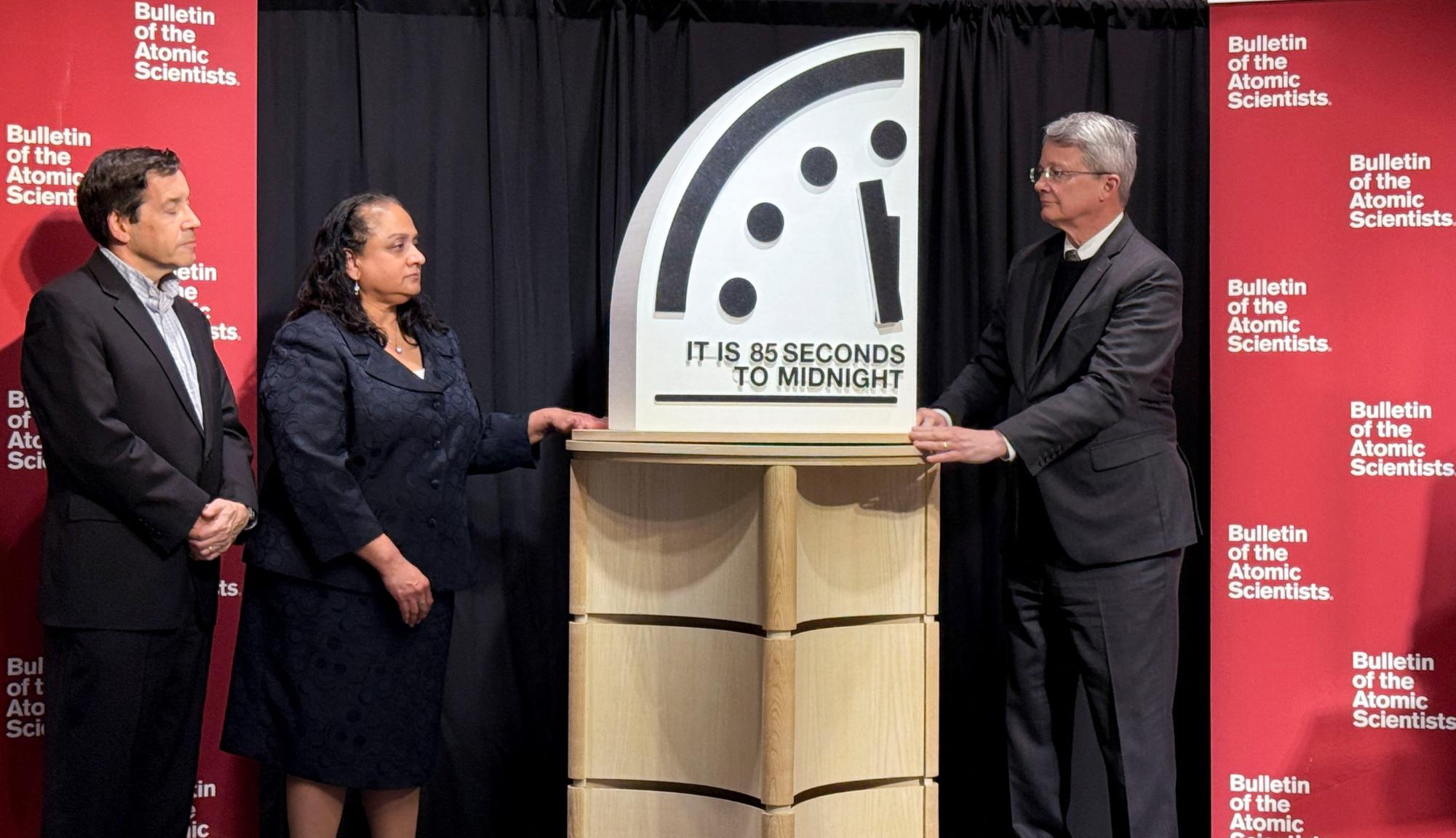
The Doomsday Clock has been set to 85 seconds to midnight, marking the closest it has ever been to symbolic destruction, according to the Bulletin of the Atomic Scientists. This decision, made on January 27, 2026, reflects growing concerns over nuclear risks, climate change, and the rapid advancement of artificial intelligence in military applications. The announcement was made during a town hall meeting in Washington, D.C., where experts warned that humanity is facing unprecedented threats.
Experts Warn of Global Risks
During the event, notable figures including Jon Wolfsthal, director of global risk at the Federation of American Scientists, and Asha George, executive director of the Bipartisan Commission on Biodefense, discussed the implications of the clock’s positioning. They emphasized the need for immediate action to reduce nuclear arsenals and enhance international cooperation in addressing biological threats.
Alexandra Bell, President and CEO of the Bulletin, expressed her dismay at the current global leadership failures. She remarked, “In terms of nuclear risks, nothing in 2025 trended in the right direction. Catastrophic risks are on the rise, cooperation is on the decline, and we are running out of time.” Bell’s insights are crucial, given her background as a former deputy assistant secretary for nuclear affairs in the U.S. State Department’s Bureau of Arms Control.
The clock serves as a grim reminder of the consequences of neglecting global security. It was created in 1947 by scientists who worked on the Manhattan Project to illustrate the dangers posed by nuclear weapons after World War II. The nearer the minute hand gets to midnight, the closer humanity comes to catastrophe.
A Historical Perspective
Since its inception, the Doomsday Clock has been adjusted numerous times in response to global events. For instance, the clock was set to 7 minutes to midnight in 1947, reflecting the immediate post-war tensions. Significant historical milestones include the U.S. pursuit of the hydrogen bomb in 1953, which moved the clock to 2 minutes to midnight, and the signing of the Partial Test Ban Treaty in 1963, which pushed it back to 12 minutes.
Recent adjustments have mirrored the evolving landscape of international relations. In 2020, the clock was set to 100 seconds to midnight, highlighting the dual threats of climate change and nuclear warfare. By 2023, it was adjusted to 90 seconds due to the ongoing instability stemming from the conflict in Ukraine and the resurgence of nuclear tensions. The latest shift to 85 seconds signals a culmination of factors, including the increasing involvement of artificial intelligence in military strategies.
As the clock continues to tick, the message is clear: without concerted efforts from global leaders and citizens alike, the potential for irreversible devastation looms large. The Doomsday Clock remains a symbolic yet urgent call to action, urging humanity to come together to avert disaster.
While some may see the clock as merely a representation of fear, it serves as a vital reminder of the responsibilities that come with technological advancement and geopolitical power. Engaging in dialogue, establishing international agreements, and prioritizing peaceful resolutions are essential steps needed to push the minute hand away from midnight.
As noted by student Joseph Davila, “To me, Doomsday is the metaphorical end of the Earth being livable… the fact that humanity can’t come to an agreement on doing what’s best for the Earth is honestly disturbing.” This sentiment underscores the urgency for collective action to safeguard the future of the planet.