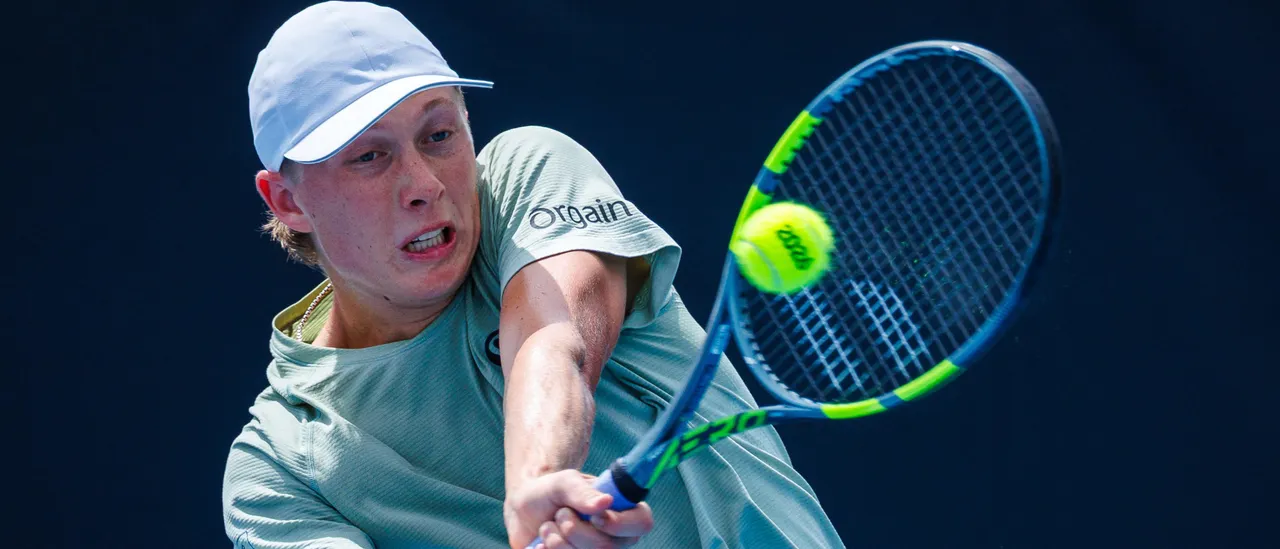
A reporter’s persistent questioning about U.S. politics has drawn attention at the Australian Open, particularly regarding American players. In a recent press conference, journalist Owen Lewis directed inquiries at Ethan Quinn, who had just advanced past the initial rounds of the tournament. Lewis’s questions about political tensions in the United States have been met with a mix of confusion and dismissal.
During the press conference on January 20, 2026, Lewis began his questioning by referencing Quinn’s enjoyment of being in Australia. He then pivoted to a controversial topic, stating, “a lot’s happened in the last year, there’s a lot of tension there right now, and I’m wondering how you feel about all of that and how it feels to play under that flag right now.” Quinn’s response, “No comment,” captured the awkwardness of the moment, as he maintained a calm demeanor throughout the exchange.
This was not an isolated incident. Lewis has previously questioned other American players, including Coco Gauff, Amanda Anisimova, Taylor Fritz, Madison Keys, and Jessica Pegula, about their views on political issues in the U.S. His approach has sparked criticism from various corners, with observers questioning the appropriateness of such inquiries in the context of a sporting event.
The Australian Open, taking place in Melbourne, is known for its vibrant atmosphere and competitive spirit. However, Lewis’s focus on American politics has overshadowed the athletic achievements of the players. Critics argue that the tournament should center on tennis rather than political discourse. As tensions rise between sports and politics, it remains to be seen how organizers will address the situation.
While the Australian Open organizers have not publicly responded to Lewis’s line of questioning, the repetition of these inquiries raises concerns about the role of media at sporting events. Fans and players alike seem to prefer discussions centered on performance and competition rather than political commentary.
As Quinn prepares for future matches, he and his fellow competitors may continue to navigate the delicate balance between their athletic careers and the external pressures of political discourse. The Australian Open, traditionally a stage for sporting excellence, may find itself at the intersection of sports and politics as the tournament progresses.