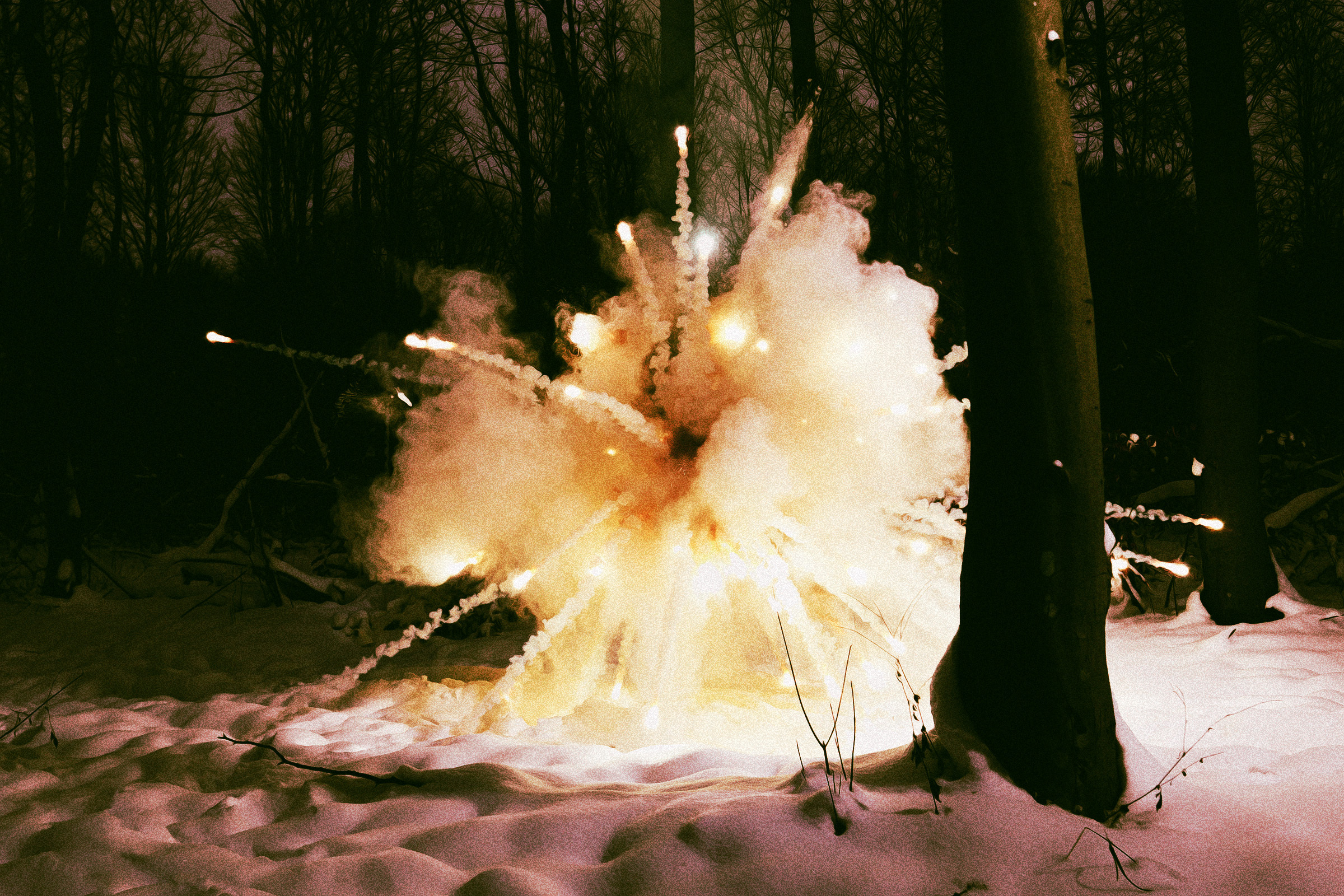
As a significant winter storm approaches, meteorologist Max Schuster has raised awareness about an unusual risk: the potential for trees to suffer damage due to extreme cold. The storm is forecast to impact nearly every state east of the Rocky Mountains from January 21 to 22, 2026, with temperatures plummeting to as low as 20 degrees below zero Fahrenheit in areas such as the Dakotas, Minnesota, Wisconsin, and northern Michigan.
In a post that gained considerable attention on X, formerly known as Twitter, Schuster warned of an “exploding tree risk,” suggesting that the rapid drop in temperature could lead to dangerous conditions for trees. According to Schuster, the cold can cause moisture within the trees to expand, potentially leading to structural failures.
While the notion of trees exploding may sound exaggerated, there is scientific grounding to this phenomenon. Multiple reputable publications have corroborated Schuster’s claims, noting that the moisture inside trees can indeed freeze and expand rapidly. This rapid expansion can create significant pressure within the tree, which, in certain circumstances, may result in what experts call “frost cracks.”
Understanding Frost Cracks
Bill McNee, a forest health specialist with the Wisconsin Department of Natural Resources, explained to the Milwaukee Journal Sentinel that frost cracks are not uncommon during sudden temperature drops. “It’s going to get cold enough that this sap may actually finally freeze,” McNee stated. “When it does that, like ice cubes in your freezer, they expand very quickly. That just creates a lot of physical pressure that can lead to the frost cracking appearing suddenly. People hear this really loud crack from their tree, almost like it’s a gunshot.”
Despite the dramatic nature of this description, McNee emphasized that such occurrences are relatively rare. He has never personally witnessed trees exploding due to internal pressure but acknowledged that there are documented cases of significant frost cracking. “From what I have seen and what I read online, it is rare for there just to be so much pressure that is suddenly released inside this tree that it almost does explode,” he added.
As temperatures continue to drop and the winter storm takes hold, residents in affected areas are advised to take precautions. This includes monitoring trees near homes and structures, as falling branches or loud cracking noises could pose hazards.
While the sensation of trees “exploding” may capture the imagination, the reality is that frost cracks are a more mundane but still noteworthy consequence of severe winter weather. As this storm approaches, the focus remains on safety and preparation amidst the cold.