President Donald Trump is considering a controversial proposal that would offer residents of Greenland $1 million each to facilitate U.S. control over the Arctic island. This potential deal, as reported by the Daily Mail, could cost the United States approximately $57 billion given Greenland’s population of around 57,000 individuals. The proposal marks a significant shift in U.S. foreign policy, illustrating Trump’s ongoing interest in the region.
On January 22, 2024, Trump announced he would not proceed with tariffs against eight European countries, a move previously suggested as leverage for acquiring Greenland. This announcement followed his earlier declaration expressing a desire to obtain “right, title, and ownership” of the territory.
Framework for Arctic Security Discussions
In a recent statement on his social media platform, Trump revealed he has reached an understanding with the leader of NATO regarding a “framework of a future deal” focused on Arctic security. This development could alleviate rising tensions in the region, which carries significant geopolitical implications.
Trump further indicated that “additional discussions” are taking place about Greenland, particularly in relation to the Golden Dome missile defense program. This complex system, which costs an estimated $175 billion, would represent the first deployment of U.S. weapons in space. The introduction of such technology could drastically change the balance of power in the Arctic.
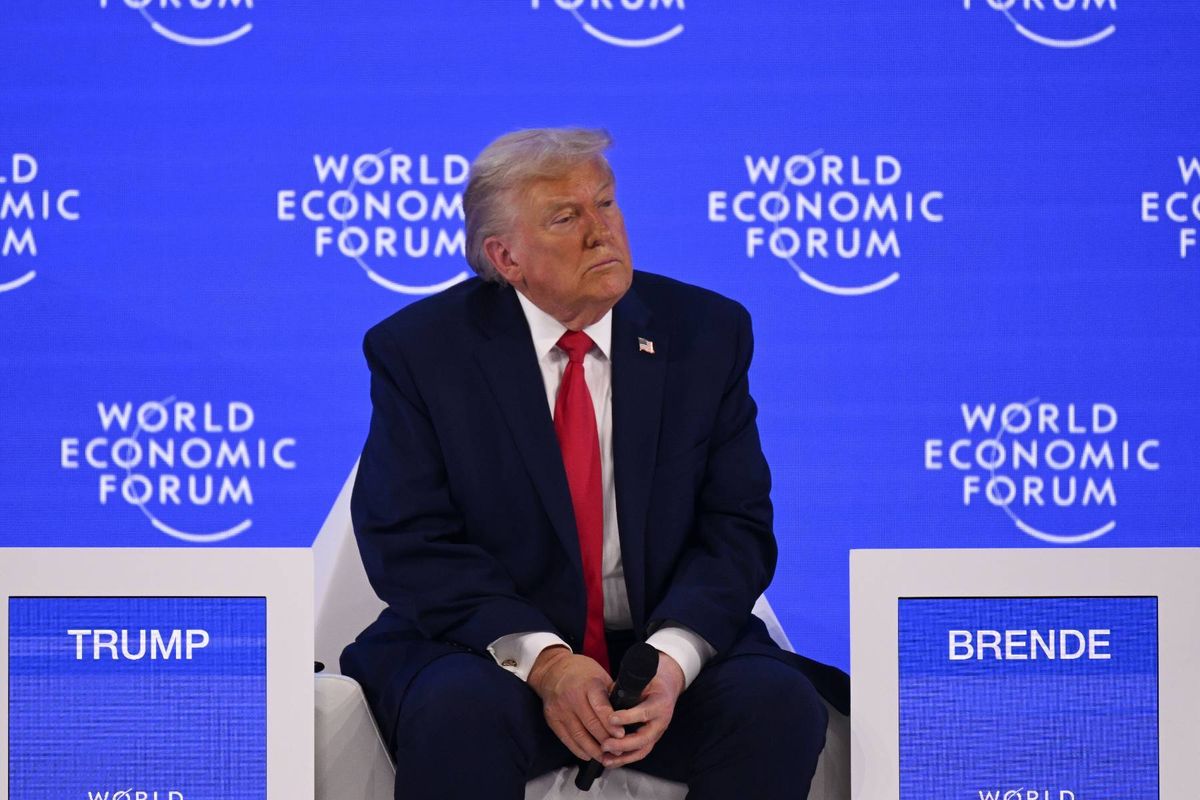
During his address at the World Economic Forum in Davos, Trump defended his pursuit of Greenland, stating it is “cold and poorly located.” He emphasized the historical context of U.S. support for Europe, particularly during World War II. “It’s a very small ask compared to what we have given them for many, many decades,” he remarked regarding NATO contributions.
Trump expressed that without “excessive strength and force,” the U.S. may not achieve its objectives in international negotiations. Nonetheless, he indicated a desire to avoid such measures, showcasing a complex interplay of diplomacy and military strategy.
This proposal to offer financial incentives to Greenland’s residents represents a novel approach to territorial acquisition, raising questions about international law, sovereignty, and the implications for U.S.-Greenland relations. The outcome of these discussions remains to be seen as both parties navigate the intricacies of Arctic geopolitics.