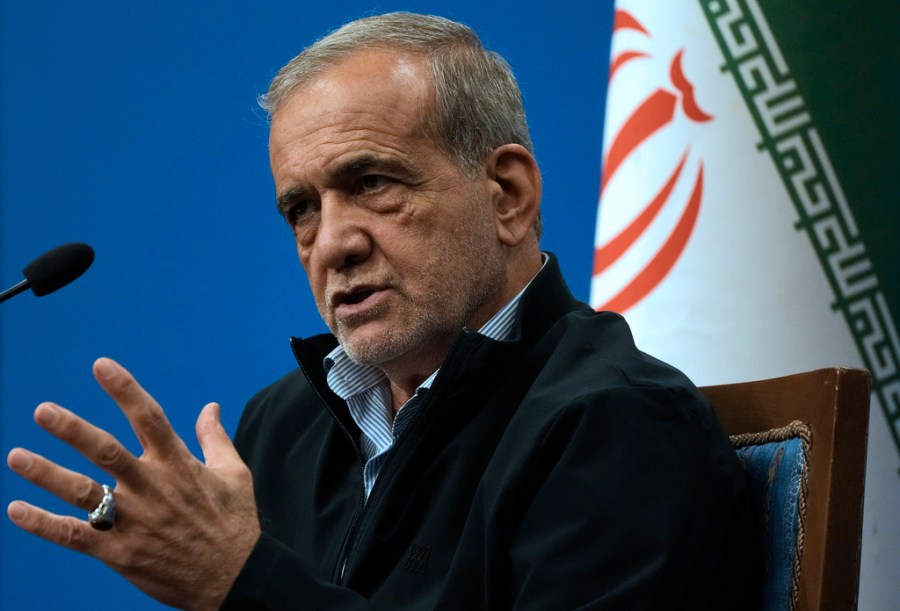
Iranian President Masoud Pezeshkian strongly cautioned foreign leaders on March 10, 2024, against any form of aggression directed at the country’s Supreme Leader, Ali Khamenei. His remarks come amidst widespread protests across Tehran and several other provinces, raising international concern over the escalating tensions within the nation.
During a press briefing, Pezeshkian emphasized that any perceived threat or hostility aimed at Khamenei would be interpreted as an act of war against Iran. “If the people of Iran face hardship and difficulties in their lives, one of the main reasons for it is the longstanding enmity and inhumane behavior from foreign entities,” he stated. This assertion reflects the Iranian government’s ongoing narrative that external forces contribute to domestic challenges, including economic strife and social unrest.
The protests, which have surged in various cities, are reportedly fueled by discontent over economic conditions, including inflation and unemployment. Demonstrators have voiced their frustrations over the government’s handling of these issues, leading to a significant increase in public dissent. Eyewitness accounts indicate that many protesters are demanding both economic relief and political reforms.
Pezeshkian’s statements have drawn reactions from multiple world leaders, with some expressing concern for human rights and the treatment of protesters. The Iranian government has historically responded to dissent with a heavy hand, often resulting in violent clashes between demonstrators and security forces. As tensions rise, international observers are closely monitoring the situation, fearing that further escalation could lead to severe consequences for the region.
The Iranian authorities have maintained a firm stance against external interference, suggesting that foreign nations should respect the sovereignty of Iran. Pezeshkian reiterated the government’s commitment to defending its leadership and territorial integrity, urging foreign governments to focus on diplomatic solutions rather than hostility.
As the situation continues to unfold, the international community remains divided on how to respond effectively. Some nations advocate for sanctions and other punitive measures against Iran, while others call for dialogue and engagement. The complex dynamics at play highlight the challenges in addressing the underlying issues driving the unrest within Iran.
With protests expected to persist, the Iranian leadership faces a critical juncture. The government’s ability to address public grievances while managing external relations will be paramount in determining the country’s stability in the coming weeks and months.