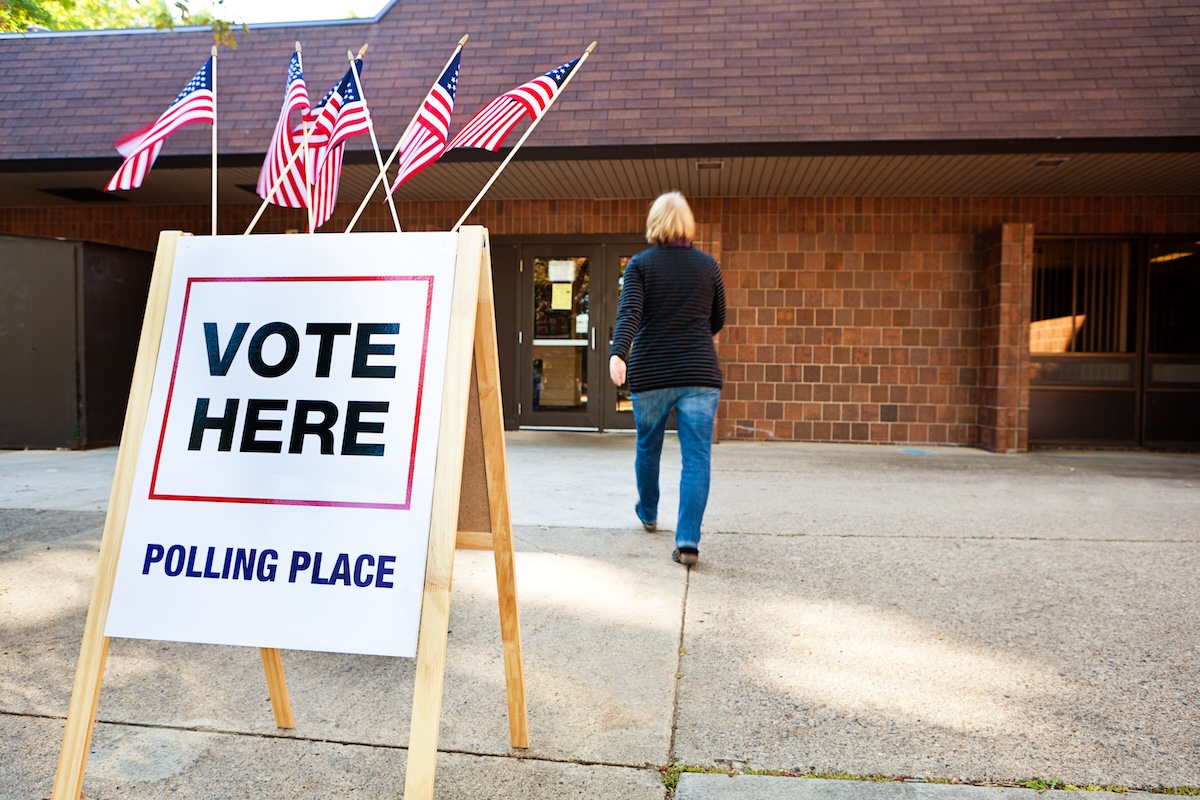
A federal judge has issued a significant ruling against key provisions of an executive order from former President Donald Trump, which aimed to alter election rules across the United States. On Friday, U.S. District Judge John Chun became the third judge to block critical elements of this order, asserting that the Constitution grants authority over elections primarily to the states and Congress, not the president.
The executive order, issued in March 2023, sought to mandate proof of citizenship for federal voter registration, limit machine-readable codes in ballot counting, and prevent the counting of ballots postmarked by Election Day but received afterward. The Trump administration has indicated plans to appeal this ruling, marking yet another setback for its election agenda.
Judge Chun’s decision followed lawsuits filed by the states of Oregon and Washington, which challenged several provisions of the executive order. He ruled against requirements that voters using the federal registration form must provide documentary proof of citizenship and that absentee ballots arriving after Election Day should not be counted. The judge emphasized that his ruling was intended to “restore the proper balance of power among the Executive Branch, the states, and Congress envisioned by the Framers.”
This ruling specifically applies to Oregon and Washington, states that primarily utilize mail-in voting. Chun also blocked provisions linking federal election funding to compliance with proof-of-citizenship requirements, underscoring the limitations of unilateral presidential authority in election matters.
Legal experts have voiced concerns regarding the executive order’s viability. Derek Clinger, a senior staff attorney with the University of Wisconsin Law School’s State Democracy Research Initiative, remarked that the ruling clearly indicates that the president lacks the constitutional power to implement such changes. He further noted that the executive order’s implications have resulted in a series of legal challenges, with two previous rulings already striking down similar provisions.
Despite the setbacks in court, the Trump administration continues to pursue legislative avenues to alter federal election laws. However, efforts in Congress have stalled, and attempts to influence state legislatures have met with limited success. Some states, such as Ohio, have enacted measures to eliminate grace periods for mail-in ballots, but substantial shifts in voting policies have not materialized.
The U.S. Department of Justice has been actively involved in enforcing election laws, filing numerous lawsuits against states that refuse to provide unredacted voter data. Many of these actions reference Trump’s executive order as a guiding principle.
Legal analysts like David Becker, who previously worked in the Justice Department’s Civil Rights Division, suggest that the ongoing judicial scrutiny of the executive order highlights a pattern of exceeding constitutional boundaries. Becker stated, “The more courts look at this executive order, the more they come to the conclusion that the president vastly exceeded his constitutional authority.”
Trump’s efforts to reshape election policy have not gained the traction he expected, with critics arguing that his approach mainly serves to undermine public confidence in the electoral process. Justin Levitt, an election law professor at Loyola Marymount University, likened the administration’s strategy to a flawed plan lacking clarity and execution.
As the legal battles continue, the implications of these rulings resonate beyond the courtroom, influencing public discourse on election integrity and access. The recent decisions affirm the enduring principle that state and federal authorities hold the reins on voting laws, a foundation intended to safeguard democratic processes.
With the political landscape constantly evolving, the future of Trump’s election agenda remains uncertain, and its impact on the upcoming electoral cycles will be closely monitored by both supporters and critics alike.