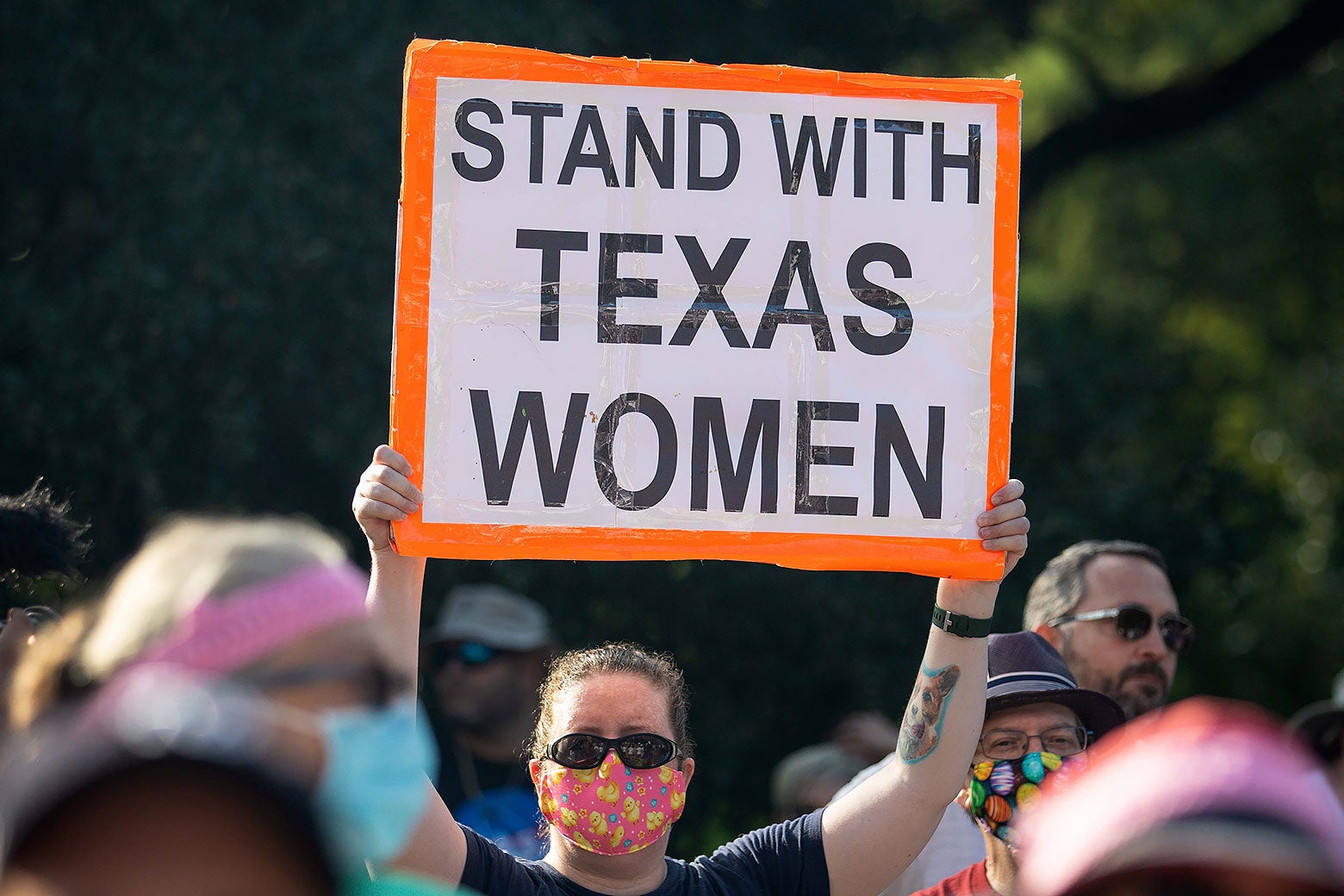
Texas’ controversial abortion law, known as S.B. 8, is encountering significant legal challenges that could redefine the boundaries of free speech in relation to reproductive rights. Enacted in 2021, S.B. 8 permits private citizens to sue anyone who performs an abortion after six weeks of pregnancy, effectively placing Texas at the forefront of national abortion debates. Recent developments indicate that this law, once considered a powerful tool for anti-abortion advocates, may be losing its legal foothold as new litigation unfolds.
Legal Landscape Changes for S.B. 8
Initially, S.B. 8 inspired similar legislation in conservative states and was upheld by the Supreme Court in a landmark ruling prior to the overturning of Roe v. Wade. The law’s implications have been profound, leading many clinics to cease offering abortions after six weeks and contributing to an uptick in births among teenagers and rising infant mortality rates across Texas.
Currently, Texas enforces a more stringent ban that prohibits abortions from the moment of fertilization, alongside a recent law that allows lawsuits against anyone involved in the distribution of abortion pills. This shift raises questions about the continuing relevance of S.B. 8 in a landscape where harsher penalties exist. However, the conversation surrounding S.B. 8 has shifted towards its impact on free speech related to abortion advocacy.
Recent lawsuits highlight attempts by anti-abortion groups to suppress discussions and support for abortions through litigation. For instance, conservative attorneys general are pursuing Planned Parenthood for hundreds of millions of dollars over statements comparing the safety of the abortion pill mifepristone to common medications like Tylenol. Additionally, North Dakota has filed a suit against Mayday Health, an organization providing information on reproductive alternatives, based on advertisements suggesting their website as a resource for those seeking abortion options.
Free Speech and the Future of Abortion Advocacy
The legal battles surrounding S.B. 8 could determine whether states with strict abortion laws can limit advocacy and support for abortions. In 2022, two Texas advocacy groups began exploring avenues to safeguard their operations, which assist individuals in accessing abortions out of state. They quickly found themselves targeted under S.B. 8, prompting them to file lawsuits arguing that the law infringes on their First Amendment rights by stifling essential conversations and support systems.
These lawsuits assert that the vagueness of S.B. 8 creates confusion about permissible actions, and they contend that it violates equal protection principles by establishing unique procedural rules solely for those leveraging the law for litigation. While district courts in Chicago and Washington, D.C., dismissed some related federal suits on procedural grounds, concerns remain among abortion opponents regarding the constitutional implications of these challenges.
In a notable case, Weldon v. Lilith Fund, the Texas Supreme Court is now considering arguments that constitutional challenges to S.B. 8 could undermine protected speech. In this case, private citizen Sadie Weldon sought to depose the deputy director of the Lilith Fund, using a special Texas mechanism that allows individuals to investigate potential claims prior to filing a lawsuit. Weldon’s actions appear to be influenced by Jonathan Mitchell, the architect of S.B. 8, who has employed similar petitions.
The Lilith Fund is prepared to leverage Weldon’s petition as a platform for a constitutional challenge against S.B. 8. In response, Mitchell has sought to dismiss the countersuit, citing anti-SLAPP (Strategic Lawsuit Against Public Participation) laws intended to protect individuals from frivolous lawsuits aimed at silencing public discourse. Lower courts have ruled against Weldon and other anti-abortion plaintiffs, concluding that the Lilith Fund’s actions aim to ensure that unconstitutional statutes are not enforced rather than to suppress speech.
The Texas Supreme Court recently heard oral arguments in Weldon’s case, which may not have significant implications if deemed moot due to Weldon’s withdrawal from her petition. Nevertheless, the case emphasizes that S.B. 8 remains a vital point of contention in ongoing discussions about abortion rights and free speech.
As the legal landscape evolves, the ramifications of these court decisions will extend beyond Texas, potentially influencing similar debates in states grappling with stringent abortion laws. The outcome may establish crucial precedents regarding the limits of censorship on discussions related to abortion, even in jurisdictions where such practices are criminalized.