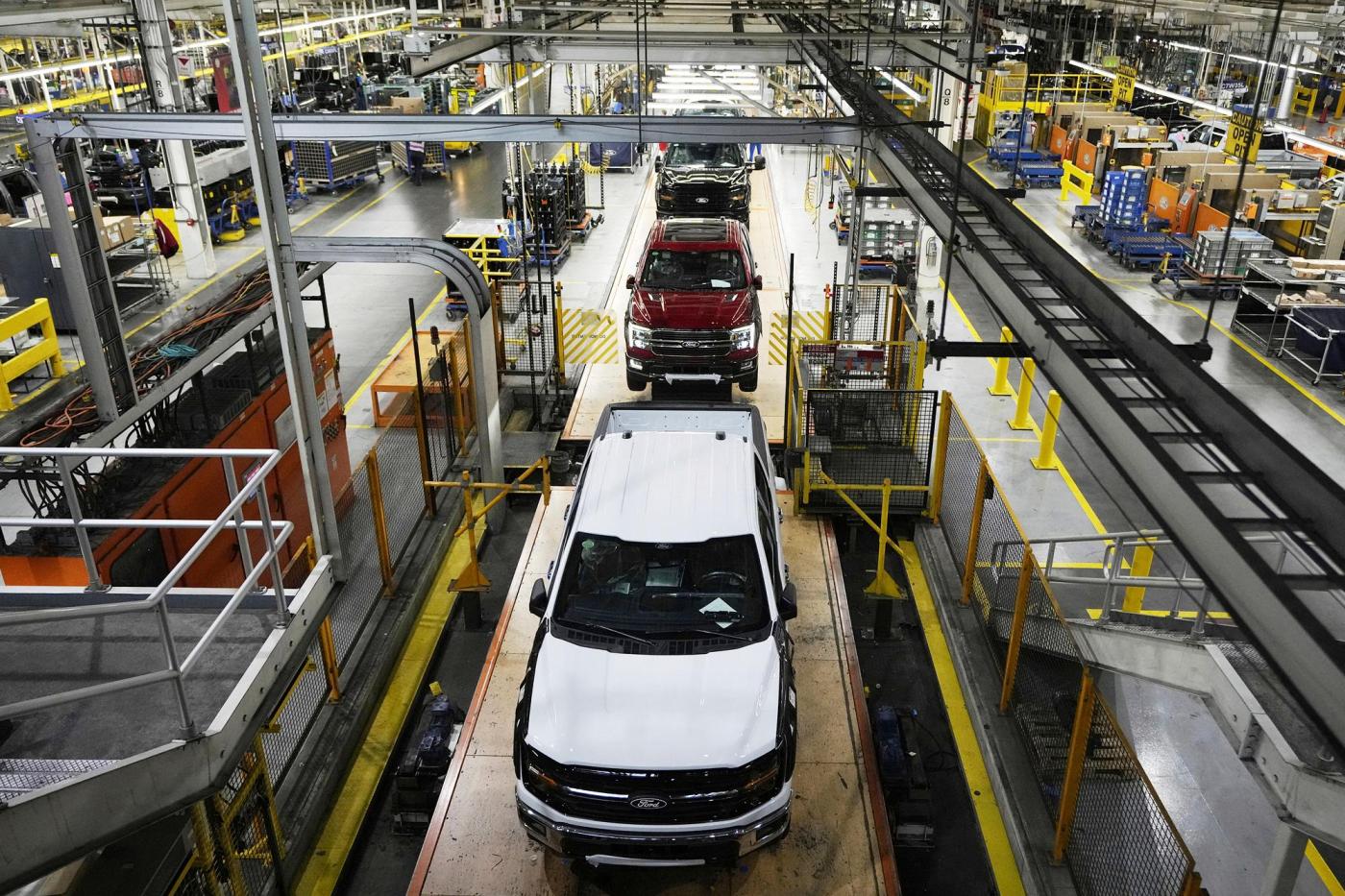
The U.S. manufacturing sector has experienced a significant decline, losing approximately 68,000 jobs over the past year. Data from the Bureau of Labor Statistics indicates that employment in manufacturing has contracted for 11 consecutive months, with a notable drop reported in December 2025. Concurrently, surveys from the Institute for Supply Management show that manufacturing activity has been on a downward trajectory for the past 10 months, reaching its lowest point in December.
Despite the administration’s claims of an “American manufacturing boom,” the anticipated turnaround has yet to materialize. President Donald Trump has promoted tariffs as essential for revitalizing domestic manufacturing, citing billions in new investments. However, experts argue that the impact of these tariffs is not immediate.
Jay Zagorsky, a business professor at the Questrom School of Business, likens the manufacturing sector to a massive ship, emphasizing that the effects of tariff policies take considerable time to manifest. He notes that constructing factories requires extensive planning and resources, making swift changes challenging.
Economist Peter Mueser from the University of Missouri concurs that while tariffs theoretically support domestic manufacturing, the process is gradual. He points out that uncertainty surrounding tariff policies may inhibit manufacturers from committing to expansion in the U.S. Mueser observes, “Large tariffs have been imposed, and then they’ve been reduced, and then they’ve been eliminated for some period of time or postponed. There’s no certainty about the level of tariffs going into the future.”
The political landscape adds another layer of complexity. With the current administration having three years remaining, Mueser mentions that the continuation of tariffs under the next president is uncertain. Additionally, the Supreme Court is currently reviewing Trump’s authority to impose tariffs, potentially altering the landscape in a matter of days.
Zagorsky highlights that the current tariff environment contributes to confusion among manufacturers. He states, “I think a lot of manufacturers are thinking, ‘Do I build a factory in the United States? Yes. No.’ I think people are just waiting for the Supreme Court.” This indecision reflects a broader concern about the effectiveness of tariffs in restoring manufacturing jobs.
The National Association of Manufacturers (NAM) has expressed concerns that tariffs could be detrimental to manufacturers. Their latest survey reveals that a significant 80% of manufacturers have incurred costs due to tariffs on imported manufacturing inputs since the beginning of 2025. NAM President and CEO Jay Timmons has previously stated that U.S. manufacturers are seeking trade agreements that guarantee zero tariffs.
Experts suggest that while reshoring manufacturing could benefit certain sectors, it may lead to higher costs for American consumers. Mueser explains that production costs in the U.S. are generally higher than in countries like the Philippines or China, largely due to wage differences. Nonetheless, he acknowledges the potential for a reshoring effect that could benefit specific industries.
In light of national security concerns regarding reliance on foreign suppliers, Zagorsky advocates for diversifying supply chains. He believes that while not all factories need to reside in the U.S., enhancing access to essential goods from allied nations would strengthen national security.
As the manufacturing sector grapples with these challenges, the effectiveness of tariffs remains a contentious topic. The future of American manufacturing hangs in the balance, influenced by political, economic, and global factors that continue to evolve.