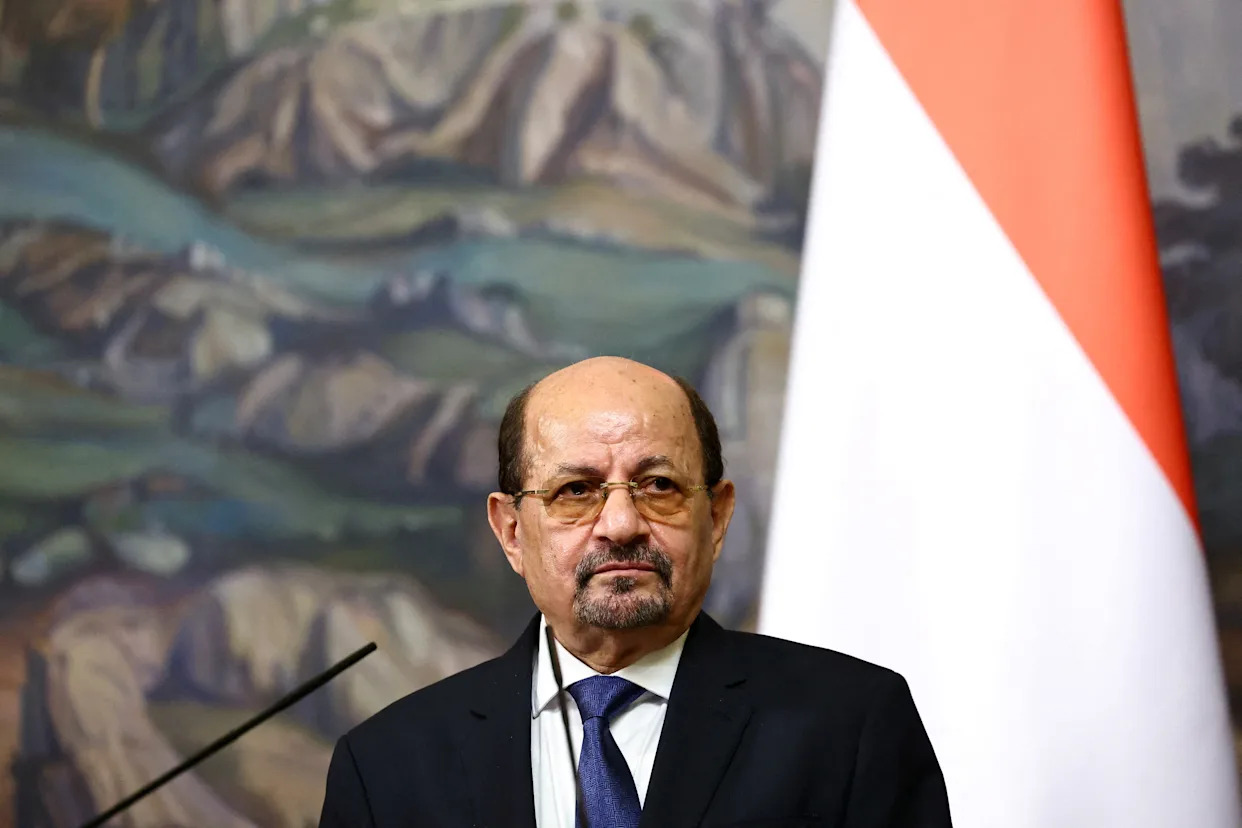
Yemen’s presidential leadership council, supported by Saudi Arabia, has accepted the resignation of Prime Minister Salem bin Breik and appointed Shaya Mohsin al-Zindani, the former foreign minister, as the new prime minister. The state news agency Saba reported that bin Breik’s resignation was formally submitted and approved before al-Zindani was tasked with forming the next cabinet.
This leadership change comes at a time of increasing tensions between Saudi Arabia and the United Arab Emirates (UAE) regarding control and influence in southern Yemen. The Southern Transitional Council (STC), a key separatist group backed by the UAE, has made significant territorial gains in southern and eastern Yemen, coming perilously close to the Saudi border. These developments have heightened Saudi concerns about national security.
In December, Saudi-backed fighters managed to reclaim many of the areas previously lost to the STC. However, underlying differences over geopolitical issues and oil production continue to strain relations between the two Gulf powers. Previously, Saudi Arabia and the UAE had collaborated in a coalition against the Iran-backed Houthis during Yemen’s ongoing civil war, which has resulted in one of the worst humanitarian crises globally.
Changes in Leadership Structure
On the same day as al-Zindani’s appointment, Yemen’s eight-seat presidential council dismissed Faraj Salmeen Al-Bahsani, a southern separatist leader, consolidating Saudi Arabia’s control over the decision-making body. Al-Bahsani had been receiving medical treatment in the UAE and previously served as governor of Hadramout, Yemen’s largest province, which has been a focal point for separatist activities.
The resolution to dismiss Al-Bahsani cited multiple reasons, including his support for Aidarous al-Zubaidi, the STC leader who was recently accused of “high treason” and fled to the UAE. Following his dismissal, Al-Bahsani expressed his commitment to the southern forces, emphasizing their refusal to unify under the command of a Saudi-led coalition, a sentiment he shared in an interview with the AFP news agency.
Al-Bahsani also urged Saudi Arabia to facilitate meetings for southern factions outside the kingdom, suggesting that such gatherings in Riyadh could exert undue pressure on participants. Earlier this month, a high-level delegation from the STC claimed to have dissolved their group while in Riyadh for talks, alleging coercion from Saudi authorities.
Financial Support and New Appointments
Following the leadership changes, the presidential council appointed two pro-Saudi figures to replace Al-Zubaidi and Al-Bahsani. Lieutenant General Mahmoud al-Subaihi, a former defense minister, and Salem al-Khanbashi, the governor of Hadramout, were selected to enhance Saudi influence in the council.
In a separate but related development, Saudi Arabia announced a financial commitment of $90 million to Yemen, aimed at covering two months of salaries for public servants and military personnel. This follows a prior pledge of $500 million for humanitarian projects aimed at alleviating the ongoing crisis in the country.
As Yemen continues to navigate its complex political landscape, the ramifications of these leadership changes and financial interventions will be closely monitored, both within the country and by international observers.