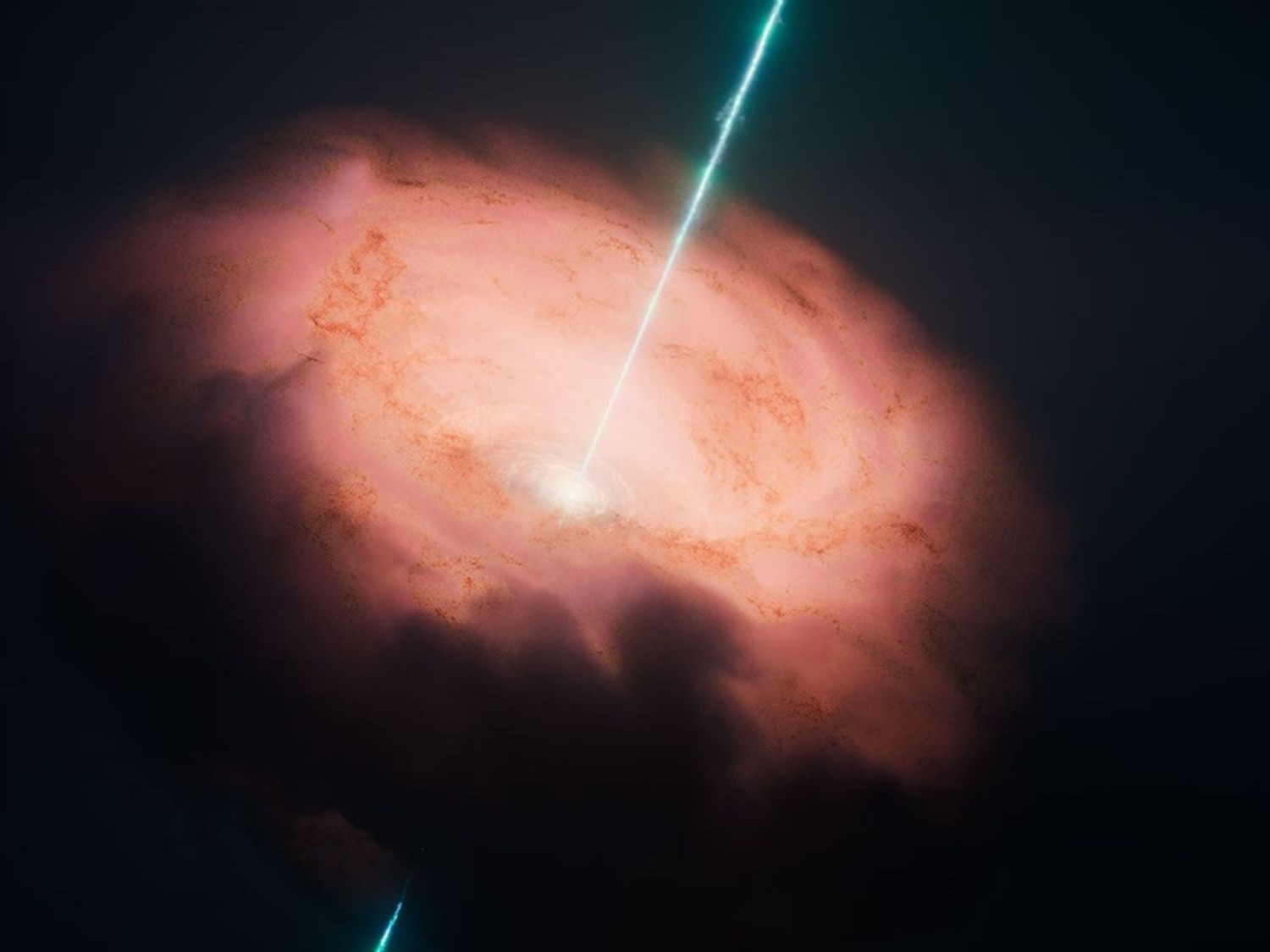
The James Webb Space Telescope (JWST) has achieved a significant milestone by capturing its sharpest images yet of the environment surrounding the supermassive black hole known as Sagittarius A*. This achievement, announced on October 27, 2023, marks a pivotal moment in astrophysics, providing new insights into black hole dynamics and their effects on nearby matter.
These images reveal the intricate details of gas clouds and stars swirling around Sagittarius A*, located at the center of the Milky Way galaxy. The JWST’s advanced capabilities allow it to observe these phenomena in unprecedented clarity, contributing to the ongoing understanding of black holes and their gravitational influence.
Unveiling the Mysteries of Black Holes
The images were obtained through a collaboration between NASA and the European Southern Observatory (ESO). Researchers utilized the telescope’s infrared capabilities to penetrate dust and gas that typically obscure such celestial bodies. The JWST’s observations complement previous data collected from the Event Horizon Telescope (EHT), which produced the first-ever image of a black hole’s event horizon in 2019.
Dr. Klaus Pontoppidan, a JWST project scientist, stated, “These new images provide a treasure trove of information about the dynamics of the black hole’s environment.” He emphasized that the data could lead to a deeper understanding of how black holes grow and influence their surroundings.
The images showcase various structures, including luminous gas streams and dynamic star formations. They not only highlight the beauty of the cosmos but also offer critical data that could lead to breakthroughs in theoretical models of black hole behavior.
Impacts on Future Research
The findings from the JWST are expected to drive future research efforts. Scientists plan to analyze the data to gain insights into how black holes feed on surrounding material and how they shape the evolution of galaxies. This research is critical, as black holes are believed to play a significant role in galactic formation and development.
Additionally, these images may provide clues about the nature of dark matter and energy, which remain some of the most profound mysteries in modern astrophysics. With the JWST’s capabilities, researchers have the potential to explore these questions more effectively than ever before.
As scientists continue to sift through the wealth of data provided by the JWST, the astronomical community is optimistic about the new discoveries that lie ahead. The telescope’s ability to capture such detailed images of Sagittarius A* serves as a reminder of the advanced technology now available for exploring the universe and its complex phenomena.