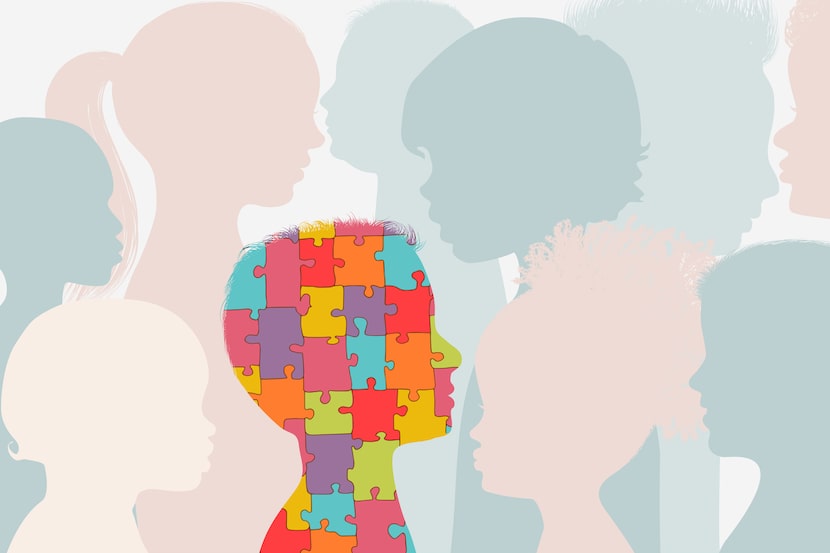
The increasing awareness of Autism Spectrum Disorder (ASD) highlights the need to recognize individual strengths rather than deficits. Recent estimates from the Centers for Disease Control and Prevention indicate that approximately 1 in 31 children in the United States are affected by ASD. Remarkably, between 30% and 50% of this population exhibit average or above-average functioning abilities, allowing them to manage many daily tasks independently despite facing social and sensory challenges.
For many, the perception of autism has historically been clouded by misconceptions. The initial tendency is to categorize individuals with ASD as disordered or less capable. However, this perspective is changing as more people engage with those on the spectrum. Real-world interactions reveal that individuals with ASD are not merely defined by their condition; rather, they are unique individuals with distinct talents and viewpoints.
Insights from Autism Advocates
Prominent advocates like Temple Grandin, a professor at Colorado State University, challenge conventional views of autism. Grandin, who has ASD herself, emphasizes that her differences have become strengths, enabling her to understand animal behavior in ways that others may overlook. She underscores the importance of recognizing autism as a different way of perceiving the world, rather than a deficit.
Both Grandin and historical figures like Opal Whiteley, a child author from the early 20th century, illustrate the rich inner worlds that can exist alongside ASD. Whiteley’s journals reveal a deep connection to nature and an imaginative perception that, while often misunderstood, offer profound insights into human experience. These narratives highlight the distinct challenges faced by those on the spectrum, particularly those with more severe forms of autism.
As the spectrum varies widely, individuals with ASD experience a range of challenges and strengths. For example, while many face significant social hurdles, others navigate daily life with remarkable independence. Understanding this diversity is crucial for fostering empathy and support.
A Personal Journey of Understanding
The journey of understanding autism often becomes more personal through familial connections. Reg Grant, a retired professor emeritus at Dallas Theological Seminary, reflects on his own experiences with his grandson, Evan, who has ASD. Grant notes that despite their age difference—he is over 60 years older than Evan—he frequently learns from his grandson’s unique perspective on the world. This relationship has opened Grant’s eyes to the beauty and wonder that ASD can reveal, transforming his understanding of the condition.
The insights gained from individuals like Grandin, Whiteley, and Evan highlight the importance of viewing autism as a spectrum full of potential rather than a barrier. They encourage society to recognize and celebrate differences, fostering an environment that allows diverse perceptions to flourish.
Through these connections, observers gain more than just an intellectual understanding of autism; they acquire an experiential grasp of human perception itself. Listening to the voices of those on the spectrum enriches the broader societal view, revealing a world that might otherwise remain unrecognized.
Ultimately, this journey serves as a reminder of the value of diversity in human experience. Embracing differences can lead to greater understanding and appreciation, enriching our collective worldview in ways we may never have imagined.