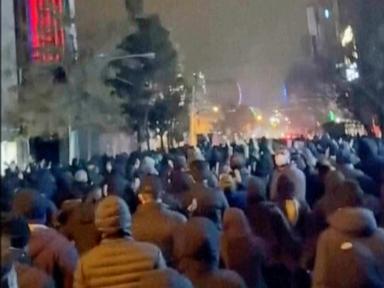
Nationwide protests in Iran challenging the theocratic regime have entered their second week, resulting in a reported death toll of at least 116 people, according to activists. Demonstrators have filled the streets of both the capital, Tehran, and the country’s second-largest city, Mashhad, amid escalating violence and a crackdown by security forces.
The protests began on December 28, 2023, triggered by the collapse of the Iranian rial, which has depreciated to over 1.4 million to $1. Frustration with the economy, exacerbated by international sanctions related to Iran’s nuclear program, has fueled calls for significant political change. Activists from the U.S.-based Human Rights Activists News Agency reported that more than 2,600 individuals have been detained as authorities attempt to quell dissent.
As communication networks have been severely restricted, with internet services down and phone lines cut off, gathering accurate information about the protests has become increasingly challenging. This information blackout raises concerns that hard-liners within Iran’s security services may feel emboldened to implement a more violent response to demonstrators.
U.S. President Donald Trump expressed support for the protesters, stating on social media, “Iran is looking at FREEDOM, perhaps like never before. The USA stands ready to help!!!” Reports from The New York Times and The Wall Street Journal indicated that Trump has been presented with military options regarding Iran, although no final decision has been made.
Videos reportedly sent from Iran showed protests occurring in various locations, including the Punak neighborhood in northern Tehran. Demonstrators were seen gathering, waving lit mobile phones, banging metal objects, and launching fireworks. In Mashhad, footage depicted clashes between protesters and security forces, with flaming debris blocking streets. The significance of protests in Mashhad is heightened due to the presence of the Imam Reza shrine, the holiest site in Shiite Islam.
In addition to the unrest in major cities, protests have also been reported in Kerman, approximately 800 kilometers (500 miles) southeast of Tehran. Iranian state television attempted to downplay the unrest by broadcasting scenes from various cities, showcasing calm areas while omitting footage from Tehran and Mashhad. They also highlighted pro-government demonstrations in cities like Qom and Qazvin.
As tensions rise, Supreme Leader Ayatollah Ali Khamenei has signaled a forthcoming crackdown, with Iranian Attorney General Mohammad Movahedi Azad warning that participation in protests could lead to charges of being an “enemy of God,” a crime punishable by death. This warning, broadcasted on state television, extends to anyone perceived as aiding protesters.
On the international stage, Iran’s exiled Crown Prince Reza Pahlavi has also called for continued protests, encouraging demonstrators to reclaim public spaces and unite under national symbols, such as the old lion-and-sun flag. His call for action has sparked mixed reactions, particularly with past support from Israel drawing scrutiny.
The situation remains fluid as Iran’s theocracy struggles to maintain control amid rising public discontent. As protests continue, the global community watches closely, with potential implications for Iran’s political landscape and its relations with the West.