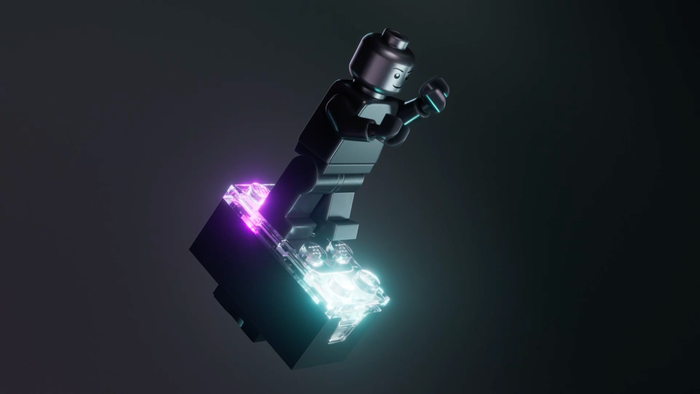
Lego has unveiled its innovative Smart Brick technology at the Consumer Electronics Show (CES) in Las Vegas, stirring a mix of excitement and concern among its adult fanbase. This new offering represents a significant shift for the iconic toy manufacturer as it integrates advanced technology into its traditional brick sets.
The Smart Brick, which retains the classic size of a two-by-four Lego piece, is embedded with sensors, lights, and a speaker, allowing it to interact with its environment. According to Lego, this technology marks one of the most notable evolutions since the introduction of figurines in 1978. The new line will launch on March 1, 2024, featuring three themed sets from the popular Star Wars franchise, priced at $70 for a Darth Vader set, $100 for Luke’s Red Five X-Wing, and $160 for Darth Vader’s Throne Room Duel & A-Wing set.
As the company pushes deeper into the realm of digital interactions, reactions from the community of adult Lego fans, often referred to as AFOLs (Adult Fans of Lego), have been mixed. While some enthusiasts express curiosity about the technology, others voice concerns regarding the perceived “tech-ification” of a toy that has historically emphasized imaginative play.
Jake Doll, a 33-year-old Lego enthusiast who shares his builds on social media, commented, “I’ve loved the creativity involved without Smart Bricks. I think they’ll put more investment in tech as it can increase the overall purchase price.” Many fans fear that the introduction of these high-tech components will lead to increased costs, compounding the existing sentiment that Lego products are becoming unaffordable.
The Smart Brick system allows for interaction through light detection, player movement, and proximity to other bricks. When multiple Smart Bricks are used together, they communicate wirelessly, enabling sets to respond in synchronized ways. Lego emphasizes that this system does not rely on artificial intelligence or a constant internet connection. The bricks charge wirelessly and operate without disposable batteries, playing pre-programmed sounds directly from their built-in speakers.
In a statement to Business Insider, Tom Donaldson, head of Lego’s Creative Play Lab, said, “This isn’t changing direction from what the Lego brand has always been. It’s an expansion — we’re staying true to our brand while innovating to meet how kids play today.”
Despite the excitement surrounding the technology, some experts are cautious. Bob Friedland, a former Toys R Us executive and a Lego collector with over 115 sets, expressed skepticism about the new offerings. He stated that he is more inclined to invest in a $28 fully analog Lego DeLorean DMC replica from “Back to the Future” rather than the new Smart Play sets. Friedland noted, “These bricks will definitely bump up against the already-existing feeling that Lego is too expensive.”
While Lego’s integration of technology is not new — it previously launched the Lego Mindstorms series in 1998 and introduced the Lego Super Mario line in 2020 — the current sentiment reflects a broader concern among parents regarding the increasing presence of technology in children’s toys. Some parents worry that the novelty of interactive features may quickly wear off, potentially altering the core experience of building with Lego.
Reid Exley, a 43-year-old father and Lego enthusiast, shared his perspective, stating, “As an adult fan, my joy stems from the building process and sharing that experience with my kids. My kids would likely enjoy the novelty of the sounds and interactivity. However, I suspect that novelty would quickly wear off and Lego play would remain largely unchanged.”
In contrast, some fans view the Smart Play system as a fresh challenge that could enhance the building experience. Friedland remarked, “I can already see myself trying to figure out Easter eggs that are unlocked by placing the Smart Brick in the right place or tapping it in the right sequence while it’s next to the right colored brick.”
He believes that parents who are hesitant about technology may find Smart Bricks a more suitable option compared to other tech-heavy toys on the market. “I think this is a much better solution than the AI toys out there,” Friedland added.
As Lego prepares to launch its Smart Brick technology, the company faces the challenge of balancing innovation with the traditional values that have long defined its brand. The reception of this new line will likely shape the future direction of Lego’s offerings and its relationship with its dedicated fanbase.