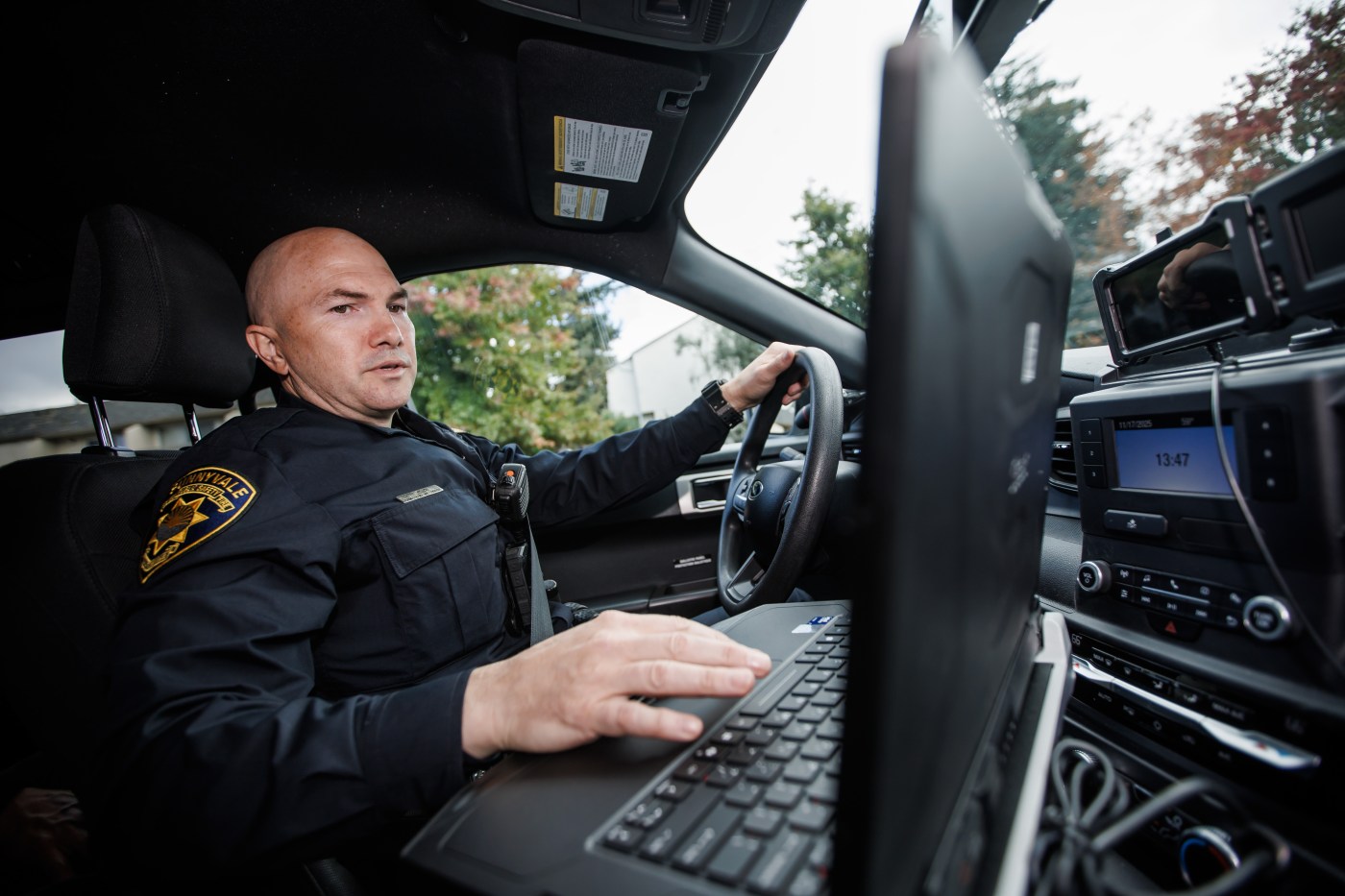
In an innovative approach to public safety, the Sunnyvale Department of Public Safety in California uniquely trains all its officers as both police and firefighters, as well as Emergency Medical Technicians (EMTs). This integrated model, which has been in place since the department’s inception in 1950, has contributed to Sunnyvale being recognized as one of the safest cities in America.
On a bright November day, Officer Andrew Tara rearranged his patrol car’s equipment outside the department headquarters in Sunnyvale. Among the usual items like evidence bags and a riot helmet, Tara’s vehicle also contained a defibrillator and a complete firefighting uniform, including a respirator. This blend of equipment reflects the multifaceted roles Sunnyvale officers take on daily.
Chief Dan Pistor emphasized the benefits of this comprehensive training model, stating, “We do three jobs all in one. You could be in a police uniform this year, and next year, you could be driving a fire engine.” This versatility is a hallmark of the department, which has celebrated its 75th anniversary and continues to adapt to the growing needs of a city that has transformed from a small agricultural community to a technological hub.
When the department was established, Sunnyvale had a population of fewer than 10,000 residents, with its public safety framework being a combination of a small police force and a volunteer fire department. City Manager Kenneth Hunter proposed the merged model to maximize resources and enhance community safety, which has endured for decades, resulting in a department that has expanded to serve a city now known for its tech giants like Google and Apple.
Despite the growth, Sunnyvale remains one of the few departments in the United States that fully cross-trains its officers. According to a 2016 assessment, out of over 18,000 police departments, only about 130 operate under such a system. This unique training requires nearly two years of instruction, during which recruits earn certifications in all three fields of public safety.
Officers rotate between fire and police duties annually, allowing for diverse experiences and skill development. Officer Matt Dupuis, who has been with the department for 11 years, noted the appeal of this flexibility: “The appeal of being able to do both is huge, and then being able to advance in the two different fields, there’s always that chance to get better.” The department claims a remarkable 90 percent retention rate post-training, an indicator of job satisfaction and engagement among officers.
Compensation also plays a role in retention. Sunnyvale’s public safety officers are among the highest-paid in the county, with salaries reaching up to $247,069. A review of city budgets by the Mercury News revealed that Sunnyvale spends less per capita on public safety than many comparable cities across the Bay Area, demonstrating fiscal efficiency alongside high salaries.
The department’s model not only saves money but also enhances response capabilities during emergencies. Officers have the training to administer medical aid at the scene of an incident, which allows for quicker response times. In situations where a crime scene overlaps with a medical emergency, officers can preserve crucial evidence while providing care, streamlining operations.
Sunnyvale has consistently ranked among the safest large cities in the United States, often appearing at the top of national safety lists. While violent crime rates are lower than those in similarly sized cities, they align closely with areas of comparable median household income. This suggests that while the integrated model contributes positively, broader socioeconomic factors also influence crime rates.
Sunnyvale Mayor Larry Klein acknowledged the multifaceted influences on public safety, including community dynamics and the city’s welcoming atmosphere. He stated, “There’s a lot that makes Sunnyvale unique… our merged model is part of the magic sauce that makes our city so great.”
Despite the successes, experts caution that adopting this model is not a one-size-fits-all solution for other municipalities. Brian Higgins, a lecturer at John Jay College of Criminal Justice, highlighted the challenges of transitioning to such an integrated system, noting, “If it ain’t broke, don’t fix it.” He recognizes the advantages of improved communication and coordination that come from a single department but observes that not all communities may be able to replicate this model effectively.
As the Sunnyvale Department of Public Safety continues to thrive, it demonstrates the potential benefits of a comprehensive approach to public safety, merging police, fire, and emergency medical services into a cohesive unit dedicated to serving the community efficiently and effectively.