Amateur astronomers can now enhance their stargazing experiences without breaking the bank by building a DIY amplifying eyepiece. This innovative approach allows for real-time observation of deep-sky objects like nebulae and galaxies, which are often difficult to see with the naked eye or through traditional telescopes.
Many enthusiasts struggle with the limitations of commercial products, which can cost anywhere from hundreds to thousands of dollars. James Provost, an amateur astronomer, sought to create a low-cost solution for public astronomy nights he organizes in his community. His goal was to develop an affordable eyepiece that would provide visitors with a better view of celestial objects, without requiring a substantial financial investment.
### Leveraging Security Camera Technology
Provost quickly discovered that the security camera industry offers affordable hardware capable of handling low-light conditions. Manufacturers of closed-circuit television (CCTV) cameras utilize a video standard known as Analog High Definition (AHD), which allows for the transmission of high-quality analog signals over coaxial cables. This technology made it feasible for Provost to repurpose security camera components for his eyepiece project.
By selecting a camera module that combines a 2-megapixel Sony IMX307 sensor with the supporting NVP2441 chipset, he established a system that operates in Starlight or Sens-Up mode. This mode enhances the camera’s sensitivity to light, enabling it to capture clearer images than the human eye, albeit with a slight reduction in speed. The camera integrates approximately 1.2 seconds of exposure time, making it suitable for observing astronomical phenomena without noticeable blur.
### Constructing the Eyepiece
The construction of the DIY eyepiece required several components, including a CMOS sensor module, a digital viewfinder, and a USB capture card for converting analog signals to digital. The output from the camera module is displayed on the viewfinder, which features user-friendly control menus navigated using a joystick. This joystick connects directly to the camera module and allows users to access various settings easily.
Provost’s design includes a 3D-printed enclosure that adapts to the standard 32-millimeter diameter of most telescope eyepieces, ensuring ease of use. The entire project cost less than USD $250, a fraction of the price of commercial alternatives.
### Testing the New Technology
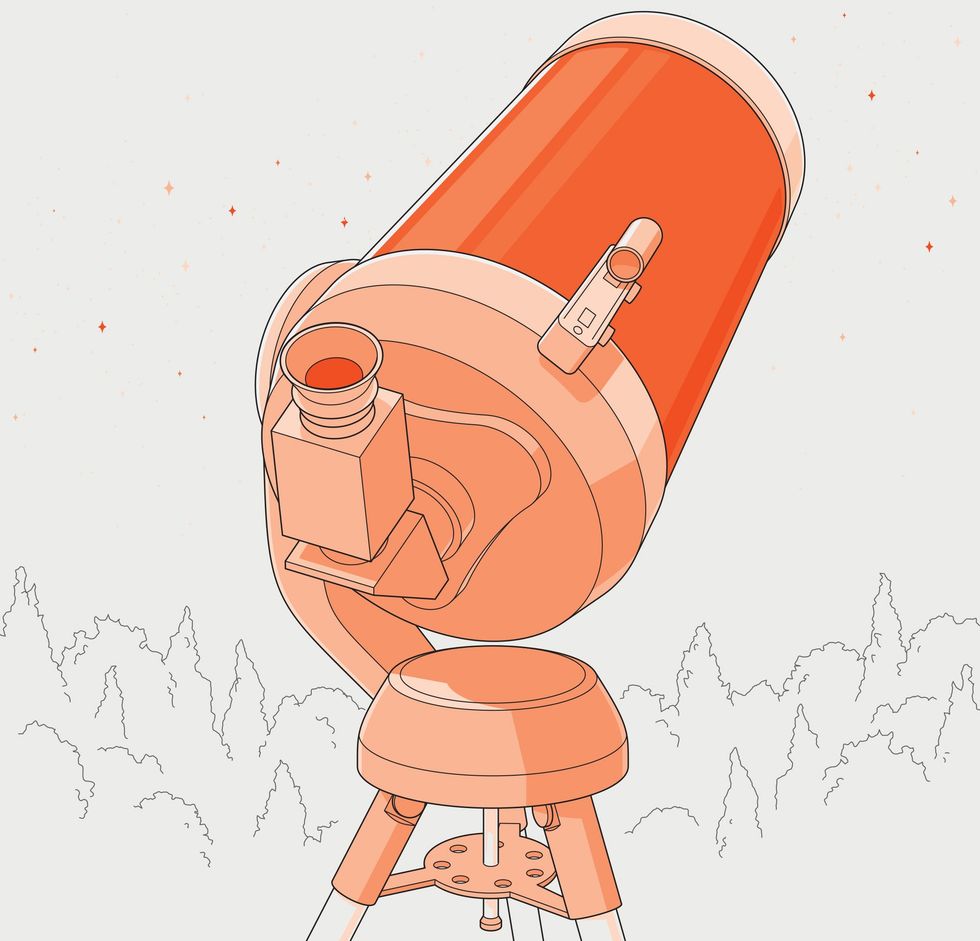
To test the new amplifying eyepiece, Provost took his creation to a stargazing event with his Celestron C11 telescope. He successfully observed the Dumbbell Nebula, also known as Messier 27, which is typically challenging to see. The nebula appeared significantly brighter through the eyepiece compared to traditional naked-eye observation.
Although the clarity was not on par with high-end commercial systems that utilize noise-reducing cooling techniques, the improvement was substantial and achieved at a minimal cost. Additionally, the eyepiece’s versatility allows it to be used as a night-vision camera by fitting a 2.8-mm HD lens onto the camera module, making it practical for dark outdoor conditions during starry nights.
This DIY approach not only democratizes access to advanced stargazing tools but also fosters community engagement in astronomy, allowing more enthusiasts to explore the beauty of the cosmos.