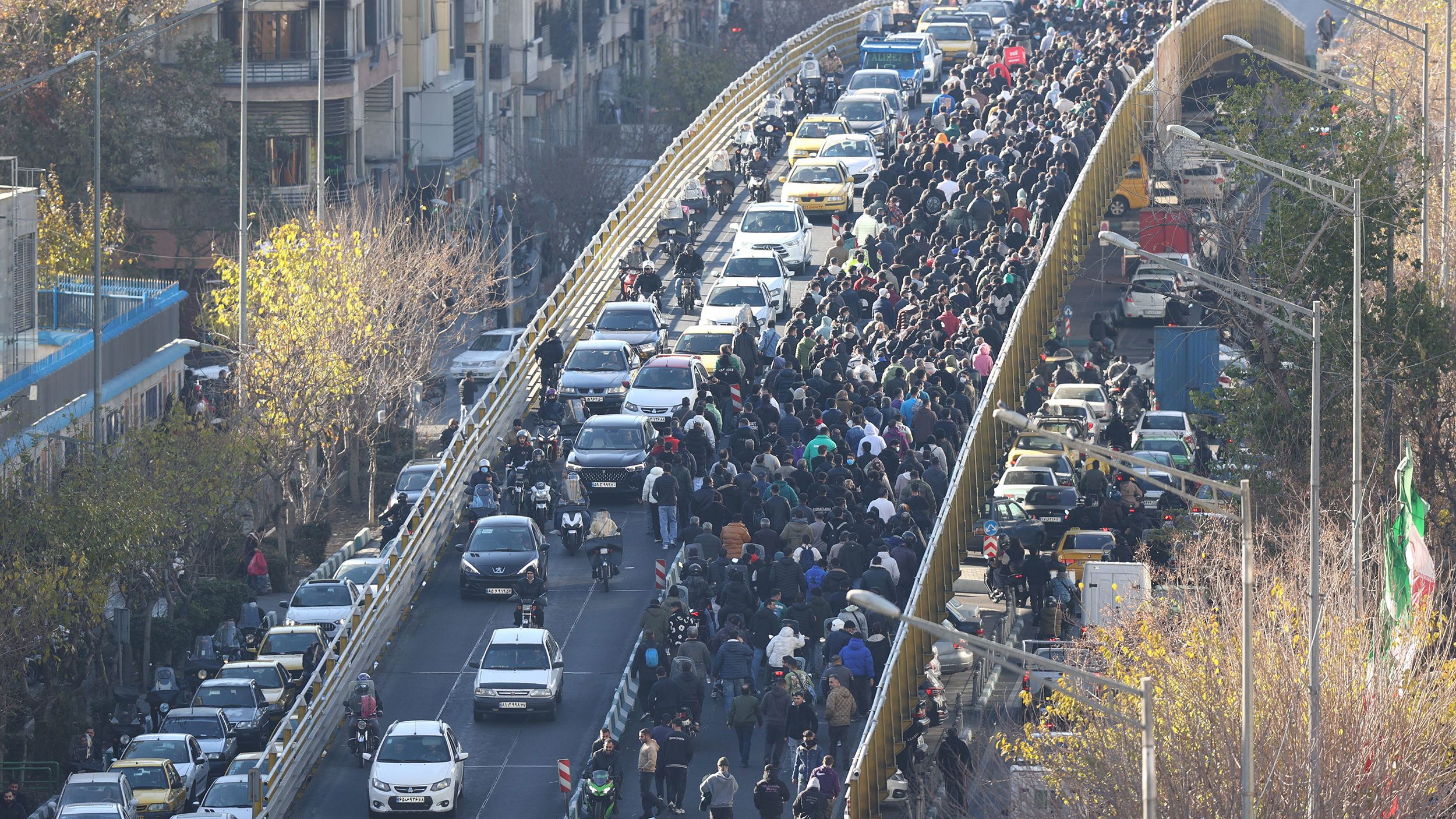
Iran has appointed a new governor for its Central Bank as the nation grapples with a severe economic crisis, which has triggered widespread protests. On Wednesday, President Masoud Pezeshkian’s Cabinet named Abdolnasser Hemmati, a former economics minister, to replace Mohammad Reza Farzin, who resigned just days after significant unrest erupted in response to the rial’s record depreciation against the U.S. dollar.
The protests began following the rial’s fall to an unprecedented low of 1.38 million rials per dollar, compared to 430,000 rials when Farzin took office in 2022. This sharp decline has been linked to a staggering inflation rate of approximately 40%, which has intensified public discontent. Many traders and shopkeepers in Tehran and other cities participated in protests by closing their businesses on Sunday, demanding action to stabilize the economy.
Hemmati’s agenda is expected to prioritize controlling inflation and strengthening the rial. He has also stated that addressing the mismanagement of banks will be a key focus. According to the government’s spokeswoman Fatemeh Mohajerani, these measures are crucial to restoring public confidence in the financial system.
Despite his previous experience as minister of economic and financial affairs, Hemmati’s return to a prominent economic role comes after a tumultuous tenure. In March, he was dismissed by parliament due to claims of mismanagement that allegedly contributed to the rial’s decline against foreign currencies.
As the economic situation deteriorates, the impact on everyday life has become increasingly severe. Rising prices for essential goods, fueled by high inflation and additional pressure from Western sanctions over Iran’s nuclear program, have placed further strain on household budgets. This situation has been exacerbated by recent adjustments in gasoline prices, which are expected to push inflation even higher.
Iran’s Prosecutor General Mohammad Movahedi Azad warned on Wednesday that any attempts to shift the focus of protests from economic grievances to issues of security would be met with a “strong reaction.” His comments came in light of escalating tensions during the demonstrations, including reports of violence and injuries among law enforcement personnel.
Significantly, Hamed Ostevar, a local judiciary official in southern Iran, denied claims that a young man had been killed during the protests. He stated that the unrest turned violent when demonstrators broke into the governor’s office, resulting in injuries to three policemen and the arrest of four protesters.
The economic challenges facing Iran are compounded by its historical context. Prior to the 2015 nuclear accord, the currency was valued at 32,000 rials to the dollar. The agreement, which eased international sanctions in exchange for stringent controls on Iran’s nuclear activities, unraveled after President Donald Trump withdrew the United States from the deal in March 2018.
Witnesses report that merchants and traders in major bazaars across Tehran, as well as in the southern city of Shiraz and the western city of Kermanshah, have kept their shops closed in solidarity with the protests. The ongoing economic crisis continues to fuel public unrest as citizens call for urgent reforms and accountability from their government.