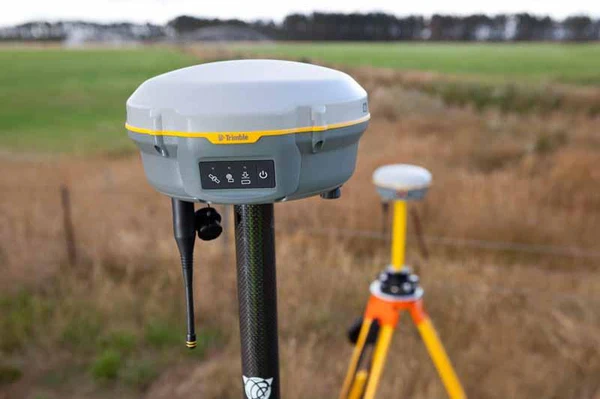
The emergence of Real-Time Kinematic (RTK) Global Navigation Satellite System (GNSS) technology is transforming the landscape of smart cities. This advanced positioning technology provides centimeter-level accuracy, significantly enhancing the precision of various industries, including construction, land surveying, and agriculture. As cities grow and evolve, the integration of RTK GNSS is becoming essential for professionals who rely on accurate geographical data.
Understanding RTK GNSS: More Than Just Accuracy
RTK GNSS operates by utilizing a network of satellites orbiting Earth. A base station sends correction signals to a mobile GNSS receiver, allowing for high-precision positioning. This functionality is particularly valuable in sectors requiring meticulous mapping and measurement, such as land surveying and autonomous vehicle navigation. Nevertheless, achieving such accuracy is not merely a matter of activating the equipment; it involves careful setup and calibration, alongside an awareness of environmental factors that may affect performance.
The technology’s efficacy can be compromised by several challenges. For instance, satellite availability is a crucial component of RTK GNSS systems. In urban environments, tall buildings may obstruct or reflect signals, leading to inaccuracies known as the “urban canyon effect.” As a result, users in densely populated areas may struggle to maintain the desired level of precision.
Environmental Influences: Atmospheric Challenges
Atmospheric conditions also play a significant role in the performance of RTK GNSS. The ionosphere and troposphere can introduce delays in satellite signals, impacting the system’s ability to provide accurate positioning. Although RTK systems can correct for some of these delays, severe weather events or solar activity may exacerbate signal issues. Consequently, while RTK GNSS can deliver high accuracy under ideal conditions, real-world scenarios often present complexities that engineers must navigate.
Another important consideration is the infrastructure required to support RTK GNSS systems. A network of strategically placed base stations is essential for transmitting correction data to mobile receivers. In remote or rural regions, this network may be insufficient, complicating the effective use of RTK technology. Additionally, maintaining this infrastructure requires ongoing technical oversight, as communication between base stations and mobile units must remain uninterrupted.
The cost associated with implementing RTK GNSS technology is another factor that can deter potential users. While the systems have become more accessible, they still entail significant expenses, particularly when accounting for base stations, correction services, and necessary software. Small-scale projects or operations with limited budgets may find the investment difficult to justify. Beyond initial costs, ongoing expenses related to training, maintenance, and potential infrastructure upgrades can further increase financial burdens.
RTK GNSS is a powerful tool that enhances precision across various fields, yet understanding its limitations is vital for effective utilization. From satellite availability to environmental conditions, professionals must acknowledge the factors influencing RTK systems. While the technology promises remarkable accuracy, users must be prepared for the complexities that may arise in practical applications.
The ongoing evolution of RTK GNSS technology offers hope for addressing many of these challenges. As professionals become more aware of the intricacies involved, they can better leverage RTK GNSS for optimal results, ensuring their projects benefit from this groundbreaking technology.