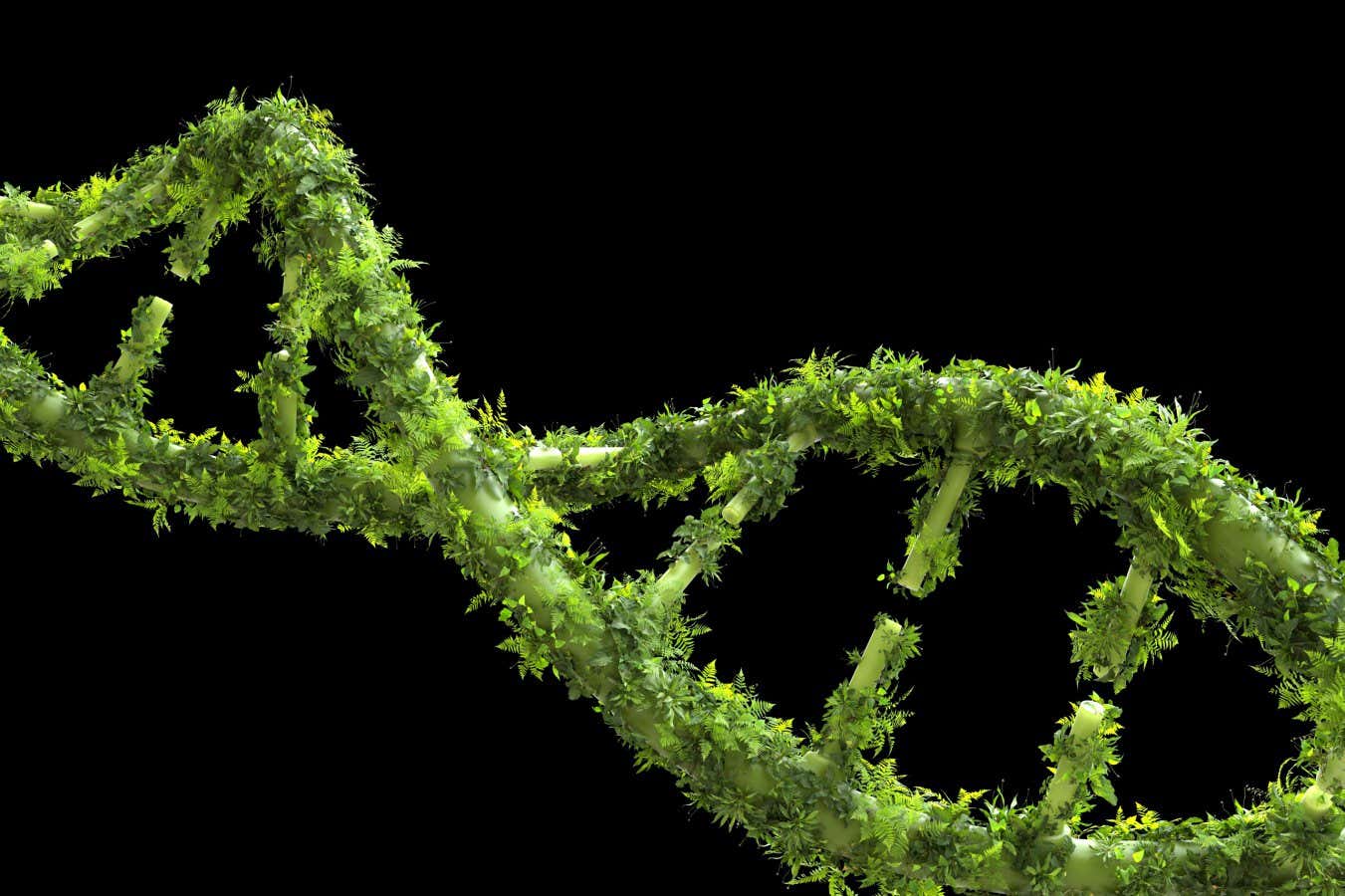
Recent research involving human cells infused with plant DNA has provided new insights into the nature of our genome, particularly regarding the concept of “junk DNA.” Scientists at the University of Auckland in New Zealand have conducted experiments that suggest much of the activity in our genome may not serve any essential function. The findings challenge long-held beliefs about the significance of non-coding DNA.
In an innovative approach, researchers utilized hybrid cells containing approximately 35 million base pairs of DNA from the plant species Arabidopsis thaliana. This research marks one of the largest investigations into what has been termed “random genome” projects. By comparing the activity levels of plant DNA with that of human DNA, the study aimed to clarify whether the active portions of our genome hold meaningful roles.
The results indicated that the plant DNA was nearly as active as the human DNA, suggesting that a significant proportion of genome activity could be attributed to “background noise.” According to Brett Adey, a researcher involved in the study, “A large amount can simply be explained by background noise.” This finding aligns with the long-standing hypothesis that much of the human genome is, in essence, non-functional or “junk.”
Historically, the primary function of DNA has been understood to be the storage of instructions for producing proteins, the essential molecules that perform various tasks within cells. Initially, it was believed that nearly all DNA contained these protein-coding instructions. However, more recent research has revealed that only about 1.2 percent of the human genome actually codes for proteins. This raises the question: what purpose does the remaining DNA serve?
Since the 1960s, many biologists have advocated the idea that most of the non-coding DNA is largely redundant. Although there are critical segments of non-coding DNA, the consensus among certain researchers is that these discoveries will not significantly alter the overall perception of the human genome as predominantly junk. For instance, a study conducted in 2011 found that only about 5 percent of the genome is conserved throughout evolutionary history, implying that the remainder may not be functionally important.
Some scientists have taken a different approach, focusing on whether human DNA is transcribed into RNA, regardless of whether that RNA has a known purpose. A comprehensive project known as ENCODE, launched in 2012, claimed that over 80 percent of the human genome is active in this sense, suggesting it has meaningful functions. This notion has led to the term “dark DNA,” referring to non-coding segments that may hold significance we have yet to comprehend.
In response to these claims, Sean Eddy from Harvard University proposed the idea of a random genome project, questioning whether synthetic DNA inserted into human cells would exhibit similar activity levels as those observed in the ENCODE project. “You can’t really conclude anything just from measuring activity,” he stated, emphasizing the need for a baseline to interpret meaning.
The team at the University of Auckland capitalized on this idea after learning about the creation of hybrid cells with extensive plant DNA. They aimed to analyze the transcriptional activity of the plant DNA when introduced into human cells. Following initial validations, Adey and his colleague Austen Ganley measured the number of starting points for RNA production across the non-coding regions of both human and plant DNA.
Surprisingly, the results revealed that the plant DNA had about 80 percent as many transcription start sites per kilobase compared to human DNA. This finding strongly suggests that much of the activity previously recorded by ENCODE could be attributed to noise, rather than essential biological function.
“This is an excellent demonstration of how biology is, indeed, noisy,” noted Chris Ponting from the University of Edinburgh. He added that the biochemical activities observed within the plant sequences do not confer any functional role on human cells.
The study has received praise for its elegant design and its contribution to the ongoing debate surrounding junk DNA. Dan Graur from the University of Houston remarked, “This very elegant study was needed. It offers yet more experimental evidence confirming what has been obvious for years: most of the human genome is junk.”
Despite the intriguing findings, the research team noted that they cannot yet explain why human DNA exhibited 25 percent more activity than the plant DNA. This discrepancy raises further questions about the potential functions of some RNAs produced by human genes. The researchers are currently employing machine learning techniques to differentiate between meaningful genetic activity and background noise.
While the study has yet to be published formally, its implications are significant in the ongoing exploration of genetic function and the understanding of our genome. As science progresses, further inquiries into the complexities of DNA will continue to reshape our comprehension of genetic material and its roles within living organisms.