President Donald Trump is set to meet with Israeli Prime Minister Benjamin Netanyahu at his Mar-a-Lago estate in Florida on Monday. This meeting comes at a pivotal time as the United States seeks to reinvigorate efforts for a U.S.-brokered ceasefire in Gaza. The current ceasefire, which has largely held since its initiation in October, faces significant challenges as both sides accuse each other of violations.
Ceasefire Challenges and Next Steps
The ceasefire began shortly after the two-year anniversary of a Hamas-led attack that resulted in the deaths of around 1,200 people. While most hostages taken during that incident have been released, the peace process has recently stalled. Divisions have emerged among the U.S., Israel, and various Arab nations regarding the path forward.
Trump’s ambitious 20-point plan for Gaza, which received approval from the U.N. Security Council, aims to dismantle Hamas’ control over the region. The plan outlines a complex second phase that includes rebuilding Gaza under international supervision. During their discussions, Trump may attempt to leverage his strong rapport with Netanyahu to accelerate the peace process, especially amid criticism that Netanyahu has not acted decisively enough.
Mona Yacoubian, director and senior adviser of the Middle East Program at the Center for Strategic and International Studies, expressed skepticism about the potential for agreement. “This is going to be a really tall order for President Trump to get Netanyahu to agree,” she stated. “How he applies pressure on Netanyahu will be crucial.” She also pointed out that differing approaches to the region may become apparent during the meeting.
Key Issues on the Agenda
If successful, the next phase of Trump’s plan would see a demilitarized Gaza governed by a “technocratic, apolitical” committee under the supervision of a group called the Board of Peace, chaired by Trump. This phase also envisions normalizing relations between Israel and Arab nations, potentially paving the way for Palestinian independence.
However, significant logistical and humanitarian challenges remain. Rebuilding Gaza, disarming Hamas, and establishing an International Stabilization Force are all critical components of the plan. This multinational body would be tasked with maintaining security in the region. Yet, the formation of this force has not yet materialized, and disagreements persist over its mandate between U.S.-Israeli expectations and those of other nations.
Currently, Israeli officials are meticulously vetting members of the Palestinian technocratic committee, which has delayed progress. Additionally, ongoing military operations continue to complicate the situation. A Western diplomat noted that there exists a “huge gulf” between U.S. and Israeli perspectives regarding the stabilization force’s role compared to that of regional and European powers.
Hamas has indicated a willingness to discuss “freezing or storing” its weapons but maintains its right to armed resistance as long as Israeli occupation persists in Palestinian territories. One U.S. official mentioned that a potential strategy might involve offering financial incentives for disarmament, echoing a previous proposal by U.S. Mideast envoy Steve Witkoff.
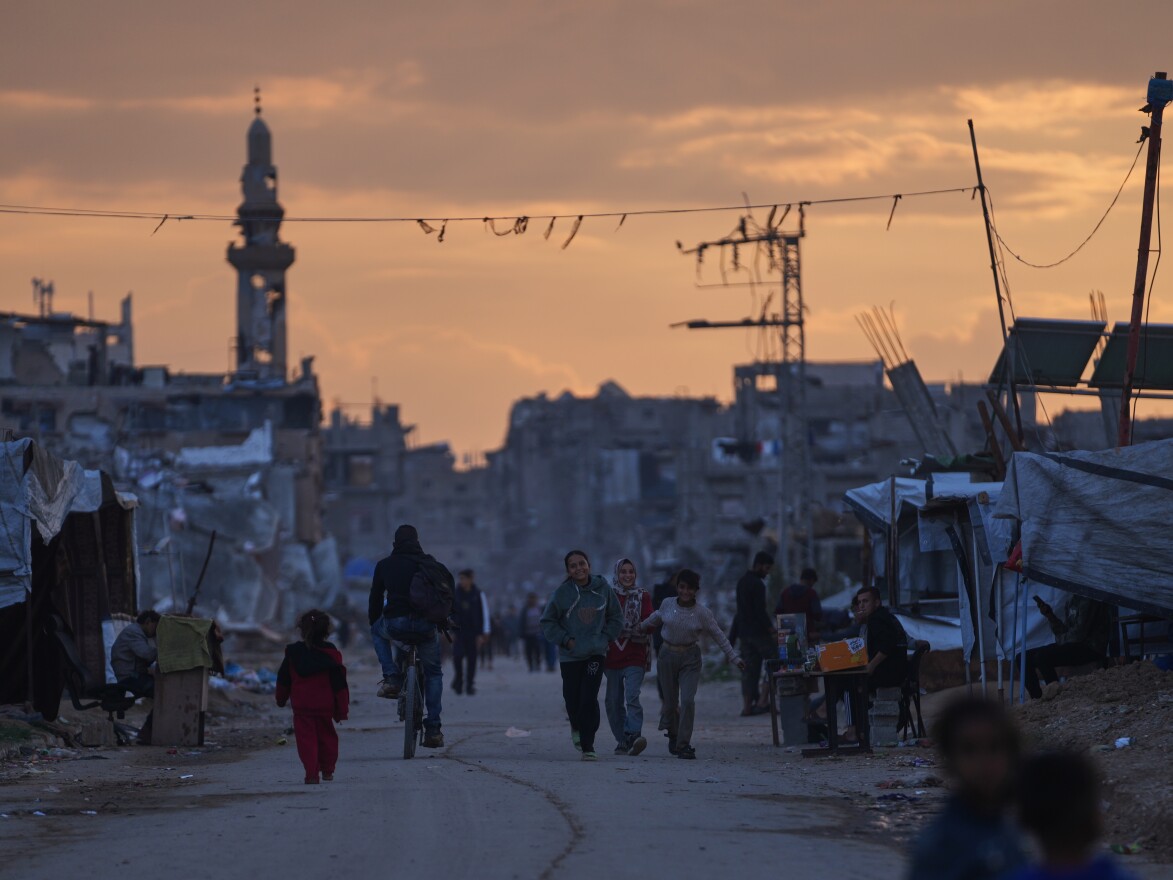
The humanitarian situation in Gaza remains dire, with extensive damage from Israeli bombardment leaving many neighborhoods in ruins. Countries such as Egypt, Qatar, Saudi Arabia, and Turkey are advocating for a negotiated settlement regarding the disarmament of Hamas and further Israeli withdrawals before advancing on reconstruction efforts.
Discussions are reportedly ongoing regarding the funding of reconstruction in Gaza, with the United Arab Emirates indicating a willingness to invest in new housing communities. However, the conditions under which such funding would be provided remain unclear, particularly concerning commitments from both Israel and Hamas regarding statehood and disarmament.
This meeting between Trump and Netanyahu marks their first face-to-face encounter since the start of the ceasefire’s initial phase in October. The outcome of their discussions may significantly influence the future trajectory of peace efforts in the region, with many complexities still to navigate.