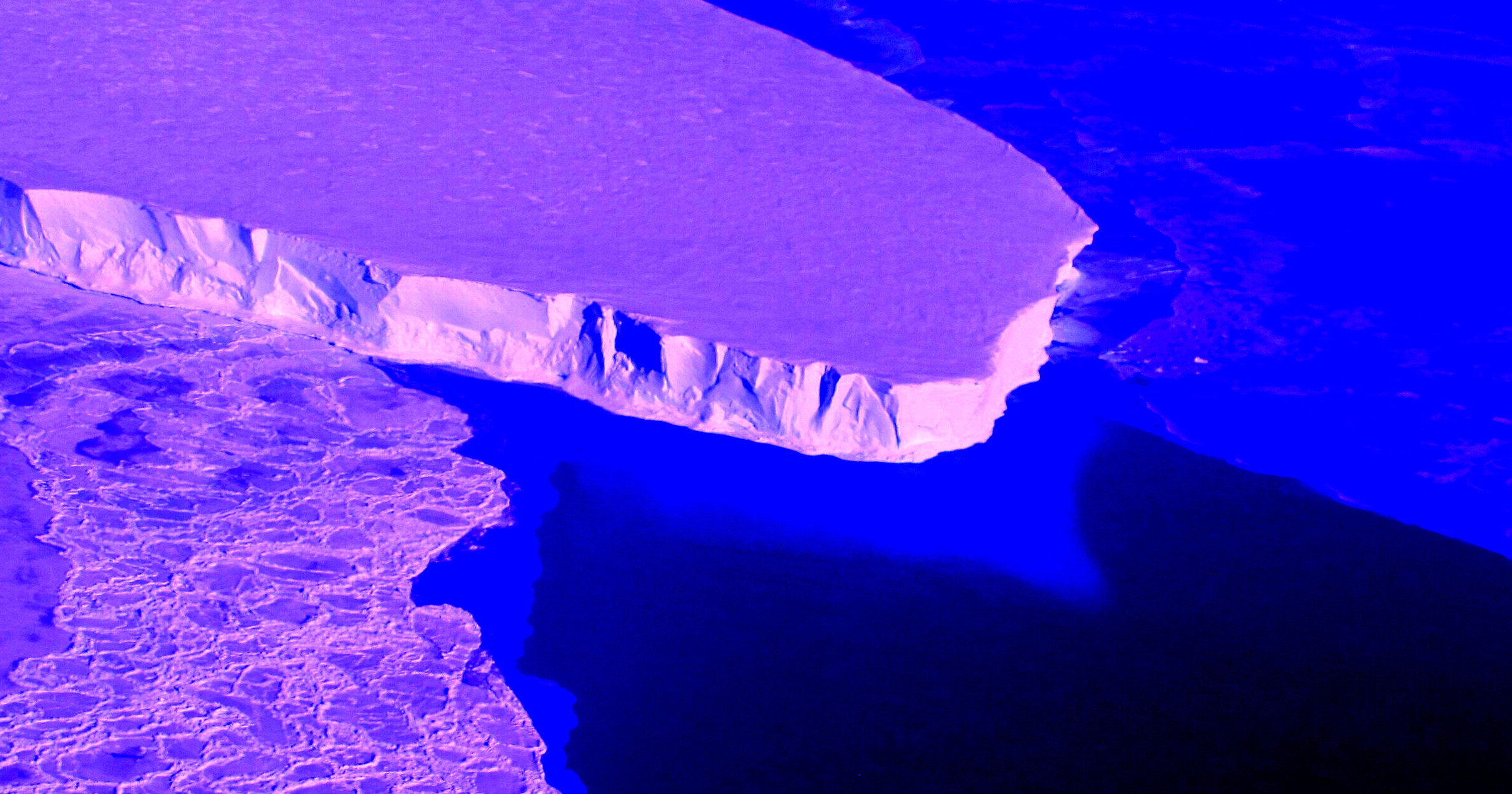
The Thwaites Glacier, often referred to as the “Doomsday Glacier,” is on the brink of catastrophic collapse, which could have dire consequences for global sea levels and coastal communities. Researchers have observed a rapid acceleration in its retreat, with new studies revealing that large cracks are forming in the ice shelf, further compromising its structural integrity. According to a report by the International Thwaites Glacier Collaboration (ITGC), the implications of a potential collapse could result in a staggering rise of up to 11 feet in global sea levels, threatening millions of people living in coastal areas.
Researchers from the University of Manitoba conducted an extensive analysis of satellite data from 2002 to 2022, tracking the growth of fractures in the Thwaites Glacier. Their findings show that over the past two decades, the total length of these fractures has expanded from approximately 100 miles to over 200 miles. Despite this increase, the average length of the fractures has decreased, indicating that new stresses are affecting the glacier.
Warming Oceans Accelerate Ice Loss
The situation is equally concerning beneath the surface of the water. A recent study highlighted the impact of warming ocean waters on ice shelves, including the Thwaites Glacier. Researchers noted that shifts in ocean temperatures can be measured not just over years, but within hours and days, as massive swirling eddies of water, some measuring up to six miles across, erode the ice from below.
The international team of scientists identified a troubling feedback loop: when cold water from melting ice mixes with warmer, saltier ocean water, it creates turbulence that accelerates further melting. “This positive feedback loop could gain intensity in a warming climate,” stated Lia Siegelman, an assistant professor at UC San Diego and coauthor of the study.
Despite ongoing research, the long-term outlook for the Thwaites Glacier remains grim. The ITGC’s 2025 report indicates that while a full collapse may not occur in the immediate future, the glacier is expected to continue its retreat at an increasing pace throughout the 21st and 22nd centuries. “Our findings indicate it is set to retreat further, and faster,” the report states.
Urgent Need for Climate Action
The ITGC emphasizes that immediate and sustained climate change mitigation, particularly through decarbonization, is vital for delaying ice loss and preventing similar unstable retreats in other marine-based sectors of East Antarctica. The urgency of addressing climate change has never been clearer, as the potential consequences of inaction could be catastrophic for millions.
With scientists racing to fully comprehend the effects of global warming on the Thwaites Glacier, one fact remains certain: the implications of its collapse would extend far beyond Antarctica, impacting coastal communities worldwide. As research continues, the global community is reminded of the pressing need for effective climate policies and actions to safeguard the future of our planet.