
A recent study has unveiled that large amounts of water were likely stored deep within Earth’s mantle during its formative years, potentially playing a crucial role in the planet’s evolution. Conducted by a team led by Prof. Zhixue Du from the Guangzhou Institute of Geochemistry at the Chinese Academy of Sciences, this research challenges long-held beliefs regarding the planet’s water storage capabilities during its early molten state.
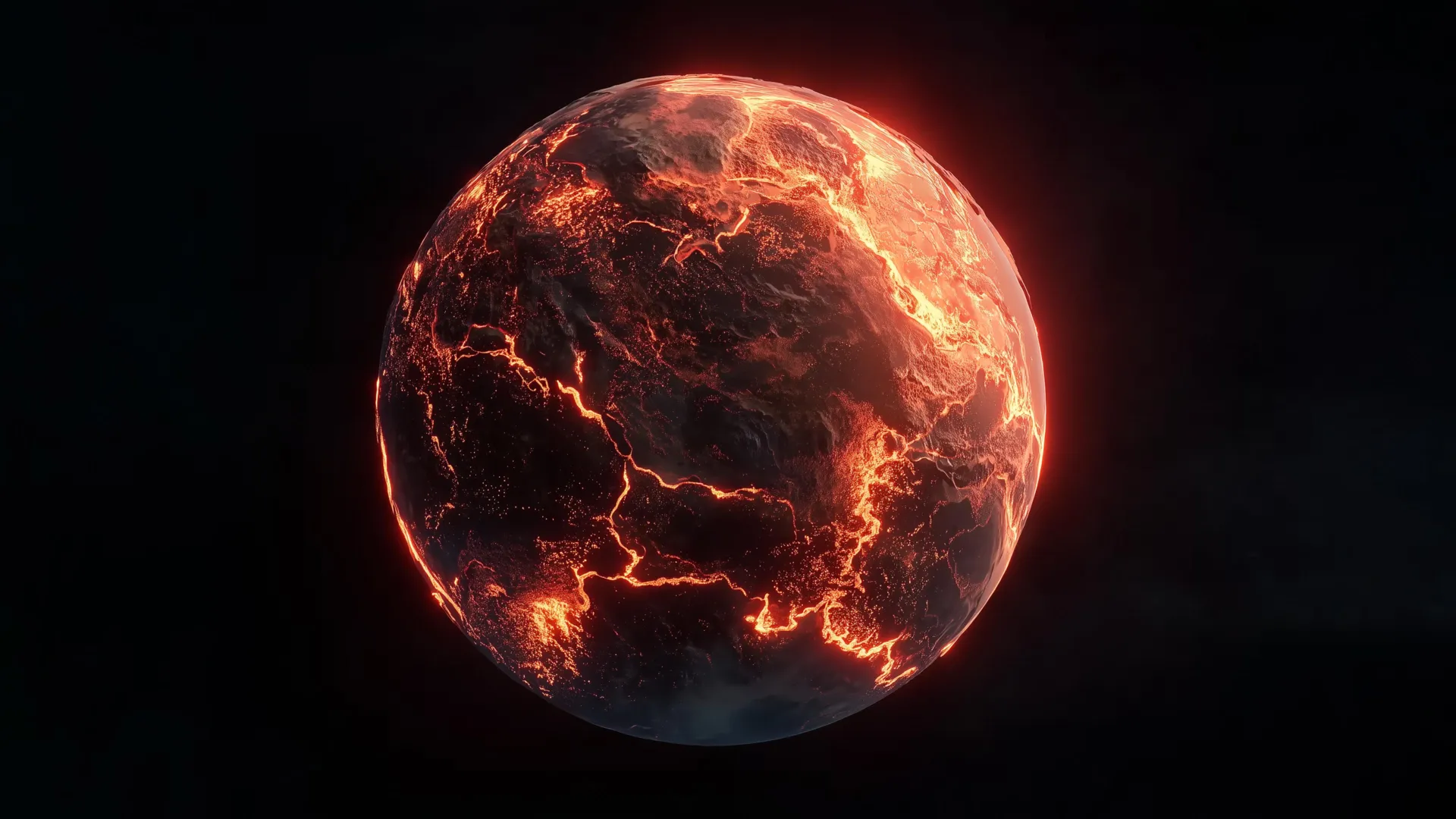
Approximately 4.6 billion years ago, Earth was engulfed in a fiery environment, characterized by extreme temperatures and frequent impacts from space. The surface was dominated by a vast ocean of magma, making it impossible for liquid water to exist. In contrast, today’s Earth is covered by oceans that account for roughly 70% of its surface. Understanding how water transitioned from this molten phase to its current state has perplexed scientists for decades.
The team’s findings, published in the journal Science on December 11, 2025, suggest that bridgmanite, the most prevalent mineral in Earth’s mantle, acts as a significant water reservoir. Previous studies indicated that bridgmanite could hold only minimal water amounts, but this new research shows it can store far more water than previously thought at high temperatures.
To explore this phenomenon, the researchers faced two primary challenges: recreating the extreme pressures and temperatures found over 660 kilometers beneath Earth’s surface and accurately detecting tiny quantities of water in mineral samples. They designed a diamond anvil cell system that employed laser heating, reaching temperatures of up to 4,100 °C to simulate deep mantle conditions.
Utilizing advanced analytical tools at GIGCAS, including cryogenic three-dimensional electron diffraction and NanoSIMS, the team effectively mapped water distribution within bridgmanite. Their techniques allowed them to confirm that water is structurally dissolved within the mineral, revealing much higher levels of water storage than previously assumed.
The experiments demonstrated that bridgmanite’s capacity to trap water increased significantly at elevated temperatures. During the era of Earth’s hottest magma ocean, this mineral could have stored water amounts that are five to one hundred times greater than earlier estimates, equating to a volume potentially ranging from 0.08 to 1 times that of today’s oceans.
This hidden reservoir of water did not remain static. It acted as a “lubricant” for Earth’s geological processes, reducing the melting point and viscosity of mantle rocks, which facilitated internal circulation and plate tectonics. Over time, volcanic and magmatic activities returned some of this water to the surface, contributing to the formation of Earth’s early atmosphere and oceans.
The researchers posit that this buried reservoir of water was vital in transforming Earth from a molten inferno into a habitable planet. The study underscores the importance of understanding the dynamics of Earth’s interior and how they shaped the planet’s ability to support life.
This groundbreaking research, conducted by the Chinese Academy of Sciences, marks a significant step forward in our understanding of Earth’s geological history and the role of water in shaping the planet’s evolution. As scientists continue to explore the depths of our planet, these findings may lead to new insights about the intricate processes that have defined Earth for billions of years.


