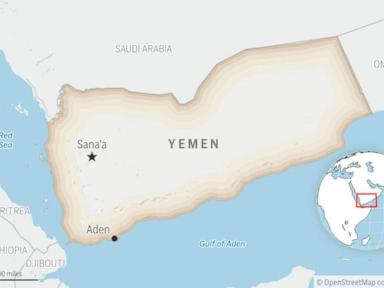
Saudi Arabia has officially called on Emirati-backed separatists in Yemen to withdraw from the governorates of Hadramout and Mahra. This announcement, made on December 25, 2023, raises concerns about potential fractures within the coalition fighting against the Houthi rebels in the country. The Saudi Foreign Ministry’s statement seeks to exert public pressure on the Southern Transitional Council (STC), which has long received support from the United Arab Emirates.
The Saudi government emphasized the necessity for cooperation among all Yemeni factions, urging restraint to avoid destabilizing the security situation. “The kingdom stresses the importance of cooperation among all Yemeni factions and components to exercise restraint and avoid any measures that could destabilize security and stability, which may result in undesirable consequences,” the ministry stated.
The STC has recently increased its presence in Hadramout and Mahra, prompting Saudi Arabia to advocate for a return to previous positions outside these regions. The Saudi Foreign Ministry indicated that efforts are ongoing to have STC forces hand over control of military camps in these areas to the National Shield Forces, another group backed by Saudi Arabia. “These efforts remain in progress to restore the situation to its previous state,” the ministry added.
Demonstrations supporting the push for South Yemen’s independence were called for in Aden, the region’s administrative center and a stronghold against the Houthis. However, the impact of Saudi Arabia’s announcement on these planned protests remains uncertain. The STC has increasingly raised the banner of South Yemen, a territory that was an independent nation from 1967 until unification in 1990.
The tensions between Saudi Arabia and the UAE reflect deeper rivalries, despite their shared membership in the OPEC oil cartel and historically close ties. Both nations have sought to expand their influence in Yemen, complicating their coalition’s objectives against the Houthis, who seized the capital, Sanaa, in September 2014, forcing the internationally recognized government into exile.
The conflict in Yemen has resulted in over 150,000 deaths, including both combatants and civilians. It has also plunged the country into one of the world’s most severe humanitarian crises, with millions on the brink of famine. As the Saudi-led coalition, supported by U.S. weaponry and intelligence, intervened in March 2015, the situation has only worsened, with tens of thousands more casualties reported in the years that followed.
The Houthis have also intensified their operations in the Red Sea, targeting maritime traffic amid rising tensions related to the Israel-Hamas conflict. Although shipping traffic has seen a slight increase recently, many vessels continue to reroute via the Cape of Good Hope to avoid the Red Sea and Gulf of Aden.
The situation in Yemen remains precarious and could potentially engage international attention once again. The United States had previously conducted bombing campaigns against the Houthis, which were halted by former President Donald Trump shortly before his Middle Eastern visit. The Biden administration has also launched strikes against Houthi positions, employing B-2 bombers to target what was described as underground facilities used by the group.
As the conflict evolves, the Houthis have made allegations against U.N. agency workers and other aid personnel, accusing them of espionage without providing evidence. The U.N. and various organizations have vehemently denied these claims, further complicating the humanitarian landscape in Yemen.