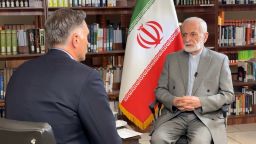
Iran has declared it will not comply with the International Atomic Energy Agency’s (IAEA) request to inspect nuclear sites damaged during recent military strikes. The Iranian government cites the lack of established guidelines for assessing facilities subjected to military action as its primary reason for refusal. This decision follows significant attacks carried out by Israel and the United States in June 2023, which targeted critical elements of Iran’s nuclear program, including facilities at Natanz, Fordo, and Isfahan.
The condition of these facilities remains uncertain, raising concerns about potential repercussions for regional security. Mohammad Eslami, the head of Iran’s Atomic Energy Organization, emphasized the need for the IAEA to provide clarity on the legitimacy of such military strikes. He stated, “If there are established procedures for the post-war situation, the Agency should announce them so that we can act accordingly.” Eslami’s comments were reported by Iran’s state-run Islamic Republic News Agency (IRNA).
Eslami further argued that if military attacks on nuclear facilities are deemed unauthorized, the IAEA should formally condemn these actions. He expressed that Iran has formally communicated its demand for clear and codified procedures regarding inspections of nuclear sites affected by military strikes. Until such procedures are established, he reiterated that Iran would not entertain what he described as “political and psychological pressure” or irrelevant demands for inspections of the bombed facilities.
In late November 2023, the IAEA urged Iran to fully cooperate with its verification processes, allow oversight of nuclear materials, and adhere to international safeguards as well as United Nations Security Council requirements. During a recent United Nations Security Council meeting focused on nuclear non-proliferation, Hedda Samson, the deputy head of the European Union delegation, called on Iran to provide updated and verifiable declarations regarding its nuclear materials and activities.
Concerns over Iran’s nuclear program have been heightened by the country’s failure to meet its international obligations, which Jay Dharmadhikari, France’s deputy permanent representative to the UN, labeled as a significant threat to global peace and security.
In the context of these developments, reports suggest that Iran is intensifying efforts to rebuild its ballistic missile program. This shift comes despite the recent re-imposition of United Nations sanctions prohibiting arms sales and missile activity. Eslami maintained that Iran’s nuclear endeavors are peaceful, focusing on enhancing the nation’s technological and scientific capabilities.
As the situation evolves, the international community remains watchful of Iran’s actions and the implications for regional stability and global security.