The NCAA Men’s Basketball Rules Committee has introduced a significant change this season, allowing college basketball coaches to challenge specific calls for the first time. This decision, made in June 2023, marks a shift toward a more interactive approach to officiating, mirroring practices in professional leagues such as the NBA.
This new rule gives coaches the authority to contest three types of plays: goaltending or basket interference, out-of-bounds calls, and block-charge situations involving the restricted arc. Coaches begin each game with one challenge, which can only be initiated if the team has at least one timeout remaining. If the challenge is successful, the team retains the timeout and earns a second challenge.
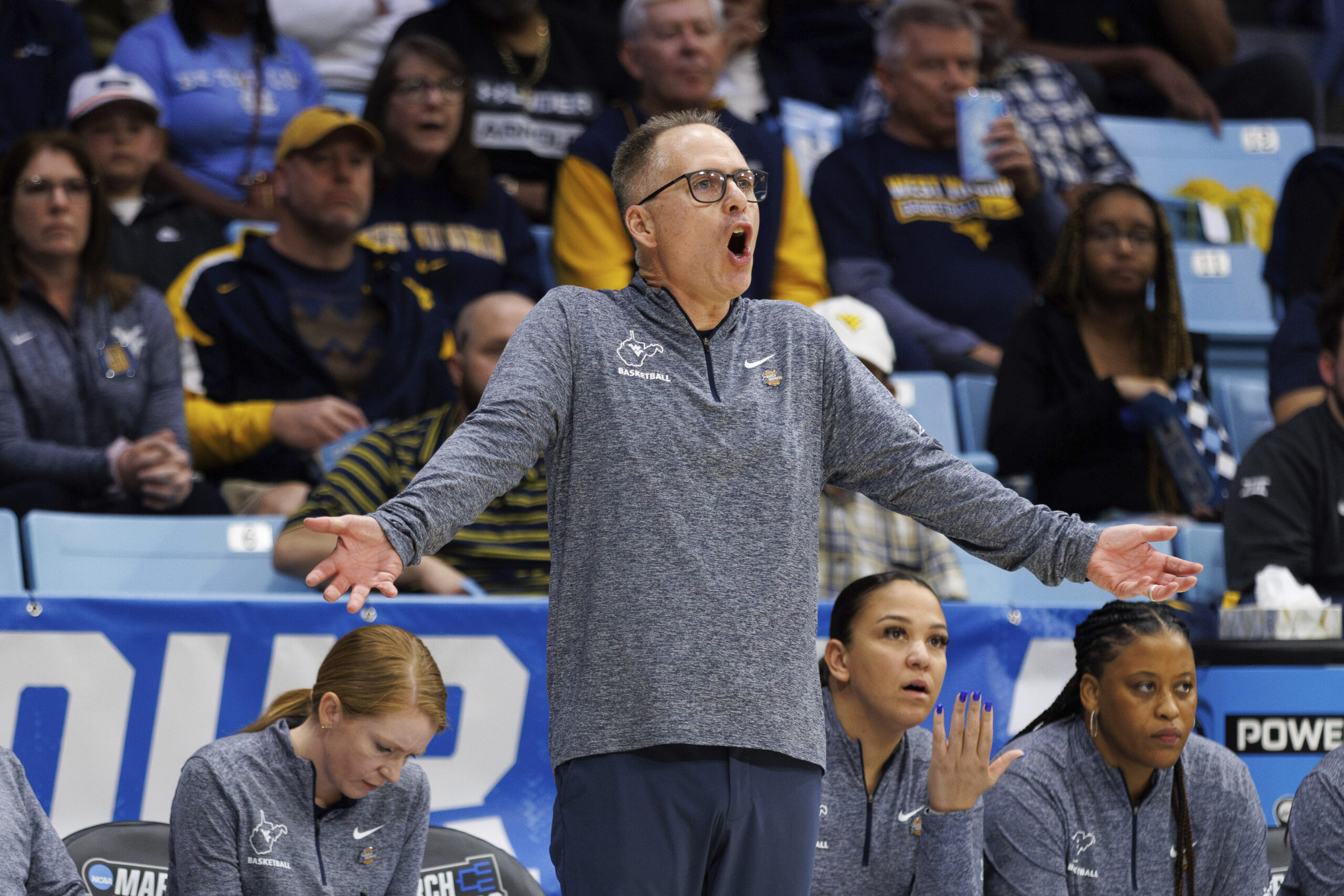
WVU men’s basketball coach Ross Hodge acknowledged the complexity of this new dynamic. “It obviously mirrors the NBA game, and there is a risk-reward benefit to it,” he stated. The challenge process can be particularly stressful, as players often advocate for reviewing nearly every call. “Players are kind of hard to trust in that situation,” Hodge admitted. “They never feel like they hit the ball last.”
The stakes are high, especially in tight games. Mark Kellogg, the coach for the WVU women’s team, pointed out the precious nature of timeouts in crucial moments. “In a close game, those timeouts are gold,” he remarked, emphasizing the importance of strategic decision-making.
Statistical analysis from Ken Pomeroy, a prominent figure in college basketball analytics, reveals that coaches have had a generally favorable success rate when challenging calls. For instance, coaches have successfully overturned goaltending calls approximately 60.4% of the time, while out-of-bounds challenges have seen reversals just below 55%. In contrast, challenges related to restricted area calls have proven less successful, with only about 27% resulting in overturned decisions.
At WVU, Kellogg has successfully challenged 1 out of 2 calls this season, while Hodge utilized his first challenge in the twelfth game against Ohio State. The challenge involved a goaltending call that Hodge believed was incorrectly ruled. “I didn’t think it was a goaltend, or else I wouldn’t have challenged it,” he reflected. Unfortunately, the call stood, illustrating the unpredictable nature of the challenge system.
Technology plays a pivotal role in the challenge process. Assistants on the bench utilize iPads to stream live games, allowing them to quickly analyze plays in question. Hodge noted, “You have the technology on the bench. It just matters how quickly you can get the replay synched up.” This rapid decision-making is crucial, as once the referees signal the ball is ready for play, the opportunity to challenge the call is lost.
Kellogg humorously suggested that players should delay play to give the coaching staff more time to assess potential challenges. “I’m going to have to tell my players to fall down and lay there like you’re hurt or something to give us an opportunity to look at it,” he joked.
Analysis shows that the majority of challenges occur during the final ten minutes of games. Interestingly, earlier challenges have a higher success rate, with first-half challenges succeeding 65% of the time compared to only 45.7% in the closing moments. Kellogg expressed caution regarding late-game challenges, stating, “Unless it’s late, right in front of us and pretty obvious, if we need the possession, I’ll probably challenge it. If not, we’ve got to be a little careful.”
The relationship between players and coaches is vital in this decision-making process. Both Hodge and Kellogg have stressed the importance of open communication with their athletes. “We’ve had that conversation,” Hodge explained, urging players to be honest about their involvement in plays under review.
As college basketball continues to evolve, the introduction of the challenge system represents a significant change with the potential to alter how games are played and officiated. Coaches and players alike will need to adapt to this new strategic layer, balancing the risks and rewards that come with the ability to challenge officiating decisions.