Democratic lawmakers are contesting the legality of the recent decision to rename the Kennedy Center in Washington, D.C., to include the name of former President Donald Trump. A group of Democratic officials, including House Minority Leader Hakeem Jeffries and Senate Minority Leader Chuck Schumer, expressed their concerns, stating that federal law prohibits the center from changing its name without congressional approval.
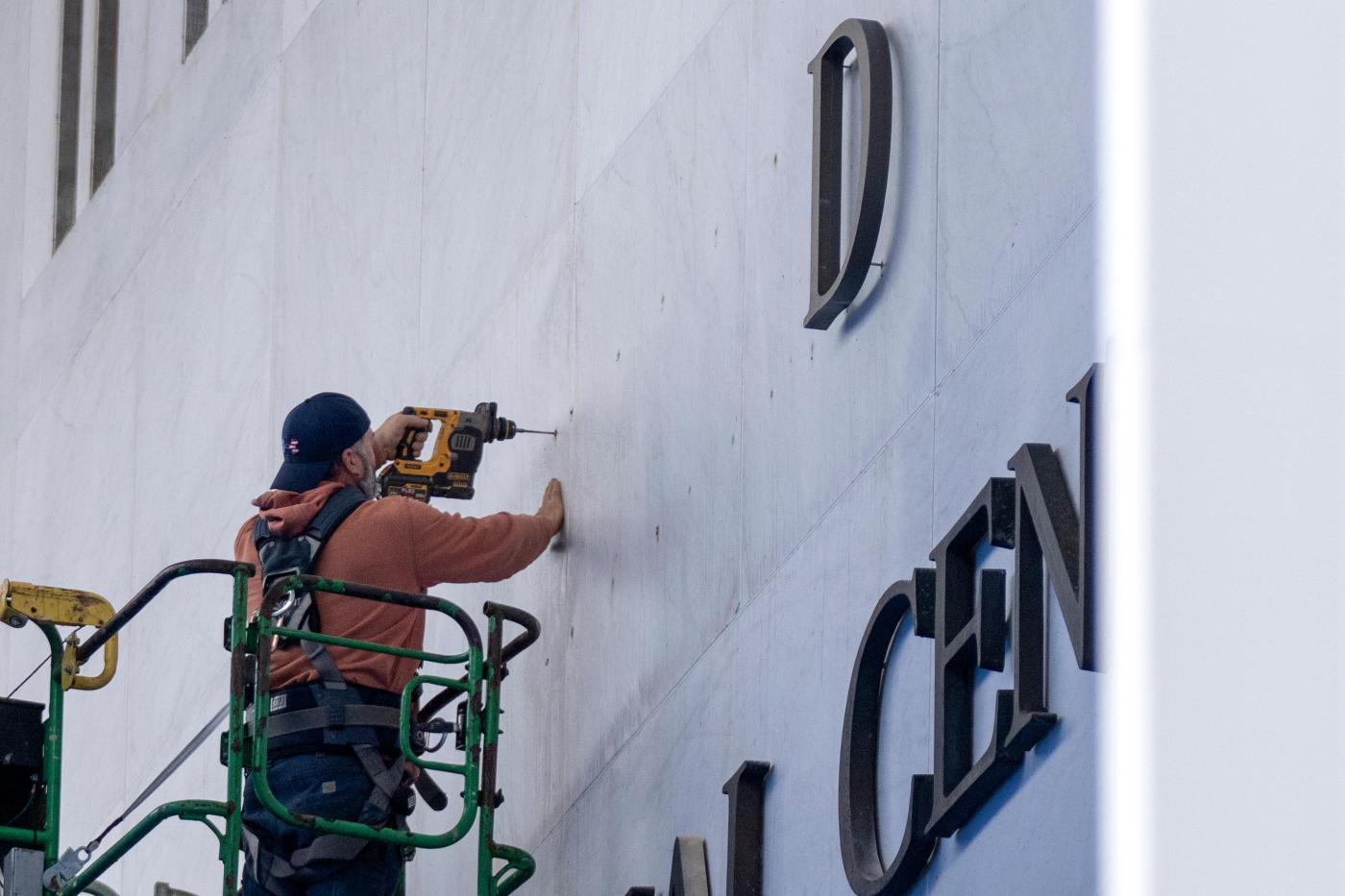
On Thursday, the venue’s board members, under Trump’s influence, voted to rename it to the Donald J. Trump and John F. Kennedy Memorial Center for the Performing Arts. The details regarding Trump’s participation in the voting process remain unclear. Following the decision, workers began adding Trump’s name to the building.
Jeffries, Schumer, and fellow board members Mark Warner, Sheldon Whitehouse, Joyce Beatty, and Rick Larsen issued a statement asserting that the change violates the established purpose of the center, which was created as a memorial to President John F. Kennedy. They emphasized that federal legislation mandates that any name alteration requires action from Congress.
Maria Shriver, niece of JFK and former first lady of California, criticized the name change on social media, calling it “beyond comprehension.” She stated, “It is beyond wild that he would think adding his name in front of President Kennedy’s name is acceptable. It is not.” Shriver’s comments reflect a broader sentiment among those who view the name change as inappropriate.
The ambiguity surrounding the legal authority to rename the center has been noted by several lawmakers. Joe Kennedy III, JFK’s great-nephew, remarked on social media that renaming the Kennedy Center is as implausible as changing the name of the Lincoln Memorial.
As the controversy unfolded, Joyce Beatty expressed her frustration with the process during a virtual meeting. She claimed that her attempts to voice opposition to the name change were stifled when she was muted by the current trustees, who provided a virtual attendance option to the meeting. “I was muted each time I tried to speak,” she stated, highlighting concerns about transparency and public discourse during the meeting.
A spokesperson for the Kennedy Center, Roma Daravi, clarified that all board members were invited to attend the meeting in person, and virtual attendance was available for non-voting members. The center has faced scrutiny over the decision-making process, particularly regarding the appointments of trustees who were reportedly replaced by Trump allies.
Trump himself expressed surprise at the name change, despite having previously suggested the inclusion of his name. A request for comment from the White House regarding the issue has not been answered.
Democratic board members have condemned the decision as part of a broader pattern of corruption under the Trump administration. They vowed to hold the administration accountable for its actions concerning federal institutions.
As this situation continues to develop, the implications of the name change and the potential legal disputes surrounding it will likely remain a topic of discussion among lawmakers and the public alike.