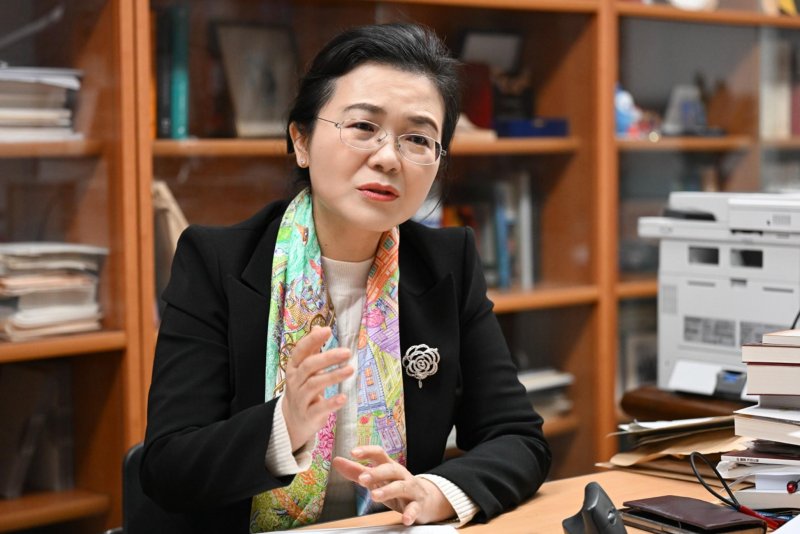
UPDATE: A prominent law professor has raised urgent alarms regarding proposed judicial reforms in South Korea, warning that these changes could significantly undermine judicial independence. Cha Jin-ah, a constitutional law expert at Korea University, highlighted the potential for these reforms to concentrate power and threaten the democratic framework of the nation.
Just announced on December 17, 2023, Cha’s concerns center around a package of judicial reform bills supported by South Korea’s ruling party. “Unchecked power leads to dictatorship,” Cha stated, emphasizing the need for careful scrutiny of these proposals.
The reforms include plans to expand the Supreme Court by adding new justices, establish a special court for treason, and introduce a controversial crime of “distorting the law.” Cha expressed conditional support for some reforms but condemned the approach of processing multiple bills simultaneously, suggesting it reflects a troubling political agenda.
In an exclusive interview, Cha articulated her views on the proposed reforms. “While increasing the number of Supreme Court justices by about four is reasonable, doubling the bench to add twelve justices would be a blatant political maneuver,” she warned. Cha also criticized the proposed court petition system, questioning how the Constitutional Court would manage a flood of petitions alleging due process violations.
She raised alarms about the implications of creating a special court for treason, stating, “Such a court is unconstitutional and would undermine fair trials, leading to predetermined outcomes.” Cha equated the proposed crime of “distorting the law” to punitive measures reminiscent of totalitarian regimes, asserting it could be exploited to stifle dissent and pressure officials into compliance with political authorities.
“The ruling party’s intent to abolish the court administration office is also deeply concerning,” Cha continued. “Judicial power encompasses both adjudication and administration, including personnel matters. Stripping these powers is unconstitutional.”
Cha emphasized that public opinion is the only force capable of halting these legislative moves. “Elections do not grant the ruling party unchecked authority. Democracy requires ongoing public engagement and accountability,” she stressed.
The professor called on the opposition to play a more active role in critiquing these reforms, urging them to provide viable alternatives and articulate a vision for preserving the balance of powers. “The opposition must wake up and fulfill its duty to challenge these potential abuses of power,” Cha concluded.
This situation is evolving rapidly, and the implications of these reforms could have lasting effects on South Korea’s judicial landscape and democratic integrity. Observers are urged to stay informed as the debate continues.
For now, the future of judicial independence hangs in the balance, and the public’s response will be crucial in shaping the outcome of these significant proposals.